Do not activate too early
Separate manufacturing, fulfilment and activation states so inventory loss does not create live credentials.
CPO and eMSP issuance programme
Programme outcome
A repeatable issuance programme connecting physical stock, token records, brand assets and replenishment.
Review recommended productDesigned for
Charge point operators, eMobility service providers and white-label mobility brands
Programme role
CPO, eMSP or combined operation
Token handoff
Issuer record, identifier and status
Platform layer
CSMS, customer platform and roaming links
Supply model
Launch stock, fulfilment and repeat batches
Operating model / 01
The physical card is one controlled input. Reader behaviour, platform records and operating rules determine whether the correct account is authorized and traced.
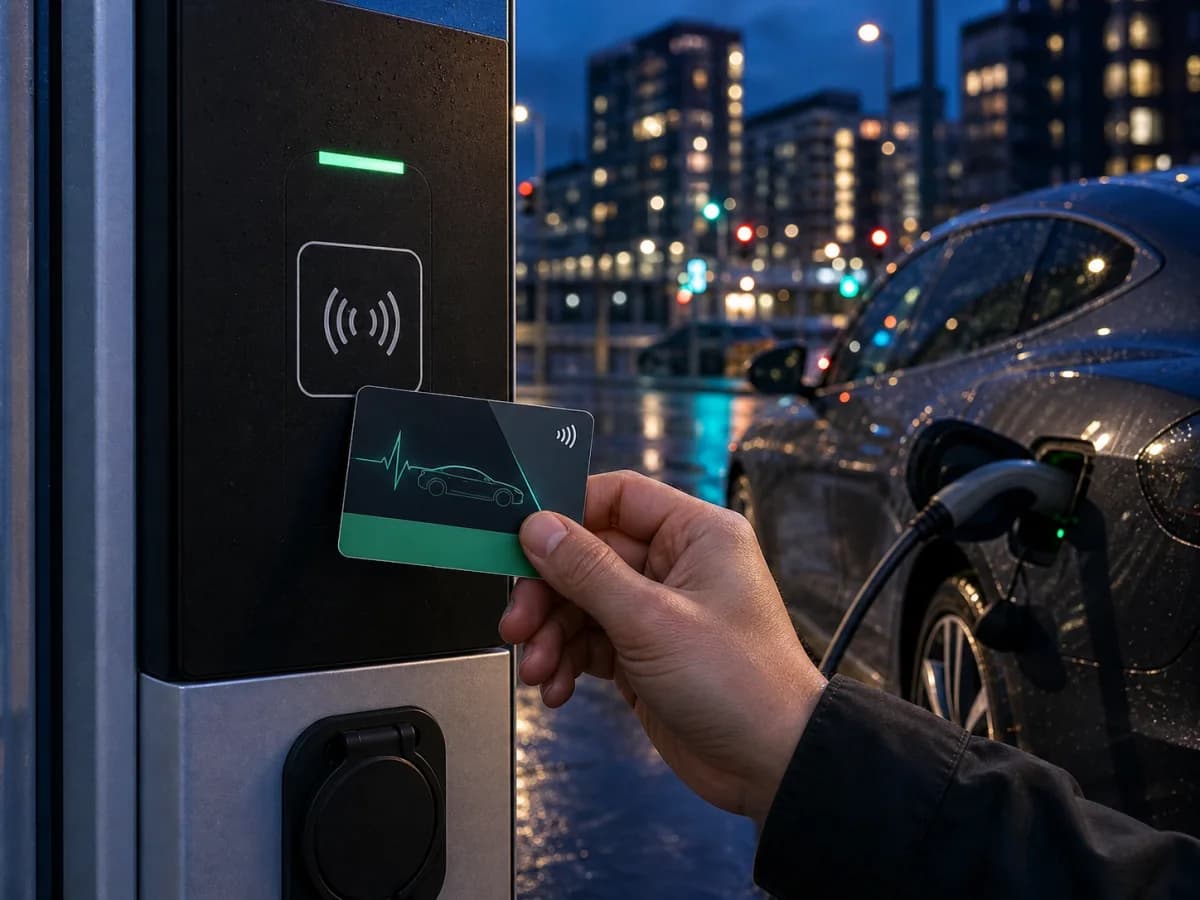
The service provider owns the commercial relationship, entitlement and activation status for the driver or organisation.
The physical credential carries the approved brand, visible serial and reader-compatible identifier.
The station reads the credential; the CSMS applies local, cached or central authorization behaviour according to its implementation.
The credential record is created, assigned, activated and exposed to customer-service and replacement workflows.
Where contracted, token data and status are shared with CPO partners bilaterally or through a roaming hub.
Specification matrix / 02
A production-ready brief states what must be decided, how it will be implemented and what evidence will count as acceptance.
State whether the programme acts as CPO, eMSP, fleet service, white-label issuer or a combination.
Ownership of token, customer, station and support records is unambiguous.
Define issuer, country/party references, token type and uniqueness rules used by the target platform.
A sample record is accepted without collision or silent reformatting.
Document reader technology and the OCPP versions and authorization features used by the CSMS.
Sample credentials complete the intended online and offline station tests.
Approve UID representation, customer reference, visible serial, status and import-file schema.
Production export passes platform validation and row-count reconciliation.
Choose whether stock is delivered inactive, pre-assigned, packaged per customer or supplied in bulk.
Activation responsibility and custody are recorded at every handoff.
Control artwork versions, language variants, support details, legal marks and variable-data zones.
A signed artwork proof and physical colour/sample approval are retained.
Reserve identifier ranges and define minimum stock, lead-time and repeat-order controls.
A repeat batch can be produced without recreating the specification or duplicating records.
Failure controls / 03
Most failed launches are not caused by print quality. They come from unclear identifiers, untested readers, incomplete data ownership or weak lifecycle control.
Separate manufacturing, fulfilment and activation states so inventory loss does not create live credentials.
Quantity, UID, visible serial, package assignment and import result should balance before customer issue.
Treat artwork, token rules and packaging as one controlled release; a partial change can invalidate the programme record.
Keep an approved credential and encoded record as the comparison point for production and future replenishment.
Delivery path / 04
Each phase should close with evidence that can be reviewed by operations, platform and procurement teams.
Confirm roles, markets, user groups, token ownership and support workflows.
Signed operating and data brief
Select form, chip, identifier handling, visual serial and packaging route.
Reader-tested credential samples
Import sample token records and test activation, authorization, blocking and replacement.
Accepted import and test log
Produce, reconcile and package the first controlled issue batch.
Batch QC, data manifest and dispatch record
Monitor stock, reserve ranges and repeat the approved build under change control.
Versioned repeat-order pack
Responsibility boundary / 05
A precise boundary prevents the card from being blamed for configuration, entitlement or settlement decisions that live elsewhere.
Controls the approved material, chip, antenna, artwork, encoding, variable data, batch QC and production record.
Defines accepted identifier format, reader behaviour, token import, authorization states, security application and technical acceptance.
Owns assignment, activation, contracts, access policy, tariffs, customer support, replacement approval and end-of-life decisions.
Credential options / 06
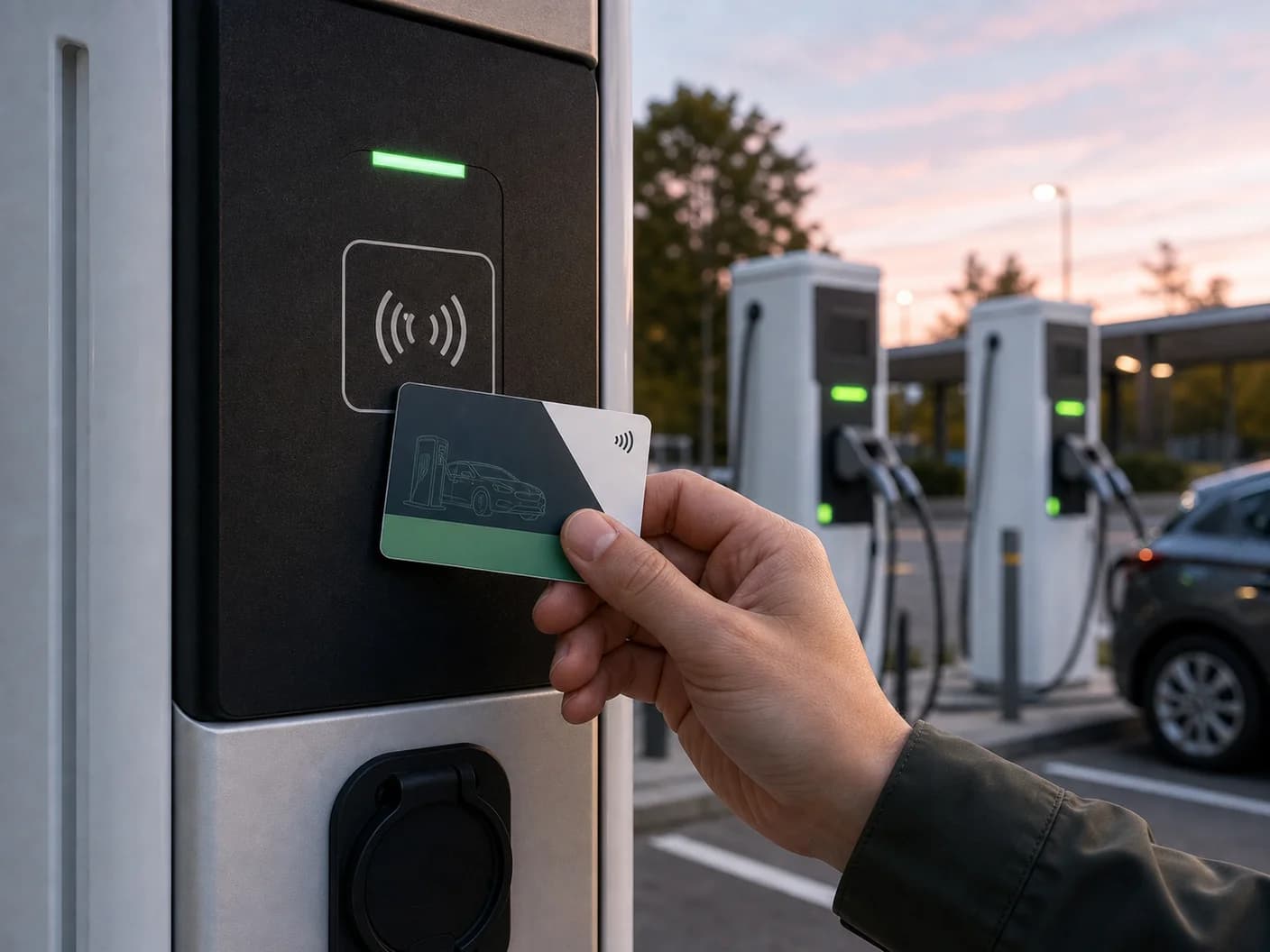
OCPP Workflows / idTag / idToken / UID Formatting
RFID credentials prepared for the identifier and authorization workflow used between EV charger readers and OCPP charging-management systems.
Review recommended product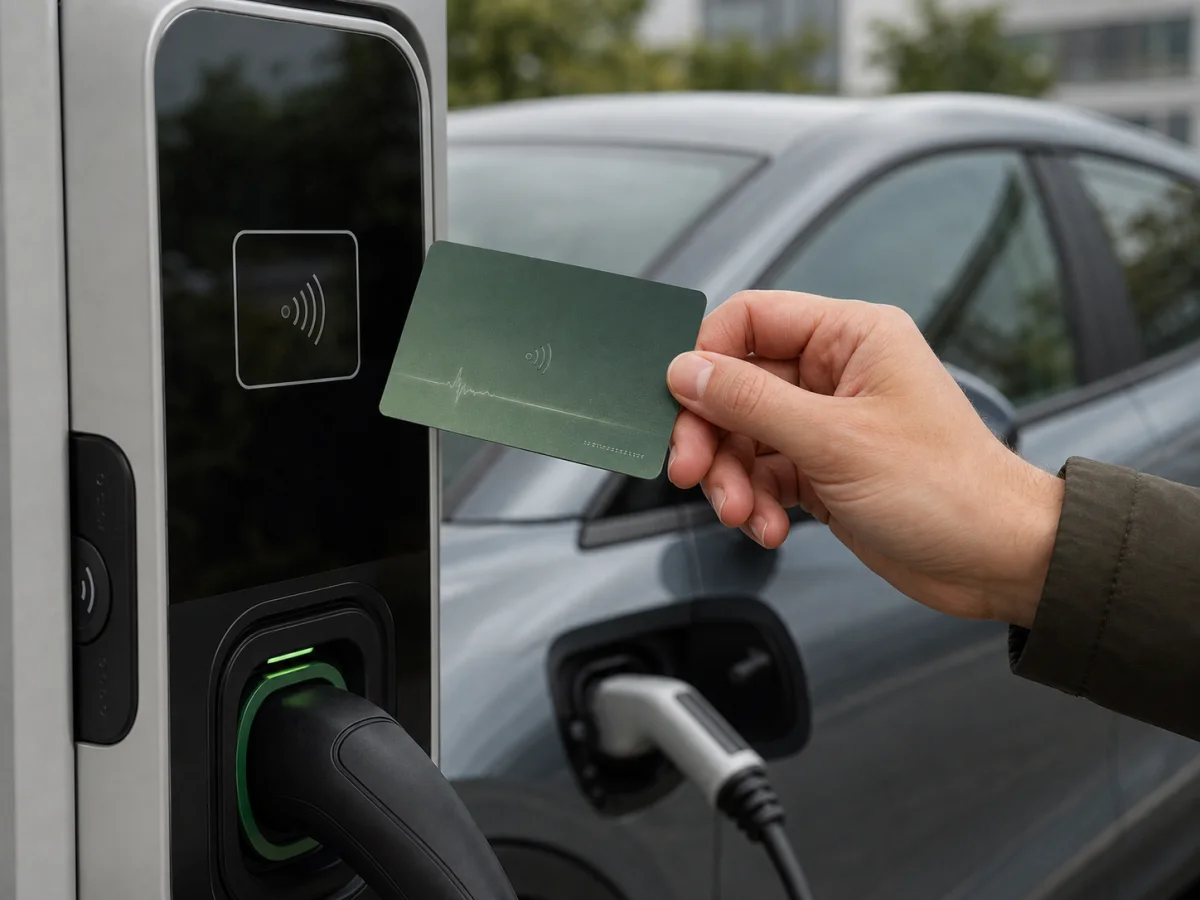
Recycled PVC / Custom RFID / UID Mapping
Custom RFID charging cards with a recycled-PVC card body, reader-matched chip options, programme artwork and UID-to-account data handoff.
Review recommended product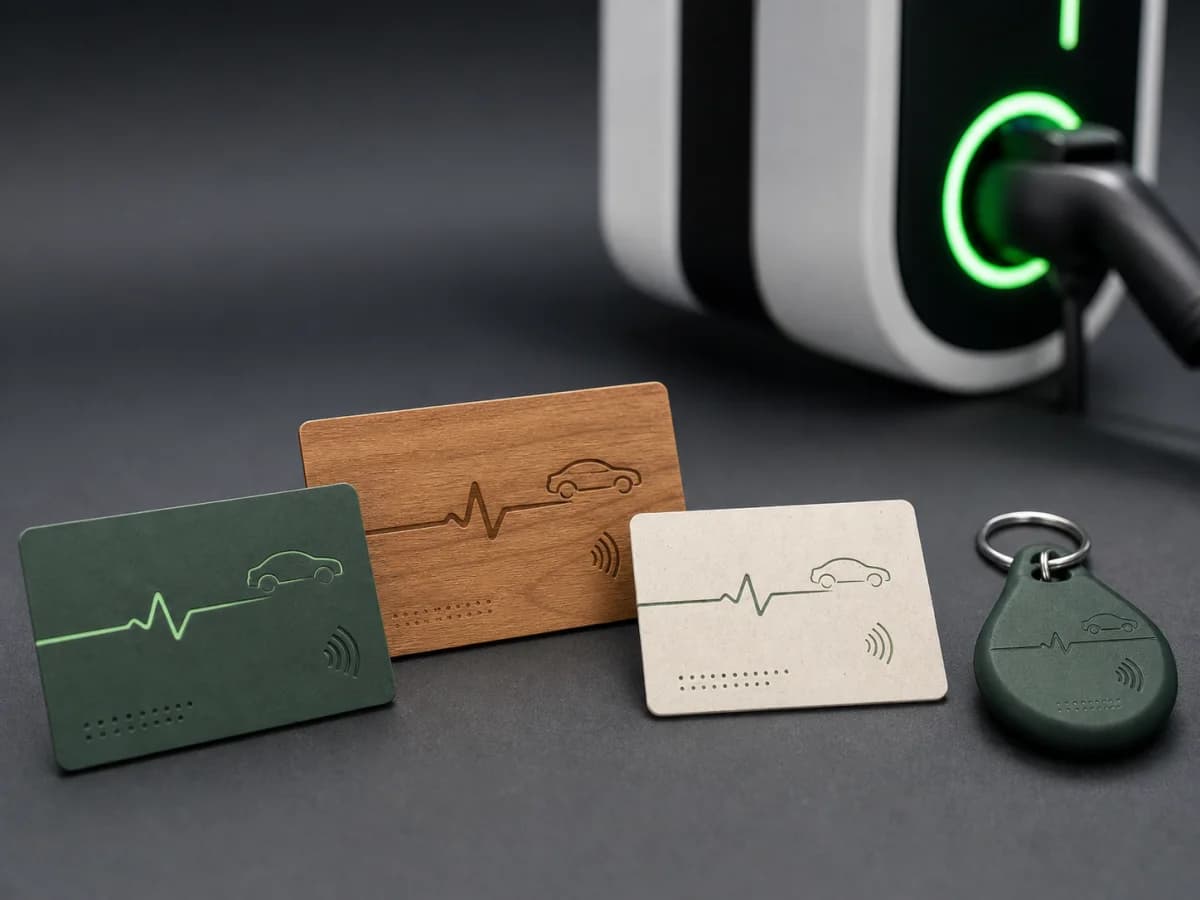
Custom Engineering / OEM/ODM / Prototype Validation
Custom RFID credentials engineered around your charging readers, token data, security model, form factor, artwork and fulfilment workflow.
Review recommended productTechnical library / 07
These sources define the surrounding technology and operating interfaces. ChargeRFID manufactures physical credentials; platform configuration, roaming contracts and charging-station certification remain with the relevant operators and vendors.

EV Infrastructure / 6 min read
An e-mobility service provider lives or dies by the moment a driver taps a card at a stranger's charger and it just works. Here is how white-label RFID cards, OCPI tokens, and clean UID provisioning let an eMSP put its brand on a credential that roams across hundreds of thousands of charge points.
Read More
Technology / 9 min read
What an RFID card for EV charging actually does, how it authenticates against OCPP stations and roaming hubs, the chip technologies used, and how to choose the right card for fleets, networks, or personal use.
Read More
Technology / 7 min read
A vendor-neutral method for choosing a 13.56 MHz EV charging credential by reader behavior, identifier format, authentication, backend controls and roaming requirements
Read MorePrimary implementation references
Programme questions / 08
The CPO, eMSP or its platform creates and controls the commercial token record. ChargeRFID can encode the agreed credential data and provide a reconciled import file, but it does not activate subscriptions or grant network entitlement.
Yes. Bulk inactive stock, pre-assigned packs and customer-level fulfilment are different operating models. The activation state and custody handoff should be specified before production.
No. OCPP connects the charging station and management system. The card must be compatible with the station reader and its identifier must fit the authorization rules implemented through OCPP.
Retain the approved material, chip, antenna, artwork, colour target, identifier rules, data schema, packaging, QC criteria and a golden sample under one programme version.
Other operating programmes
RFID credentials for depot, workplace and public charging, with controlled driver or vehicle assignment, platform-ready identifiers and replacement records.
Physical RFID credentials for roaming programmes where token records, identifier formats and lifecycle status stay consistent across eMSP, CPO and hub systems.
Credential programmes for workplaces, depots, residential sites and destinations that need controlled access by employee, resident, visitor or account.
A controlled route from legacy or UID-only credentials to reader-matched card technology with a practical pilot, data plan and phased reissue.
Branded credentials for vehicle delivery, dealership charging, loyalty and premium member programmes—with controlled serialization and presentation.
Share the reader estate, identifier rules, security requirement, platform handoff, volume and rollout markets. We will return the questions needed for samples and production approval.