Non-PVC card-body routes
Fibre- and bio-based constructions can be selected around programme goals, print result and service conditions.
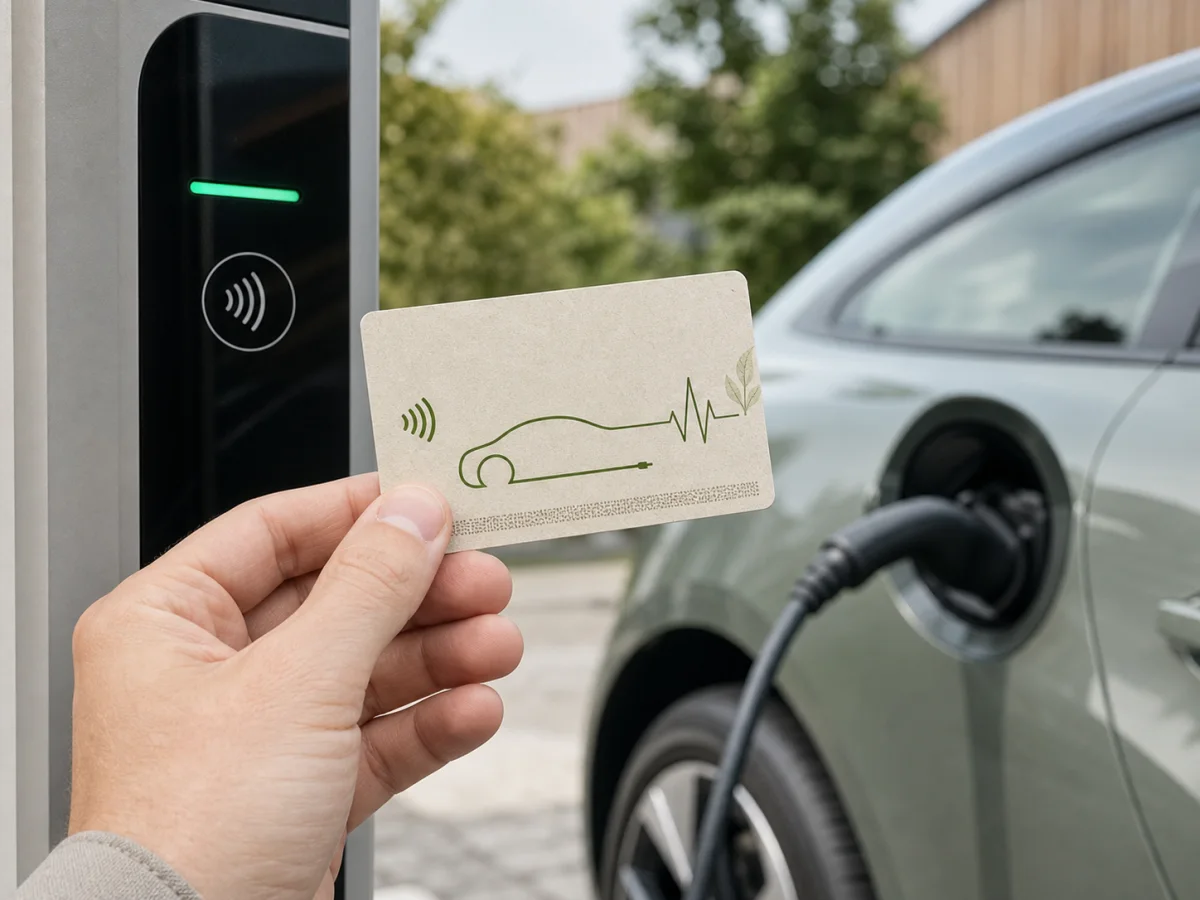
EV charging credential
Made to specificationBio-fibre and non-PVC RFID charging-card constructions with documented material claims, custom artwork and reader-matched electronics.
Compatibility is confirmed against your reader and token workflow. MOQ and timing depend on the approved material, chip, personalization and finish.
Product overview / 01
A bio-fibre charging card replaces some or most conventional PVC card-body material with a paper-, fibre- or bio-based construction. It is intended for programmes that need a non-PVC procurement route while retaining a familiar wallet-card format.
The finished credential is not only its card body: it also includes a chip, antenna, bonding layers, inks and protective finishes. End-of-life wording therefore has to match the exact material specification, test evidence and disposal conditions. We use the sample and quotation stage to define that claim before artwork is released.
Record the supplier material, composition statement and any applicable degradation or disposal test conditions.
Balance moisture resistance, flex durability and finish against the programme's issue and replacement cycle.
Choose the chip and identifier from the charger reader and backend—not from the sustainability label.
Approve environmental claims against the complete credential, including coatings, antenna, chip and adhesives.
Features and options / 02
A bio-fibre credential can still support branded artwork, variable numbering and standard charging-card data workflows.
Fibre- and bio-based constructions can be selected around programme goals, print result and service conditions.
13.56 MHz chip and antenna combinations are available for reader-compatible UID or application-based authentication.
Front and reverse programme artwork can be printed with finishes selected for the chosen substrate.
Visible card number, QR code, account reference or expiry information can vary across the production batch.
Delivered electronic data can connect each physical card to the token, driver or account record used by the operator.
Available declarations and claim wording can be agreed as part of procurement and artwork approval.
Technical fit / 03
A useful bio-card specification explains both how the credential operates in service and what is expected after it is withdrawn.
Frequency, chip protocol, UID handling and backend rules determine whether the credential authorizes a charging session.
Paper- and fibre-based bodies can be protected for normal handling, but the actual construction should be tested for the intended environment.
Home composting, industrial composting and general biodegradation are different claims. Use only the route supported for the specified material.
The antenna and chip must be considered in end-of-life instructions even when the surrounding body uses bio-based material.
Approve colour, finish, flex, scanning and live authorization before releasing the full quantity.
Full specification / 04
Values below are the available product route, not a substitute for reader validation. The final quotation records the exact construction, electronic configuration and data deliverables.
Request SamplesProduction route / 05
The sample should prove construction, print, electronic behavior and data handling together. That approved reference then controls production and reorders.
Reader, current credential, platform, quantity and operating environment
Proposed material, inlay, artwork, encoding and variable data
Physical read, exact token capture, data import and live authorization
Approved masters, controlled data, batch checks and packing review
Final mapping file, shipment record and retained repeat-order reference
Frequently asked / 06
Answers are based on the physical credential and production scope. Your charging platform remains responsible for account, tariff and authorization rules.
Not automatically. The card body may use a biodegradable or bio-fibre material, but the complete credential also contains an antenna, chip, inks, bonding materials and finishes. The final claim must follow the approved construction and its documented disposal conditions.
It can, provided the same compatible chip, antenna and identifier format are used. Finished samples should be tested because construction and reader geometry can influence performance.
The selected coating and construction are designed around the intended service environment. Normal wallet handling, moisture exposure and replacement expectations should be included in the brief and checked during sample approval.
Yes, subject to the selected construction and antenna design. AES-authenticated 13.56 MHz credential is appropriate when the reader and programme use its secure applications; it should not be added solely as a marketing feature.
Yes. Full-colour artwork, visible numbering, QR codes and other variable data can be produced and mapped to the electronic credential record.
Ask for the material identity, composition or recycled/bio-based statement, applicable test standard and conditions, chain-of-custody evidence where relevant, and wording that clearly distinguishes the card body from the full RFID credential.
Further reading / 07
Use the technical guide, programme examples and glossary to align procurement, engineering and operations before requesting samples.
A step-by-step guide to reader, chip, identifier, material and approval decisions.
Read more Material guideHow procurement choices extend to physical credentials and programme operations.
Read more Technical glossaryDefinitions for bio-based materials, ISO 14443A, UID and charging authentication.
Read moreIncluded with every order
Before production starts, we fix the identifier format with your backend team: byte length, representation, byte order, leading-zero policy. The order then ships with a machine-readable data contract and acceptance vectors your engineers can test against before the first card arrives.
See how the acceptance pack worksRelated Products
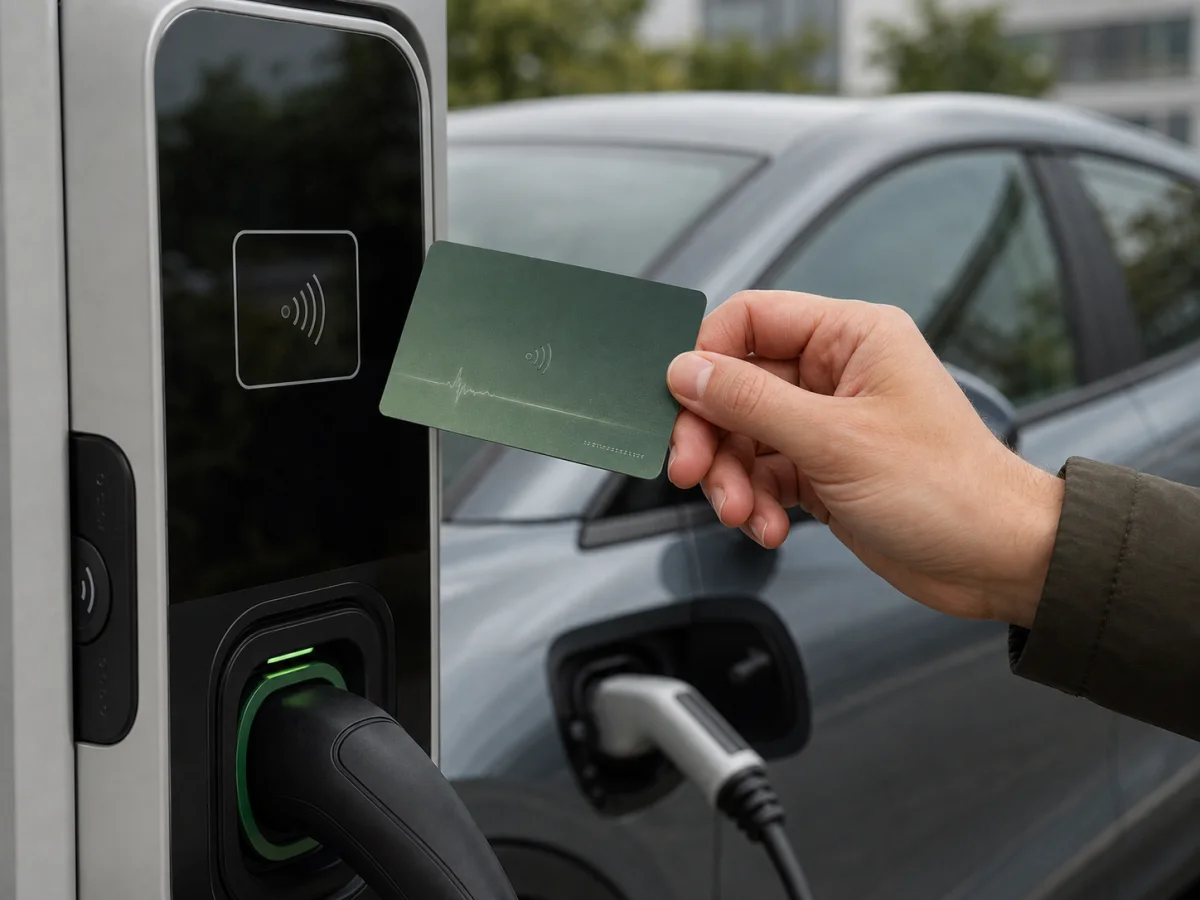
Custom RFID charging cards with a recycled-PVC card body, reader-matched chip options, programme artwork and UID-to-account data handoff.
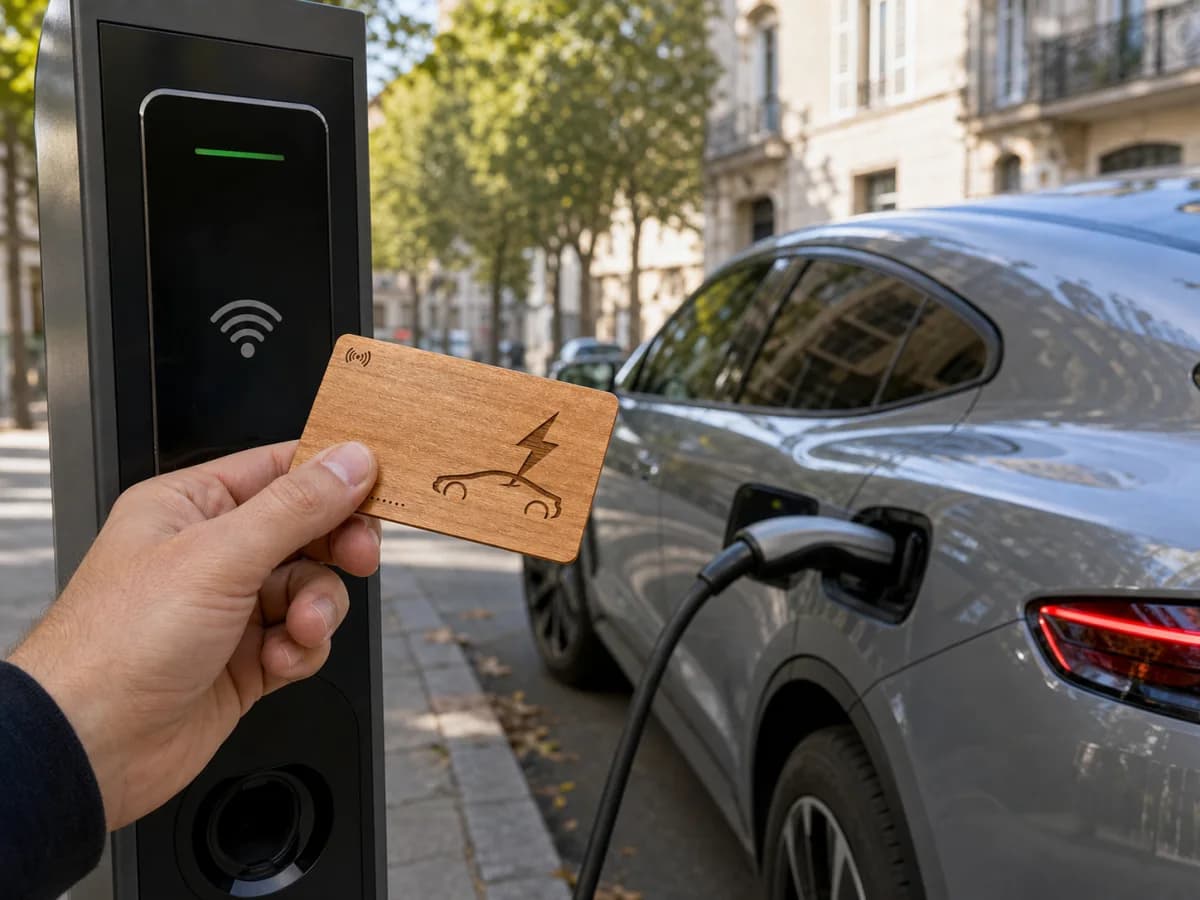
Wood-based RFID charging cards with laser engraving or print, reader-matched chip options and programme-specific variable data.
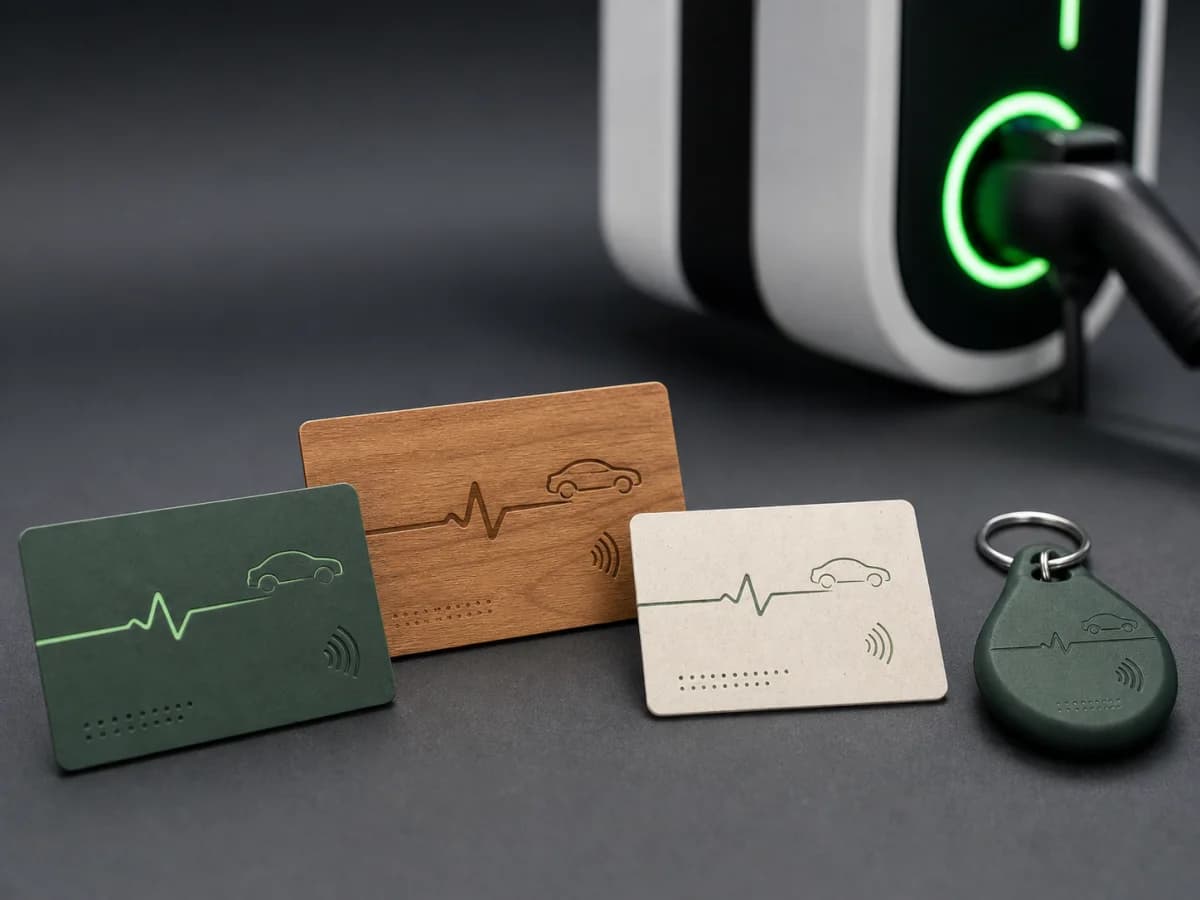
Custom RFID credentials engineered around your charging readers, token data, security model, form factor, artwork and fulfilment workflow.
Send the current card, reader model or programme brief and required quantity.