Card-body construction
CR80 card bodies with recycled-PVC content, available finishes and construction recorded in the approved specification.
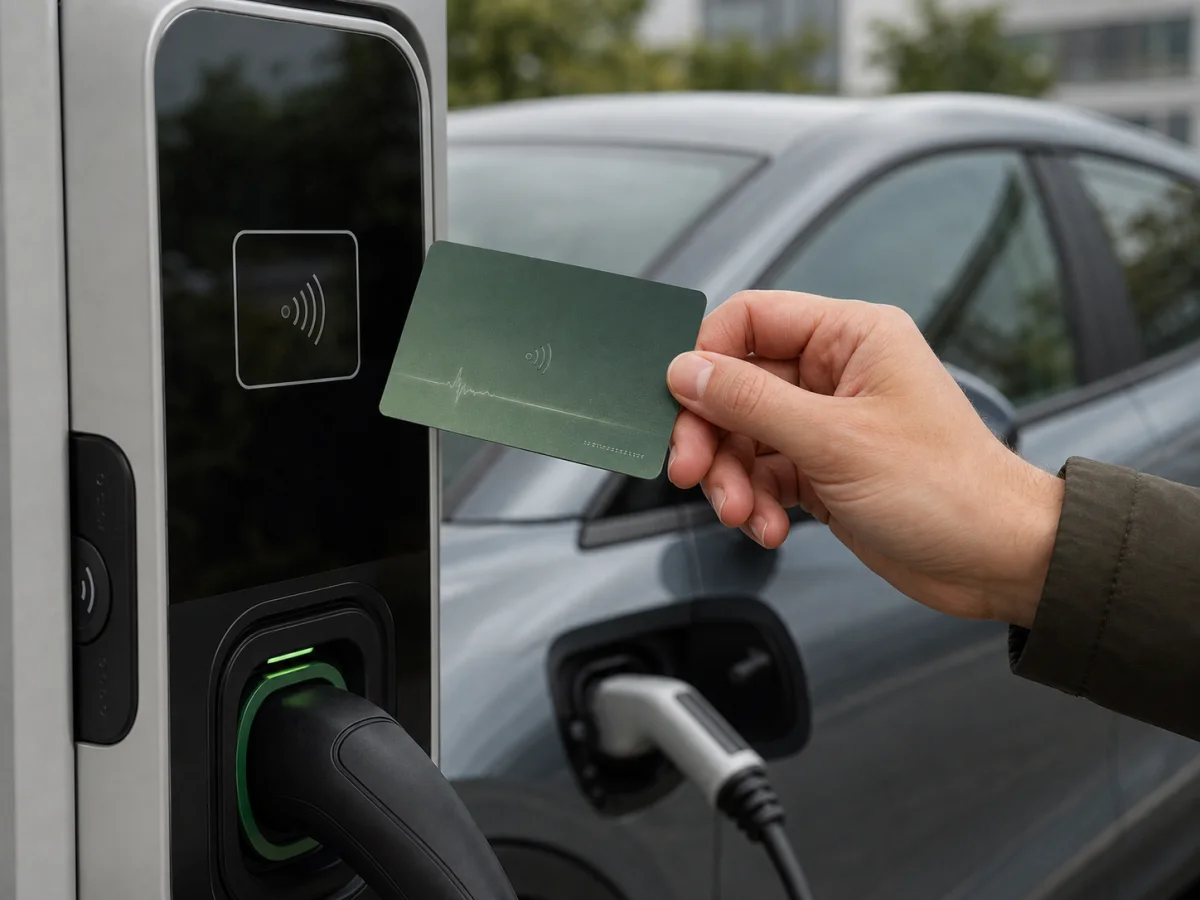
EV charging credential
Made to specificationCustom RFID charging cards with a recycled-PVC card body, reader-matched chip options, programme artwork and UID-to-account data handoff.
Compatibility is confirmed against your reader and token workflow. MOQ and timing depend on the approved material, chip, personalization and finish.
Product overview / 01
A recycled PVC EV charging card uses recovered PVC in the card body while retaining the contactless chip and antenna needed for driver authentication. The amount and location of recycled content can vary by construction, so the approved specification should state whether it applies to the core, overlays or complete card body.
Electrically, recycled PVC does not define compatibility. The target reader, chip family, identifier format and charging-platform workflow still have to be matched and tested. That separation lets a charging operator change the card material without guessing at the authentication requirement.
State the claimed percentage, whether it is post-consumer or post-industrial, and which card layers it covers.
Confirm frequency, protocol, UID length and any secure application requirement against real charging hardware.
Define wallet, vehicle, depot or outdoor use so lamination, print and durability can be selected appropriately.
Agree the material declaration, approved sample, artwork version and data format retained for repeat production.
Features and options / 02
The product can be built as a simple UID credential or as a more controlled programme card with variable data and secure chip options.
CR80 card bodies with recycled-PVC content, available finishes and construction recorded in the approved specification.
ISO 14443A options can include entry-level 13.56 MHz credential, AES-authenticated 13.56 MHz credential and other reader-compatible chip families.
Full-colour front and reverse printing with matte or gloss protection, subject to the chosen construction.
Sequential card numbers, QR codes, driver references, cost-centre fields or programme-specific identifiers.
A structured mapping file can align the physical credential with the operator's account or token database.
Approved artwork, specification, packing instructions and numbering rules can be retained for replenishment batches.
Technical fit / 03
Treat material choice, electronic compatibility and sustainability evidence as three separate approval tracks.
The charging station reads the chip identifier; its software then uses OCPP to request authorization from the management system.
A backend may expect a 4-byte or 7-byte UID represented as hexadecimal, decimal or a programme-specific token string.
UID-only programmes and protected AES-authenticated 13.56 MHz credential applications have different reader, key-management and provisioning requirements.
Avoid applying a generic carbon-reduction percentage to every order. Recycled content and impact depend on the specified material and production route.
Test RF reading, printed variable data, finish and backend import before releasing the production quantity.
Full specification / 04
Values below are the available product route, not a substitute for reader validation. The final quotation records the exact construction, electronic configuration and data deliverables.
Request SamplesProduction route / 05
The sample should prove construction, print, electronic behavior and data handling together. That approved reference then controls production and reorders.
Reader, current credential, platform, quantity and operating environment
Proposed material, inlay, artwork, encoding and variable data
Physical read, exact token capture, data import and live authorization
Approved masters, controlled data, batch checks and packing review
Final mapping file, shipment record and retained repeat-order reference
Frequently asked / 06
Answers are based on the physical credential and production scope. Your charging platform remains responsible for account, tariff and authorization rules.
The card-body material does not change the basic authentication flow. Compatibility depends on the selected chip, antenna, reader and identifier format. A finished sample should still be tested on representative chargers before production.
That depends on the approved construction. Some cards use a recycled core with different overlay or protective layers. The quotation and material declaration should state exactly where the recycled content is used and what percentage is being claimed.
Common 13.56 MHz options include entry-level 13.56 MHz credential and AES-authenticated 13.56 MHz credential families. The correct choice is determined by the target reader, UID requirement, memory needs and whether the programme uses only a public identifier or a protected application.
Yes. Visible card numbers, QR codes, barcodes and other variable fields can be printed and supplied with a digital UID-to-card-number mapping file for backend import.
Provide a current card, reader model or chip reference. Approve encoded samples, capture the identifier exactly as the charger and backend see it, and complete a live authorization test before mass production.
Quantity, delivery country, preferred material, target chip or existing card, reader or platform information, artwork requirements, variable data, finish, packaging and required delivery window.
Further reading / 07
Use the technical guide, programme examples and glossary to align procurement, engineering and operations before requesting samples.
Work from the reader and authorization flow through chip, material, artwork and production approval.
Read more Programme exampleSee how a physical charging credential supports a large roaming programme.
Read more Technical glossaryPlain-English definitions for the material and authentication terms used in a specification.
Read moreIncluded with every order
Before production starts, we fix the identifier format with your backend team: byte length, representation, byte order, leading-zero policy. The order then ships with a machine-readable data contract and acceptance vectors your engineers can test against before the first card arrives.
See how the acceptance pack worksRelated Products
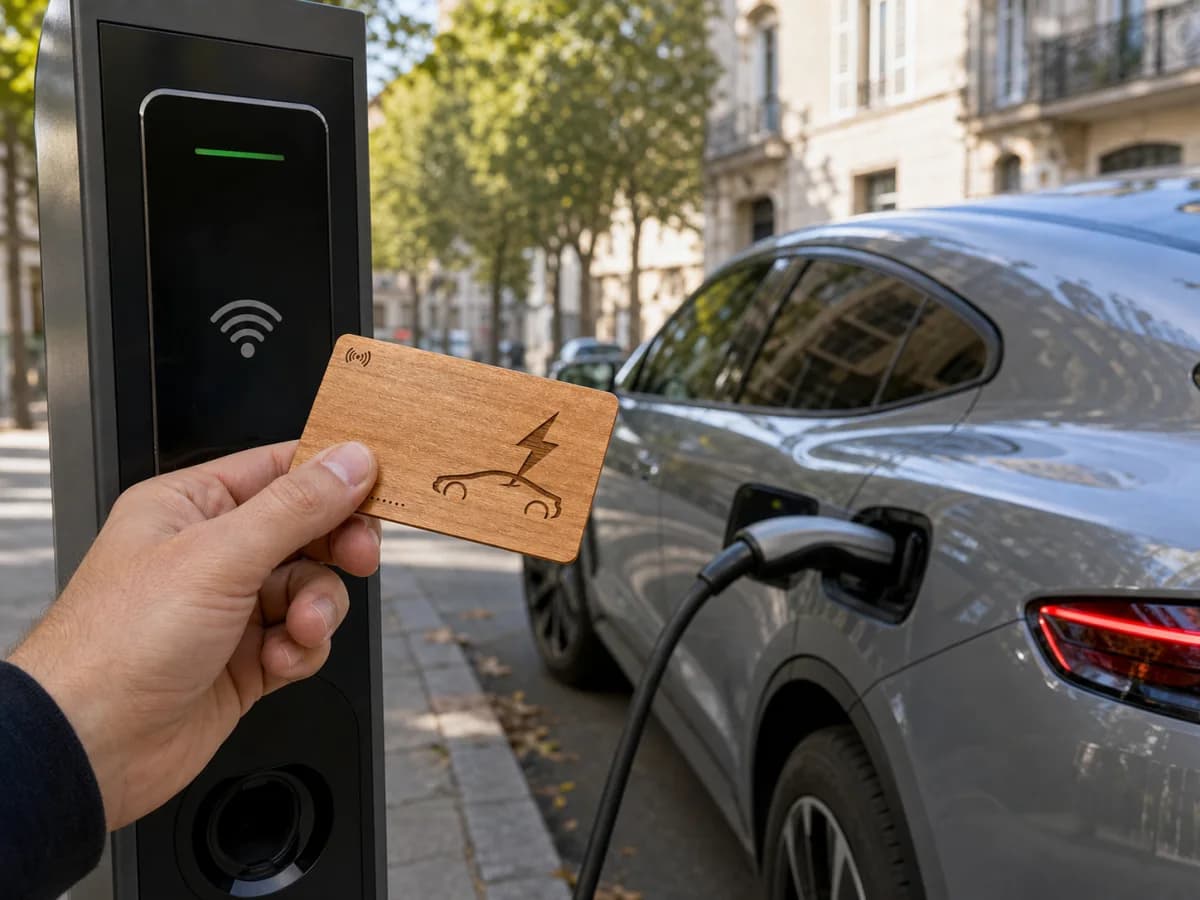
Wood-based RFID charging cards with laser engraving or print, reader-matched chip options and programme-specific variable data.
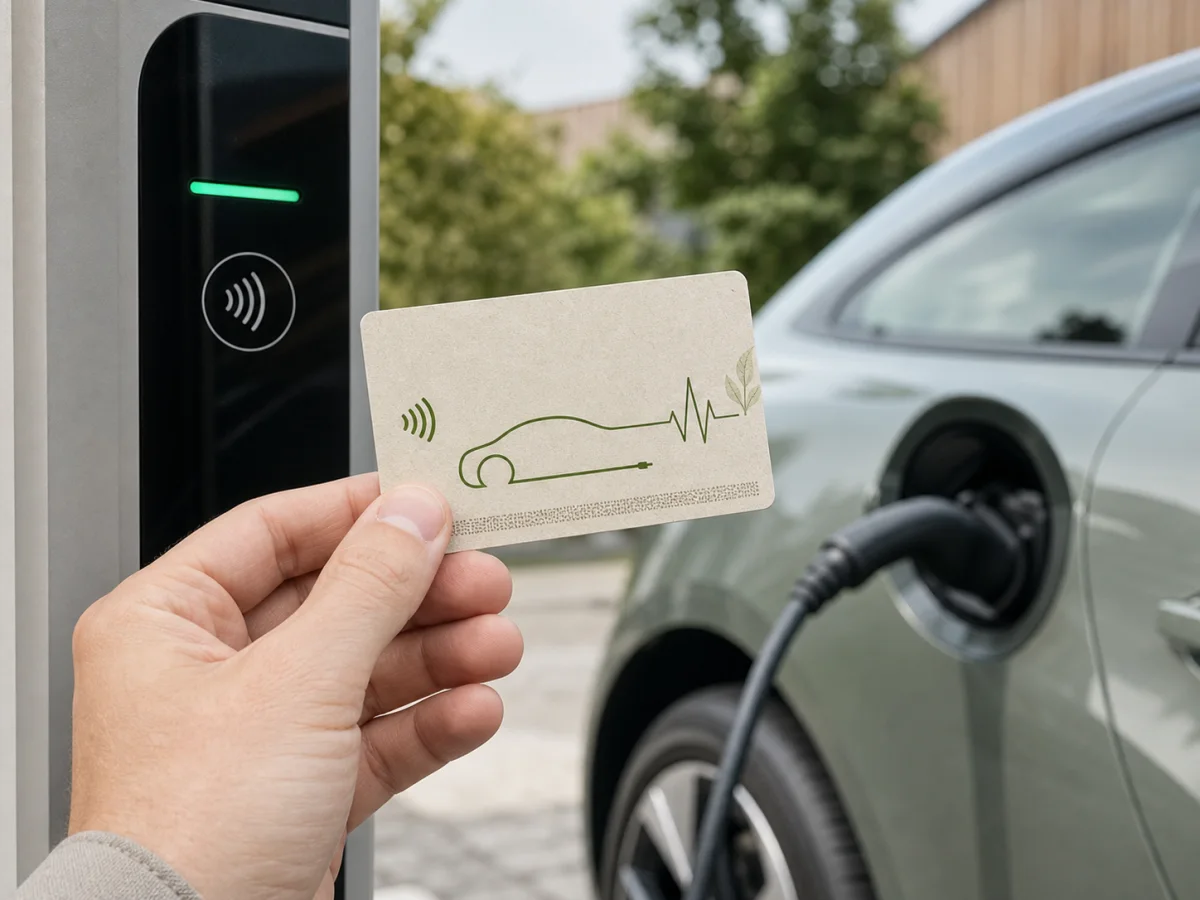
Bio-fibre and non-PVC RFID charging-card constructions with documented material claims, custom artwork and reader-matched electronics.
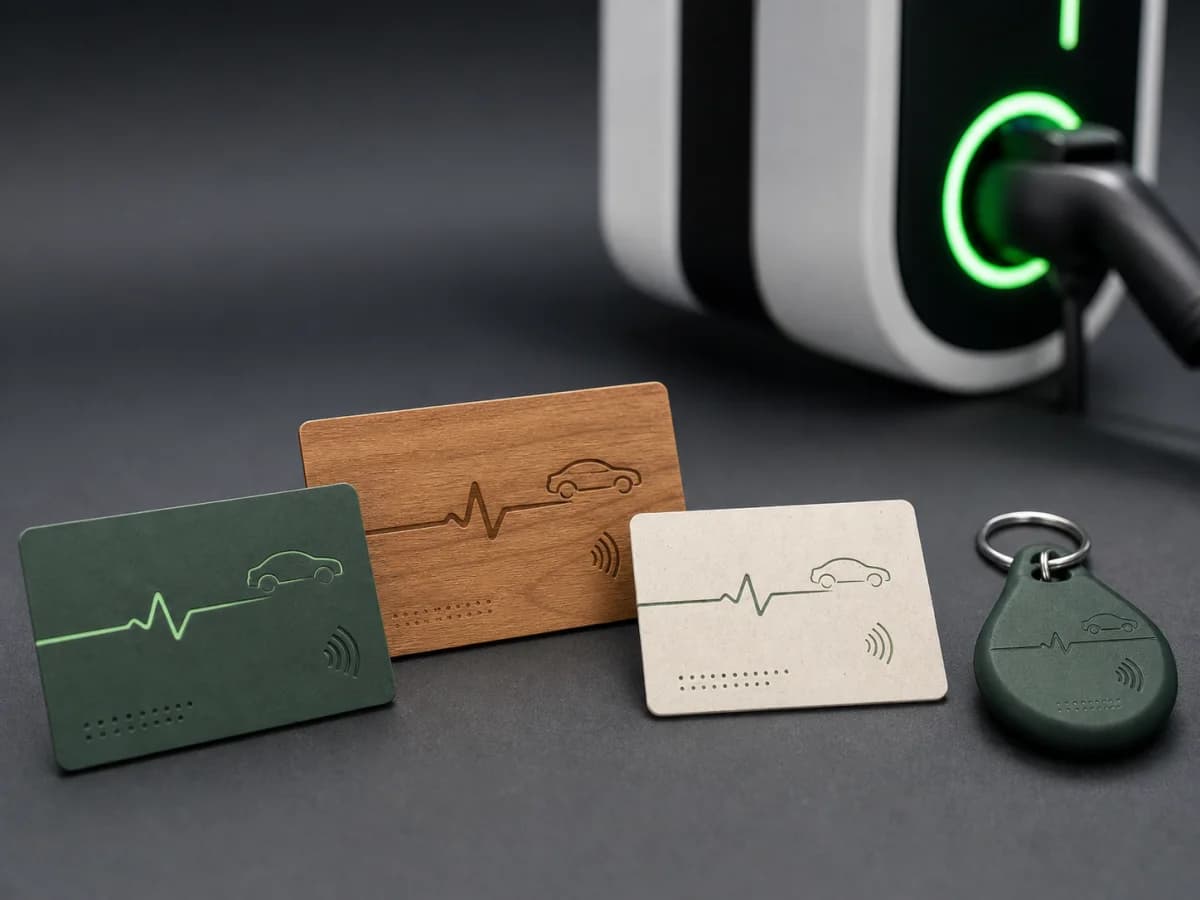
Custom RFID credentials engineered around your charging readers, token data, security model, form factor, artwork and fulfilment workflow.
Send the current card, reader model or programme brief and required quantity.