Reader-matched RFID inlay
Chip and antenna combinations are selected against the target charger reader protocol and physical presentation.
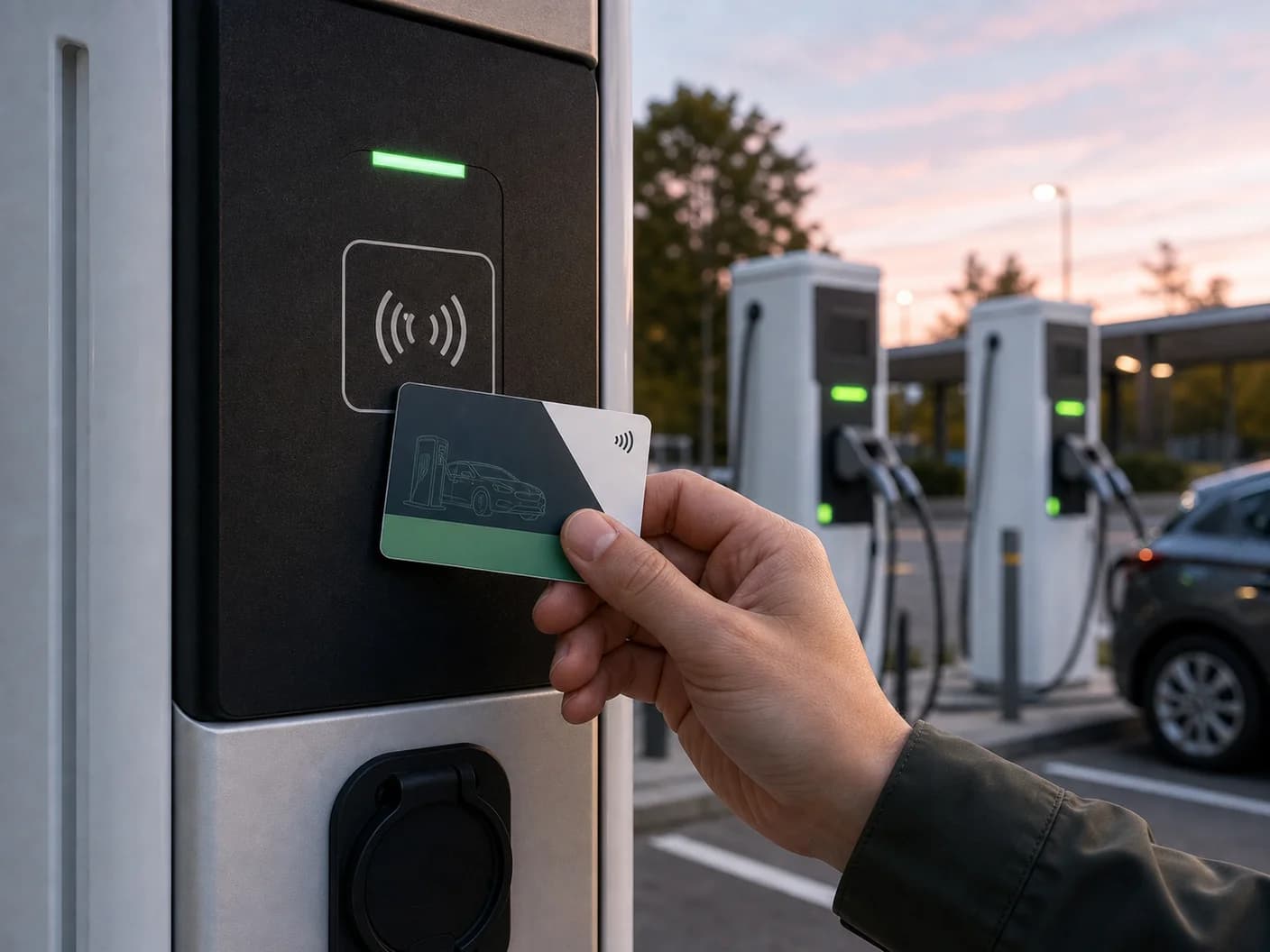
EV charging credential
Made to specificationRFID credentials prepared for the identifier and authorization workflow used between EV charger readers and OCPP charging-management systems.
Compatibility is confirmed against your reader and token workflow. MOQ and timing depend on the approved material, chip, personalization and finish.
Product overview / 01
An RFID card does not run OCPP. It presents an identifier to the charging station's contactless reader. The charging station software then uses OCPP to send that identifier to the charging station management system (CSMS), which accepts, blocks or otherwise evaluates the charging token.
In OCPP 1.6 this identifier is commonly handled as an idTag; OCPP 2.0.1 uses the broader idToken model. A successful card programme therefore has two compatibility layers: the physical reader must recognize the chip, and the identifier representation must match what the charger and CSMS expect.
Confirm the charging station and CSMS implementation separately; the physical card itself is not OCPP-certified.
Identify frequency, ISO protocol, supported chips and any limitations in the charger reader firmware.
Document UID length, byte order, hexadecimal or decimal format, casing, padding and any prefix rules.
Define how new, blocked and replacement tokens reach local authorization lists or cached station data.
Features and options / 02
We manufacture the physical RFID credential and prepare its identifier data for the operator's charging-platform workflow.
Chip and antenna combinations are selected against the target charger reader protocol and physical presentation.
Identifier length can be planned around the chosen chip family and the limits of the installed system.
Delivery data can use the exact representation agreed for CSMS import, including byte order and formatting rules.
A printed card number can be kept distinct from the electronic identifier while remaining linked in the mapping file.
Recycled PVC, wood-based and other card bodies can use the same approved electronic specification.
Controlled number ranges and batch files support new issues without duplicating active credentials.
Technical fit / 03
Most field failures come from an assumption at the boundary between the chip, reader, charger software and management system.
The reader must support the card frequency and protocol and provide adequate RF performance at the installed position.
The firmware decides which bytes are captured and how the credential is normalized before an authorization request.
The OCPP implementation carries the token within the supported authorization and transaction flow.
The imported token must map to the right contract, driver, vehicle or tariff and follow activation and blocking rules.
If authorization uses only a public UID, adding an AES-capable chip does not by itself create mutual authentication; the reader and backend design must use it.
Full specification / 04
Values below are the available product route, not a substitute for reader validation. The final quotation records the exact construction, electronic configuration and data deliverables.
Request SamplesProduction route / 05
The sample should prove construction, print, electronic behavior and data handling together. That approved reference then controls production and reorders.
Reader, current credential, platform, quantity and operating environment
Proposed material, inlay, artwork, encoding and variable data
Physical read, exact token capture, data import and live authorization
Approved masters, controlled data, batch checks and packing review
Final mapping file, shipment record and retained repeat-order reference
Frequently asked / 06
Answers are based on the physical credential and production scope. Your charging platform remains responsible for account, tariff and authorization rules.
No. OCPP applies to communication between charging stations and management systems. The RFID card presents a credential to the station reader; the station then carries the resulting token through its OCPP authorization flow.
idTag is the identifier term used in OCPP 1.6 authorization and transaction messages. OCPP 2.0.1 uses idToken as a broader token object that can represent RFID and other authorization methods.
The same physical UID can be represented in different byte orders and as hexadecimal or decimal text. If the charger exports one representation while the CSMS database stores another, a valid card will be rejected.
Not automatically. OCPP support does not guarantee that every charger has the same RFID reader, chip support or identifier handling. Define the target estate and validate samples on representative hardware.
AES-authenticated 13.56 MHz credential supports cryptographic applications, but the security benefit exists only if the charger reader and programme are configured to authenticate that application. Many charging systems read a public UID even from a secure-capable chip.
Test physical reading, exact token value at the charger, OCPP authorization through the CSMS, local or offline behavior where used, account mapping, blocking and replacement.
Further reading / 07
Use the technical guide, programme examples and glossary to align procurement, engineering and operations before requesting samples.
A practical comparison of UID-only and secure-application requirements.
Read more Technical guideUnderstand the end-to-end relationship between credential, charger and backend.
Read more Technical glossaryUse consistent terminology in your procurement and integration brief.
Read moreIncluded with every order
Before production starts, we fix the identifier format with your backend team: byte length, representation, byte order, leading-zero policy. The order then ships with a machine-readable data contract and acceptance vectors your engineers can test against before the first card arrives.
See how the acceptance pack worksRelated Products
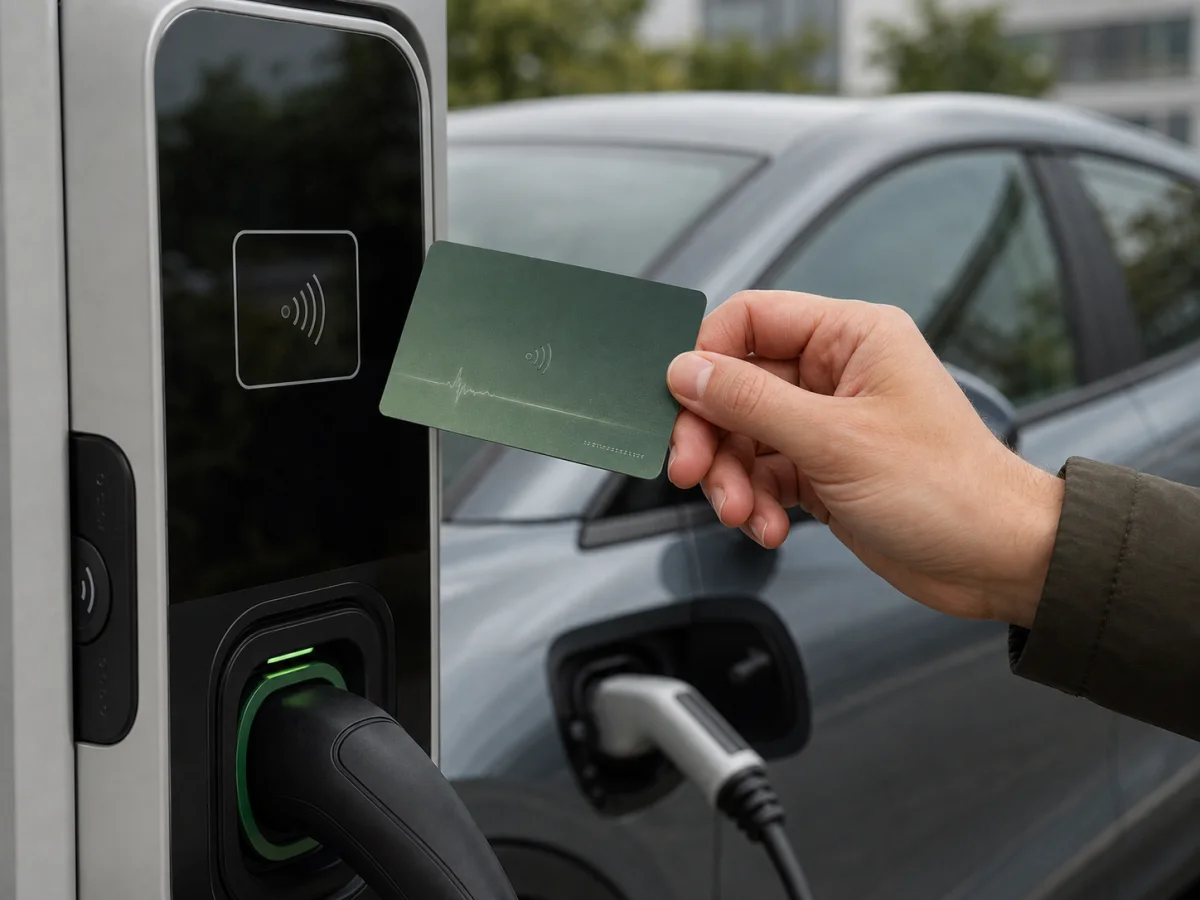
Custom RFID charging cards with a recycled-PVC card body, reader-matched chip options, programme artwork and UID-to-account data handoff.
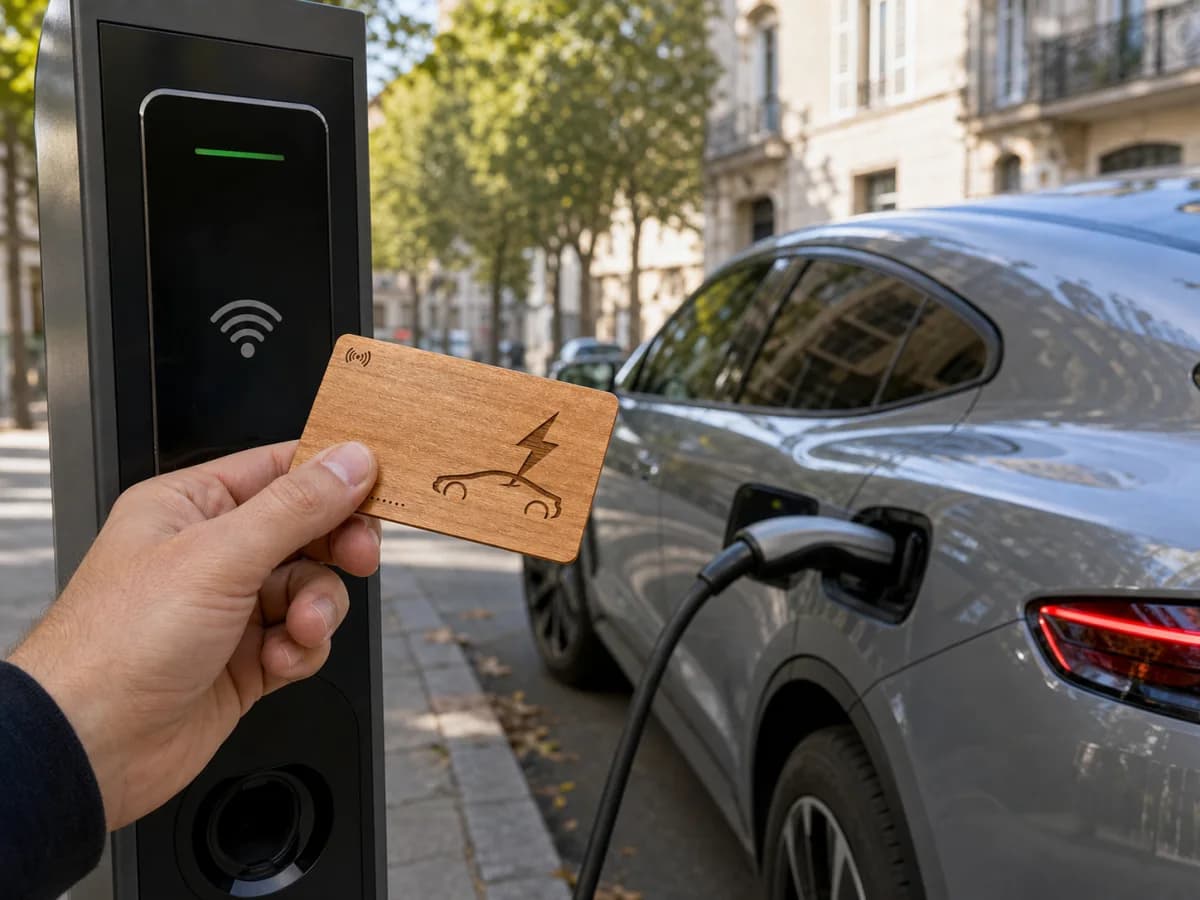
Wood-based RFID charging cards with laser engraving or print, reader-matched chip options and programme-specific variable data.
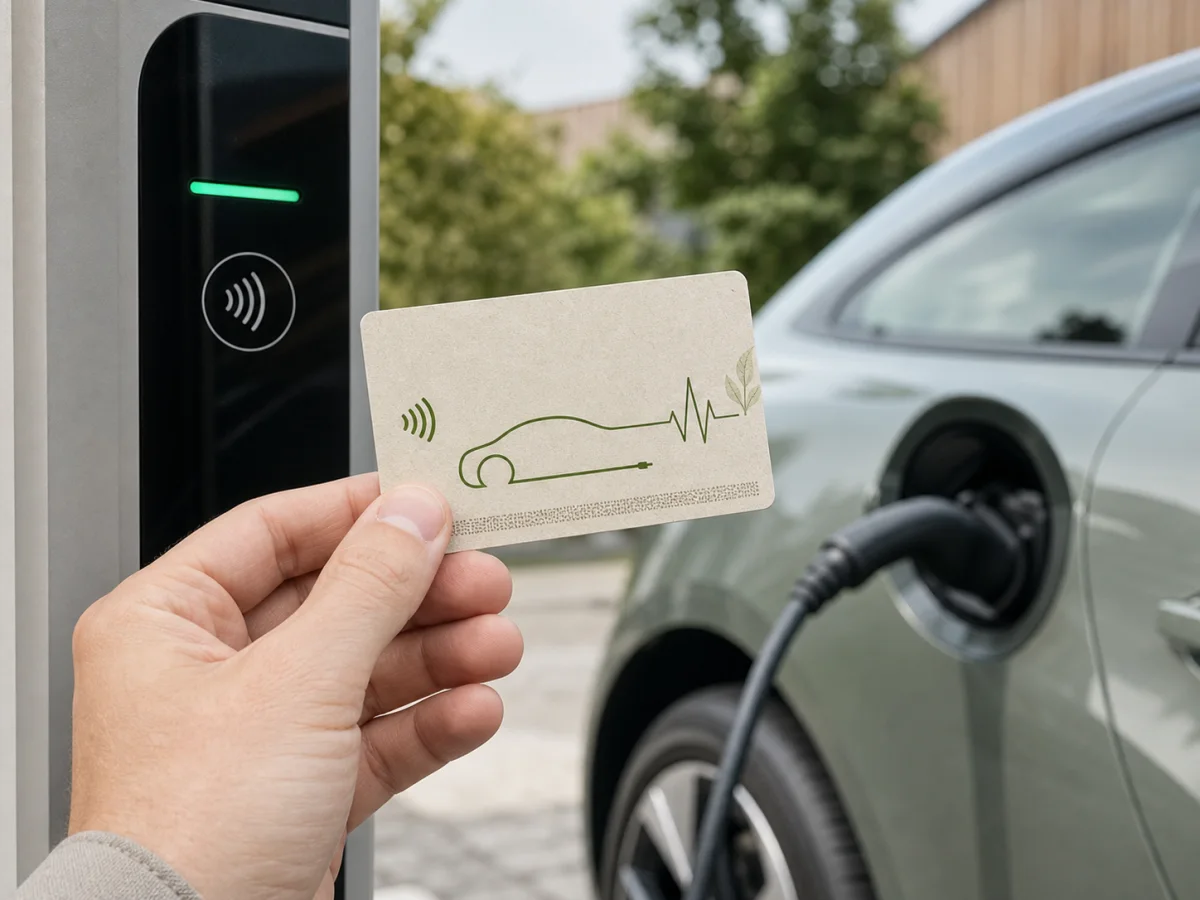
Bio-fibre and non-PVC RFID charging-card constructions with documented material claims, custom artwork and reader-matched electronics.
Send the current card, reader model or programme brief and required quantity.