Driver or vehicle numbering
Visible references can follow the operator's assignment model without exposing the electronic UID as the support identifier.
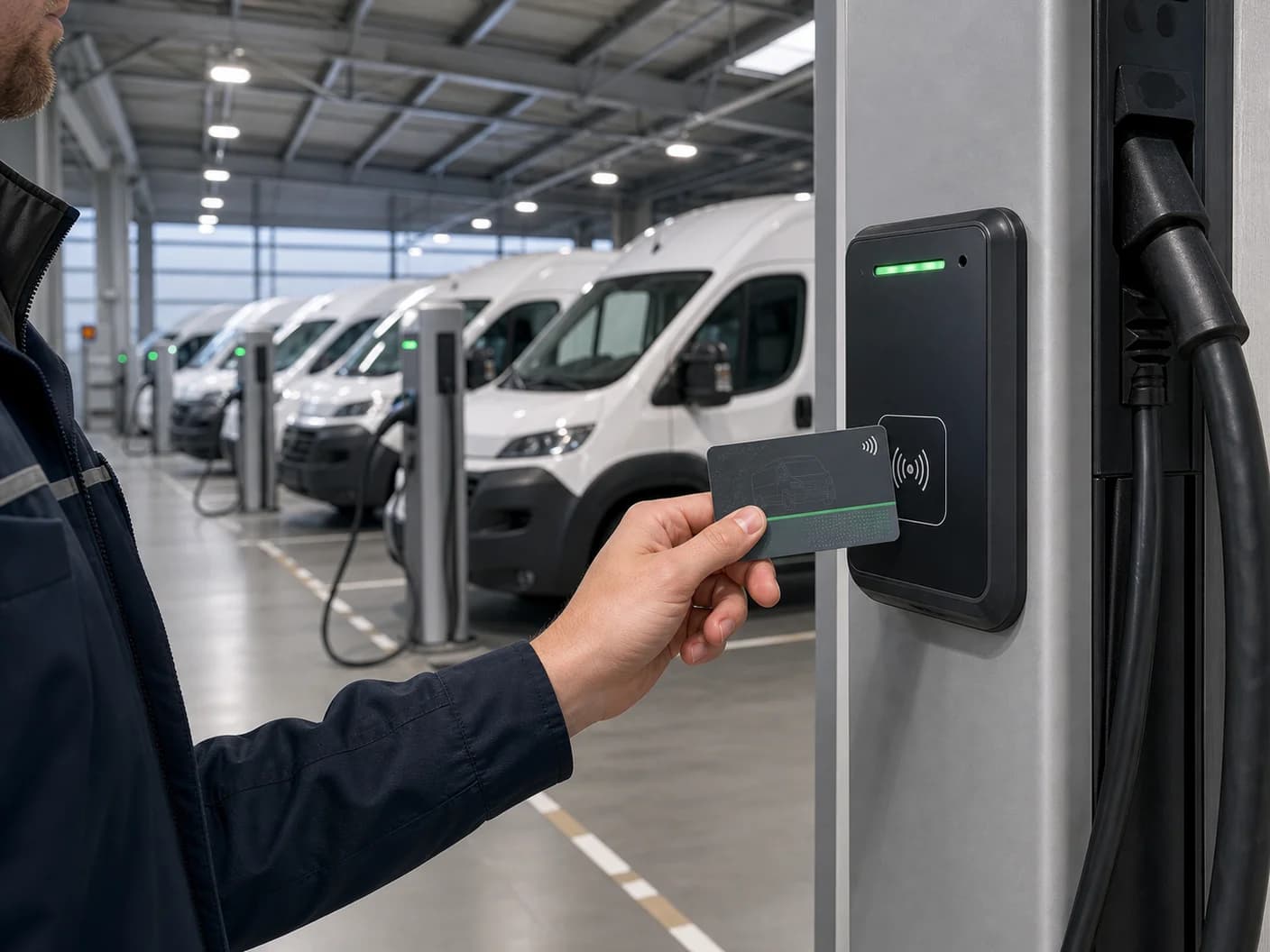
EV charging credential
Made to specificationBranded RFID fleet charging credentials with unique token data, driver or vehicle numbering, bulk platform import and controlled replenishment.
Compatibility is confirmed against your reader and token workflow. MOQ and timing depend on the approved material, chip, personalization and finish.
Product overview / 01
An EV fleet charging card is a physical token issued to a driver, vehicle, depot or cost centre so charging sessions can be assigned and controlled by a fleet or e-mobility platform. The card identifies the account; session records, prices, limits and reporting are normally handled in the backend rather than stored on the card.
A fleet card can be used on an operator's own estate or in a roaming programme. Roaming is created by commercial and technical relationships between eMSPs, CPOs and hubs—not by printing a logo or selecting a particular card body. The credential data must be registered and routed through the platform that manages those relationships.
Decide whether each token belongs to a driver, vehicle, pool, depot or cost centre and how transfers are recorded.
List depot, workplace, public and roaming environments and identify the platform responsible for authorization.
Define issue, activation, suspension, loss, replacement, expiry and return procedures before distributing cards.
Align visible card numbers, token records and fleet-system references so exceptions can be traced quickly.
Features and options / 02
The physical card can be structured to reduce support work and integrate cleanly with fleet onboarding and replenishment.
Visible references can follow the operator's assignment model without exposing the electronic UID as the support identifier.
Structured delivery files support import, assignment and activation in the fleet or e-mobility platform.
Brand, support instructions, emergency details and required legal text can be organized on the card.
Recycled PVC and alternative bodies can be selected around wallet, vehicle and depot handling patterns.
Mixed form factors can serve different driver groups while following one controlled token-data workflow.
Number ranges, artwork masters and packing rules can be retained for replacement and growth batches.
Technical fit / 03
Useful reporting and roaming depend on the systems around the credential. The card must give those systems a stable, traceable token.
Per-driver, per-vehicle and per-cost-centre reporting comes from mapping the card token to the right fleet record.
A manufactured card only works across networks after its token is registered and accepted through the relevant eMSP, CPO or roaming relationship.
Lost cards should be blocked and replaced with a new unique token; reprinting the same visible number does not require reusing the electronic UID.
Where chargers use local token lists, define synchronization timing and what should happen after a card is blocked.
Validate headers, delimiters, leading zeros and identifier representation before importing the production file.
Full specification / 04
Values below are the available product route, not a substitute for reader validation. The final quotation records the exact construction, electronic configuration and data deliverables.
Request SamplesProduction route / 05
The sample should prove construction, print, electronic behavior and data handling together. That approved reference then controls production and reorders.
Reader, current credential, platform, quantity and operating environment
Proposed material, inlay, artwork, encoding and variable data
Physical read, exact token capture, data import and live authorization
Approved masters, controlled data, batch checks and packing review
Final mapping file, shipment record and retained repeat-order reference
Frequently asked / 06
Answers are based on the physical credential and production scope. Your charging platform remains responsible for account, tariff and authorization rules.
Many programmes use only a chip identifier as the token. Driver details, vehicle data, tariffs and session history remain in the backend. Secure applications can store additional data when the reader and system are designed to use them.
Yes when the fleet's e-mobility provider or platform has the required roaming or bilateral network relationships and registers the token correctly. The physical card alone does not create network access.
Use the entity your fleet needs to control and reconcile. Driver assignment suits personal responsibility; vehicle assignment can simplify shared routes; pool cards need stronger checkout and exception controls.
Block the lost token in the authorization platform, issue a replacement with a new unique credential, update the driver or vehicle assignment and keep an audit trail linking the change.
Yes. Agree the required columns and token representation first. A delivery file can map UID, visible card number, batch and other approved fields for bulk platform import.
Usually no. The charging station and management platform create the session record and billing data. The card supplies the token used to associate that session with a fleet account.
Further reading / 07
Use the technical guide, programme examples and glossary to align procurement, engineering and operations before requesting samples.
Plan assignment, network scope, reporting and replacement before issuing cards.
Read more Programme exampleSee a physical card programme built for a fleet-focused charging platform.
Read more Roaming guideUnderstand the roles of token, eMSP, CPO, hub and charging backend.
Read moreIncluded with every order
Before production starts, we fix the identifier format with your backend team: byte length, representation, byte order, leading-zero policy. The order then ships with a machine-readable data contract and acceptance vectors your engineers can test against before the first card arrives.
See how the acceptance pack worksRelated Products
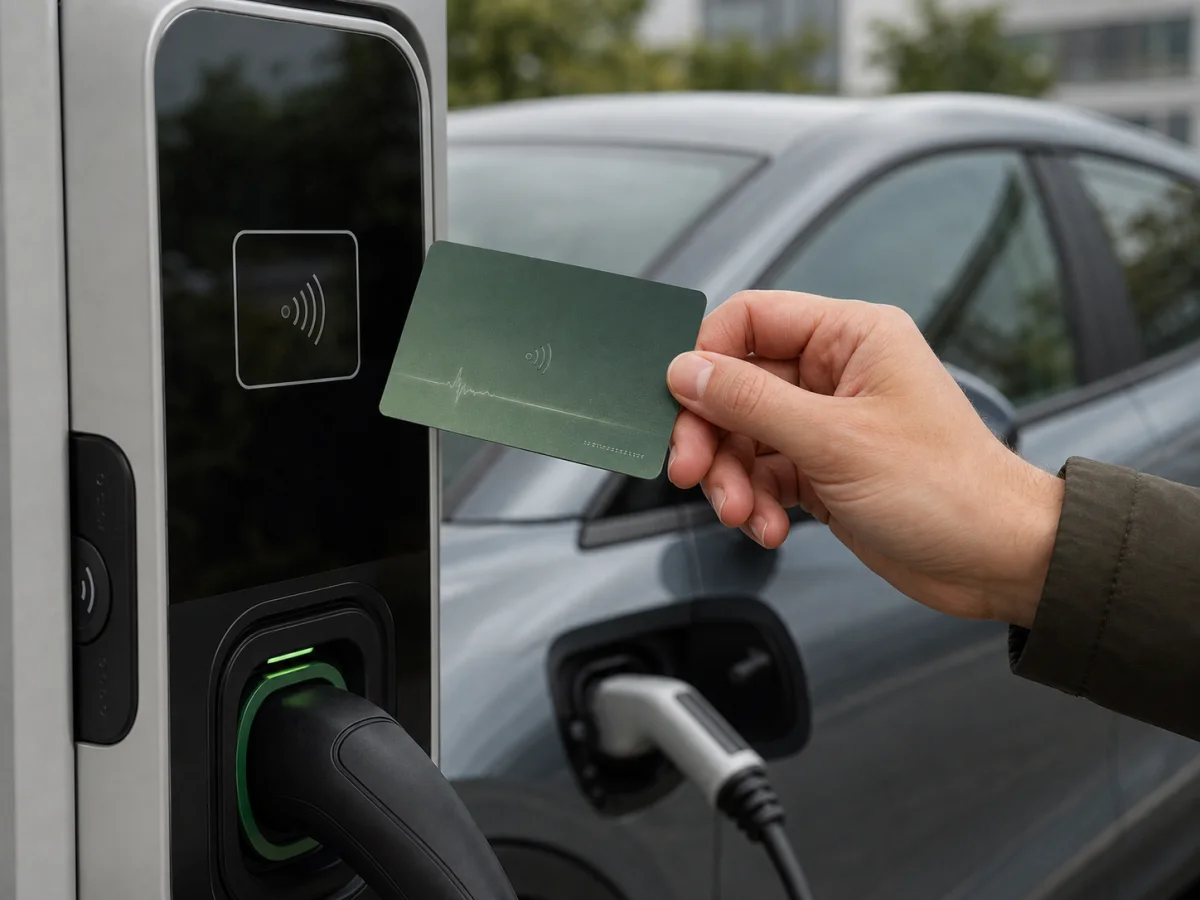
Custom RFID charging cards with a recycled-PVC card body, reader-matched chip options, programme artwork and UID-to-account data handoff.
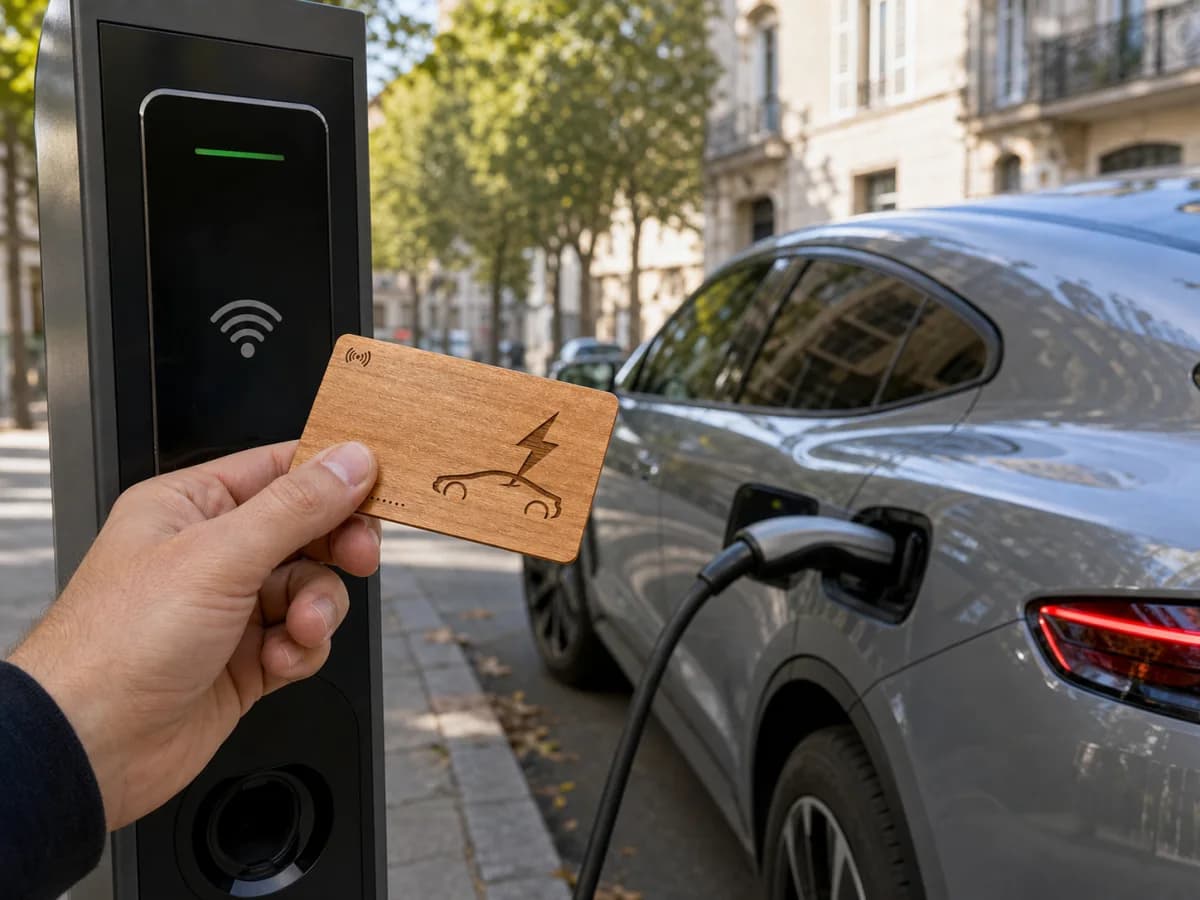
Wood-based RFID charging cards with laser engraving or print, reader-matched chip options and programme-specific variable data.
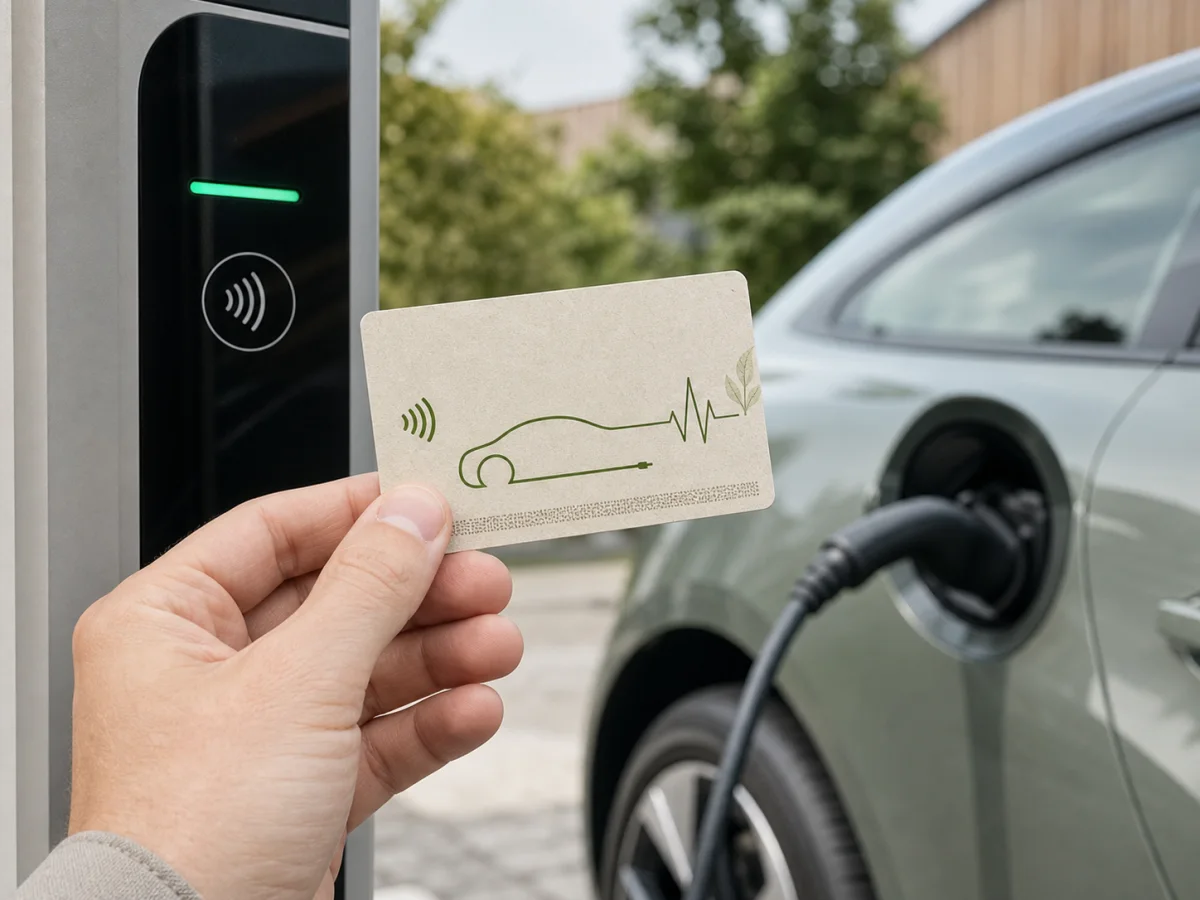
Bio-fibre and non-PVC RFID charging-card constructions with documented material claims, custom artwork and reader-matched electronics.
Send the current card, reader model or programme brief and required quantity.