Avoid shared identities
A shared card may be convenient, but it removes driver-level accountability. Use it only where the reporting model permits.
Fleet credential programme
Programme outcome
A credential record that can be assigned, traced, replaced and reconciled across depot and public charging.
Review recommended productDesigned for
Fleet operators, leasing teams, depot managers and mobility providers
Assignment model
Driver, vehicle, pool or cost centre
Station handoff
RFID reader → OCPP → CSMS
Operating estate
Depot, workplace and public charging
Lifecycle
Issue, activate, block, replace, replenish
Operating model / 01
The physical card is one controlled input. Reader behaviour, platform records and operating rules determine whether the correct account is authorized and traced.
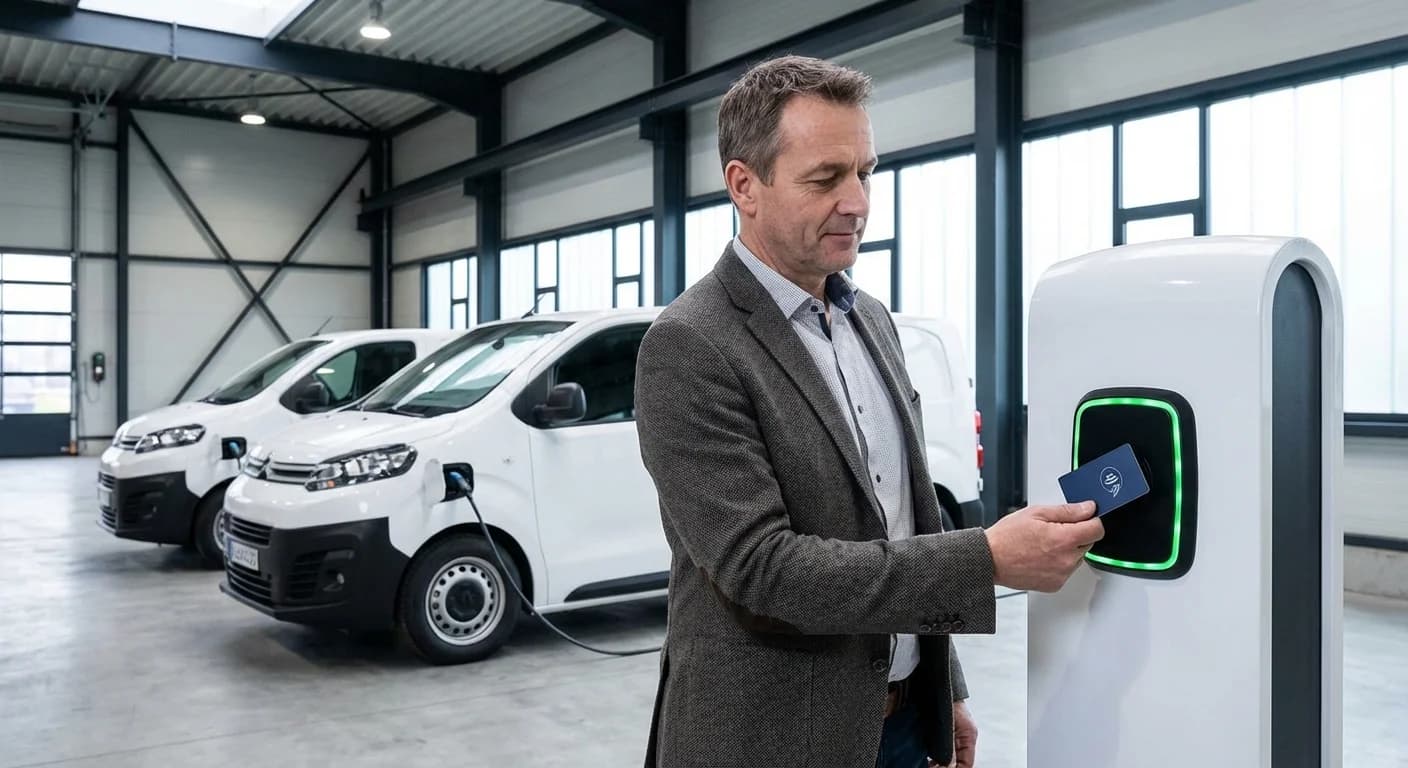
The programme owner decides whether the credential follows a person, a vehicle, a shared pool or an operating account.
The card or keyfob presents the identifier and, where supported, secure application data to the station reader.
The reader captures the supported credential data and the station passes an authorization request to its management system.
The identifier is mapped to the correct fleet record, entitlement, tariff or cost centre before the session is accepted.
Energy and session data return through the operating platform; reporting quality depends on the assignment and data model, not the card alone.
Specification matrix / 02
A production-ready brief states what must be decided, how it will be implemented and what evidence will count as acceptance.
Choose driver, vehicle, pool-card or account assignment and document the handover rules.
A sample identifier resolves to the intended record without duplicate ownership.
List representative depot AC/DC readers and any public networks where the credential will be used.
Samples are read consistently across the agreed test set.
Confirm UID or application identifier, length, byte order, character format and leading-zero treatment.
The manufactured value and platform import remain identical end to end.
Decide whether UID-only identification is sufficient or a reader-supported secure application is required.
The target readers complete the agreed authentication path; key ownership is documented.
Define the driver, vehicle, department and cost fields expected in session exports.
Pilot sessions appear against the correct operational and finance records.
Add a human-readable serial, vehicle reference, QR code or support number only where operationally useful.
Printed and encoded records match the approved variable-data file.
Define activation, blocking, return, replacement and reorder procedures before launch.
A lost-card scenario can be resolved without creating an ambiguous replacement record.
Failure controls / 03
Most failed launches are not caused by print quality. They come from unclear identifiers, untested readers, incomplete data ownership or weak lifecycle control.
A shared card may be convenient, but it removes driver-level accountability. Use it only where the reporting model permits.
Authorization cache and local-list behaviour are station and CSMS decisions. Include a disconnected-station test when depot continuity matters.
The card identifies an account. Tariffs, reimbursement, tax treatment and consolidated invoicing are controlled elsewhere.
Link old and new serials, block status and issue dates so the physical inventory agrees with the platform record.
Delivery path / 04
Each phase should close with evidence that can be reviewed by operations, platform and procurement teams.
Map users, vehicles, sites, readers, platforms and public-network requirements.
Approved fleet credential brief
Build representative cards or keyfobs using the proposed chip and identifier rules.
Physical test set and UID file
Import sample records, run depot and public-network sessions, and inspect the returned attribution.
Pilot authorization and session log
Produce the launch batch, assign credentials and retain an issuance register.
Production QC and assignment file
Manage blocks, replacements, returned cards, new drivers and repeat batches against the retained specification.
Versioned reorder record
Responsibility boundary / 05
A precise boundary prevents the card from being blamed for configuration, entitlement or settlement decisions that live elsewhere.
Controls the approved material, chip, antenna, artwork, encoding, variable data, batch QC and production record.
Defines accepted identifier format, reader behaviour, token import, authorization states, security application and technical acceptance.
Owns assignment, activation, contracts, access policy, tariffs, customer support, replacement approval and end-of-life decisions.
Credential options / 06
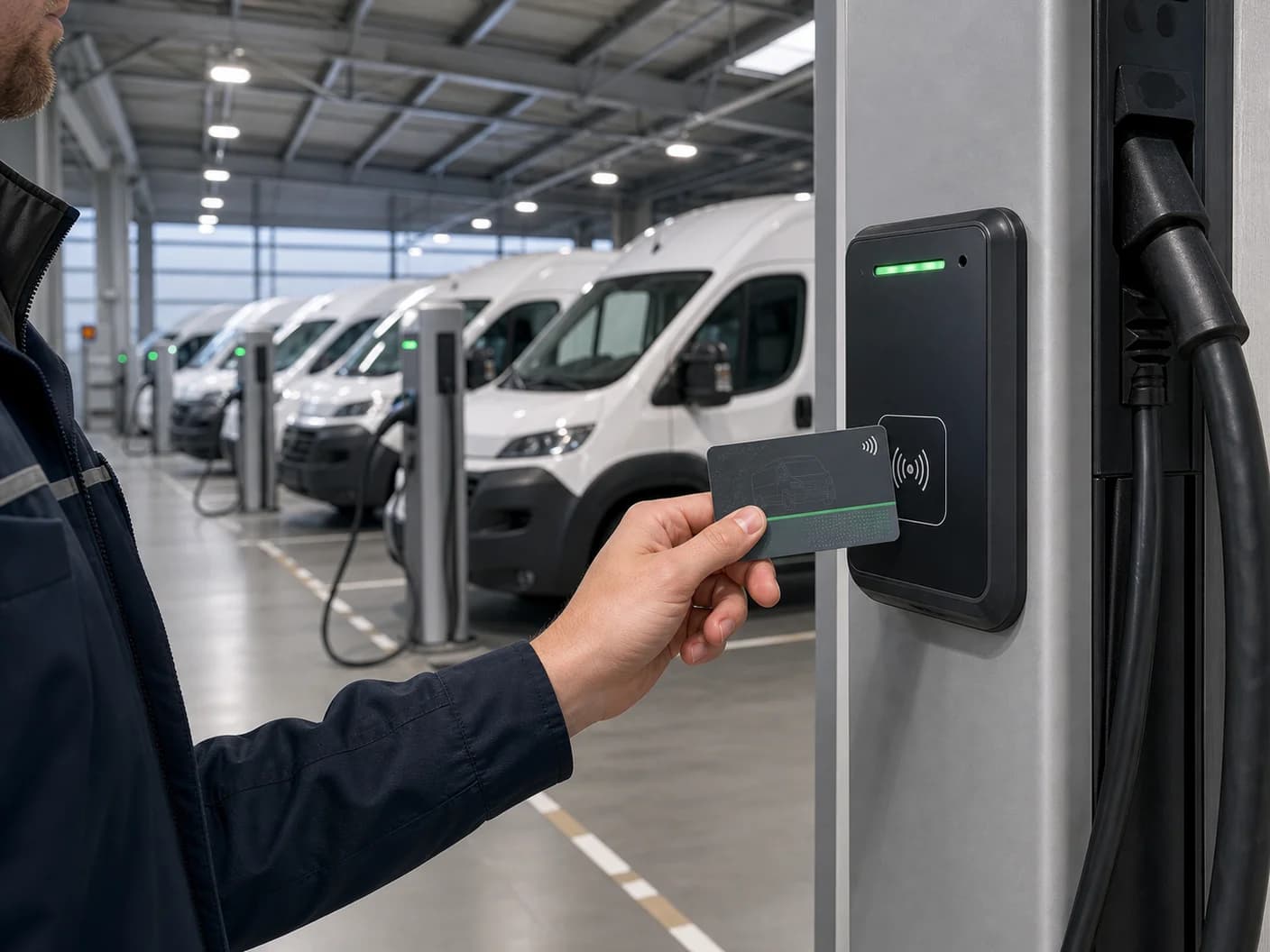
Fleet Operations / Bulk Token Data / Replenishment
Branded RFID fleet charging credentials with unique token data, driver or vehicle numbering, bulk platform import and controlled replenishment.
Review recommended product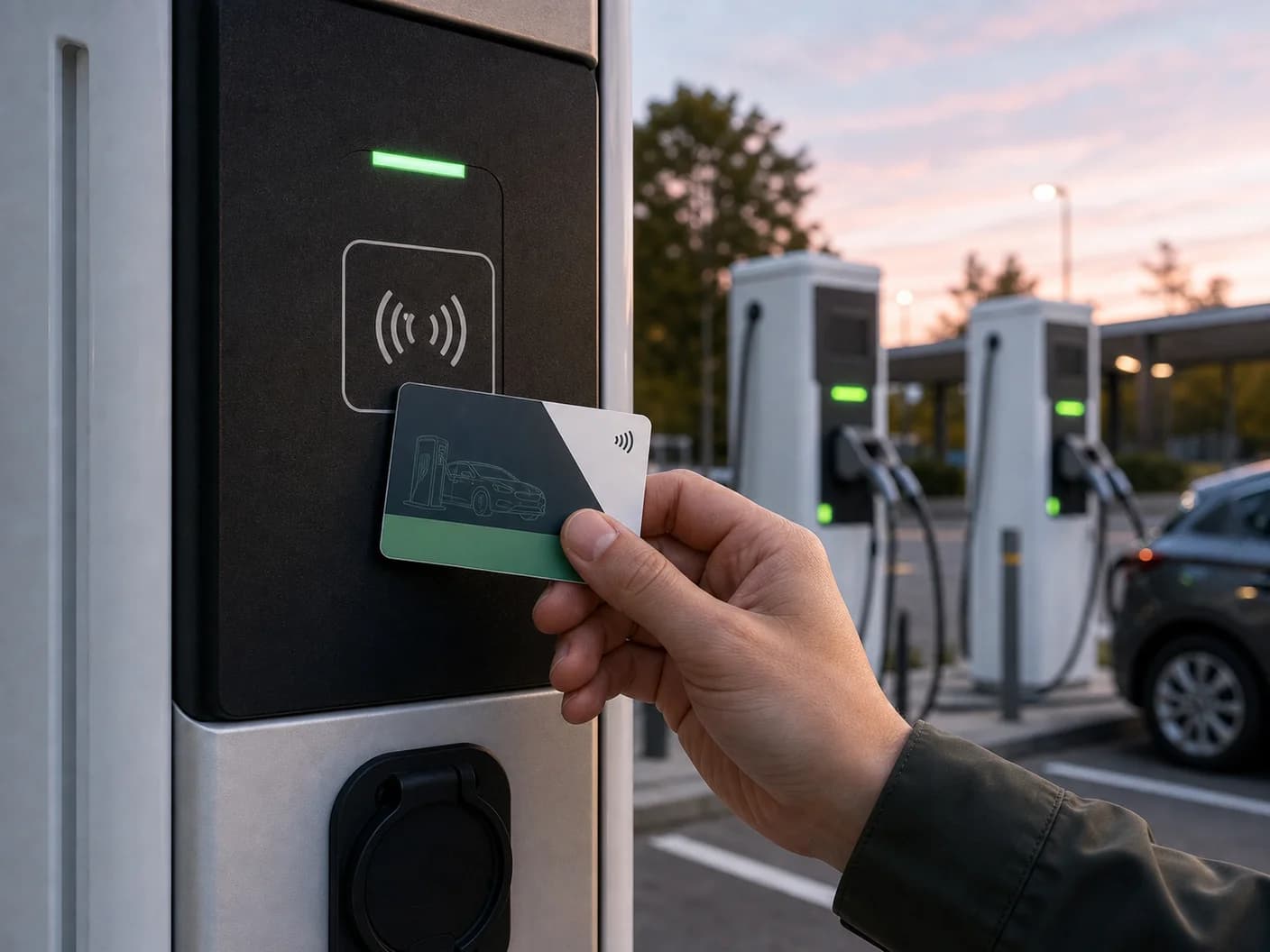
OCPP Workflows / idTag / idToken / UID Formatting
RFID credentials prepared for the identifier and authorization workflow used between EV charger readers and OCPP charging-management systems.
Review recommended product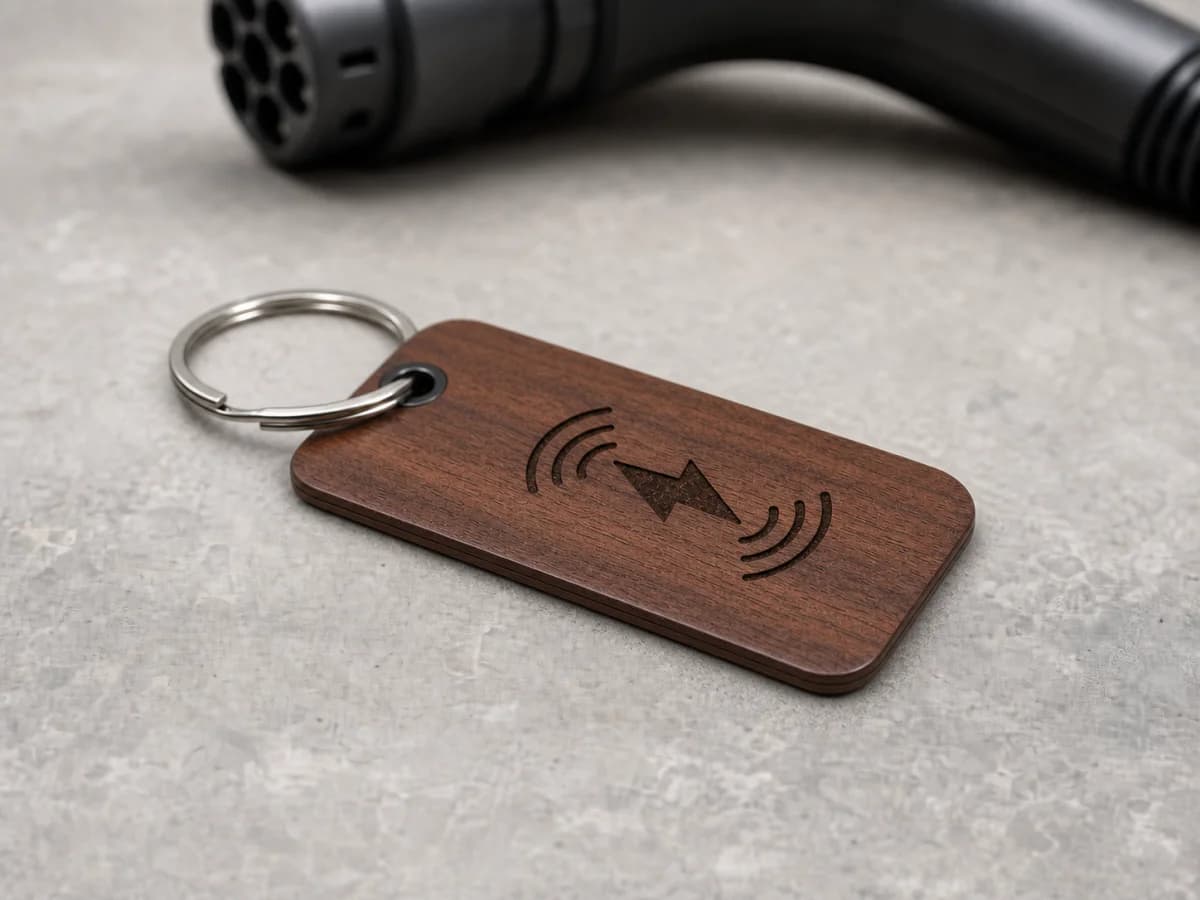
Wood · ABS · Epoxy · Crystal / Compact Credential / UID Mapping
Compact RFID charging credentials in FSC wood, moulded ABS, domed epoxy and transparent crystal-acrylic constructions.
Review recommended productTechnical library / 07
These sources define the surrounding technology and operating interfaces. ChargeRFID manufactures physical credentials; platform configuration, roaming contracts and charging-station certification remain with the relevant operators and vendors.

Fleet Operations / 8 min read
How fleet RFID charging cards work for commercial EV operations: per-vehicle kWh tracking, OCPP integration, programme-specific reporting, multi-depot key management, and what to spec when issuing cards to drivers.
Read More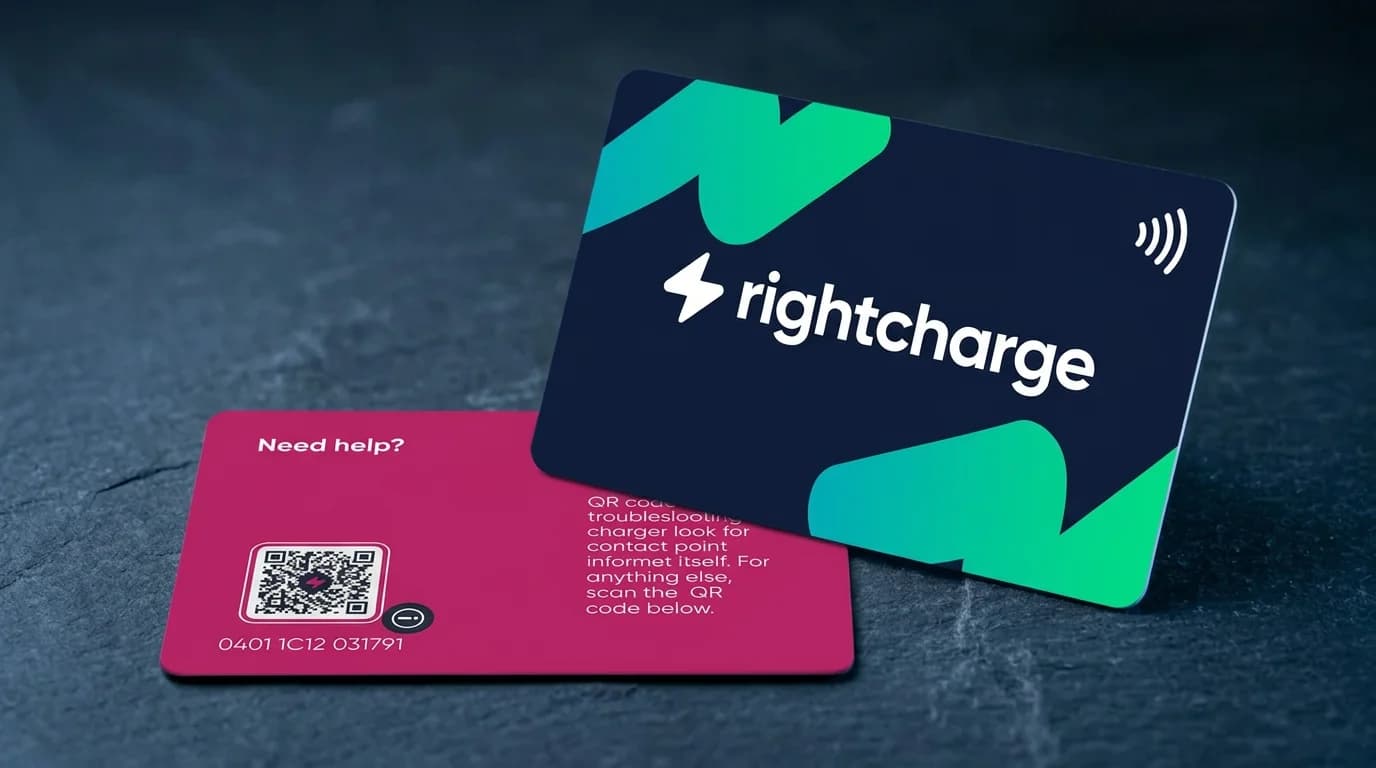
Selected work / 2 min read
RightCharge: a quiet production record of a branded PVC fleet charging card.
Read More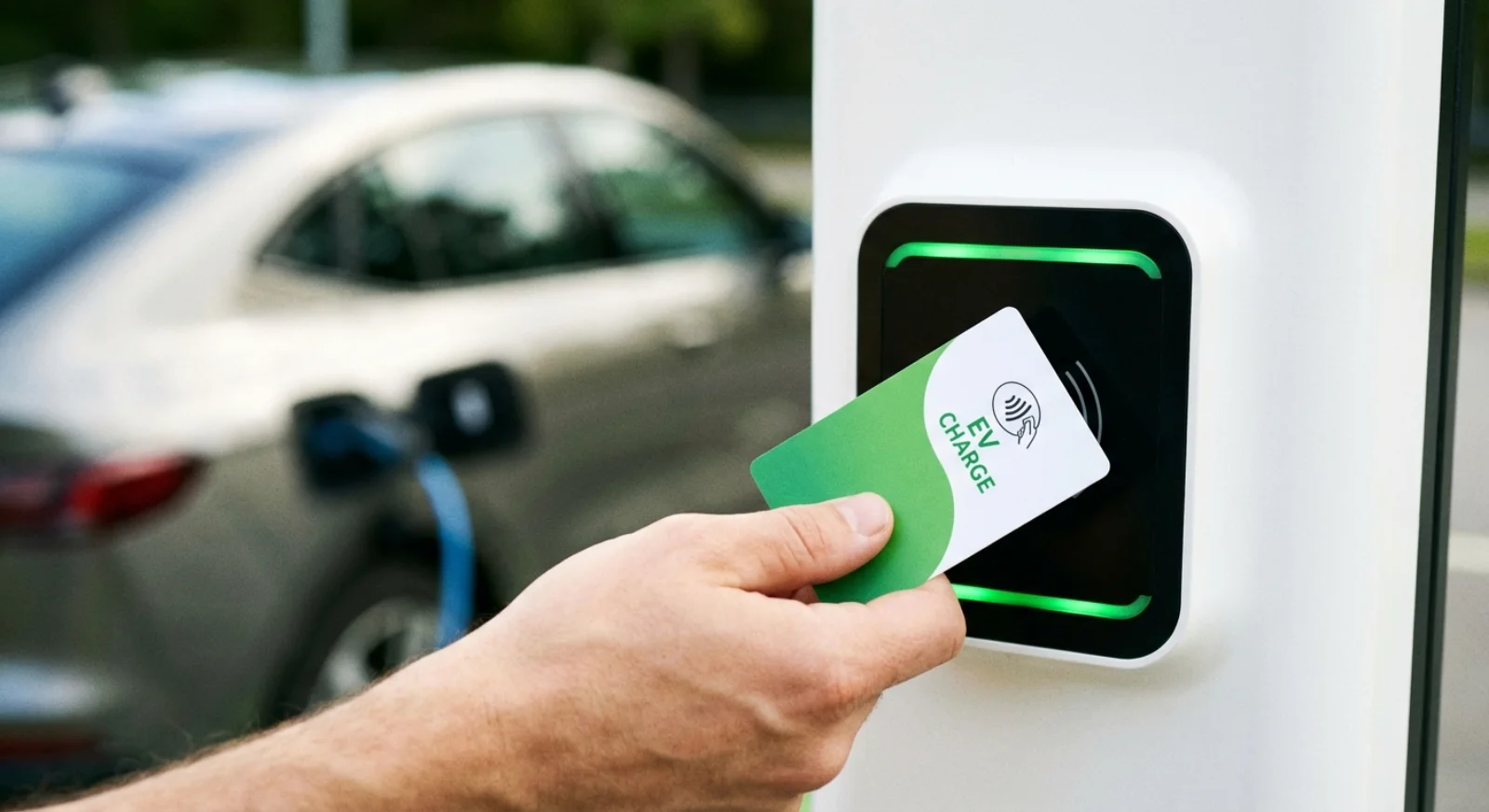
Technology / 7 min read
A vendor-neutral method for choosing a 13.56 MHz EV charging credential by reader behavior, identifier format, authentication, backend controls and roaming requirements
Read MorePrimary implementation references
Programme questions / 08
Use driver assignment when accountability and expense reporting follow the person; use vehicle assignment when the asset is the stable reporting unit. Pool cards need an additional booking or handover record if individual accountability is required.
It can, provided the identifier is accepted and registered in every relevant authorization system. Reader compatibility and public-network entitlement must both be tested; manufacturing the card alone does not create roaming access.
No. AES-authenticated 13.56 MHz credential supports AES-based applications, but that security is useful only when the target readers and backend implement the same application and key scheme. A UID-only estate should be specified honestly and assessed for its risk.
No. The credential identifies the assigned record. The CSMS, mobility platform or fleet system applies tariffs, cost centres, reimbursement and reporting rules to the resulting sessions.
Other operating programmes
White-label cards and keyfobs prepared around your brand, identifier format, platform import, launch volume and repeat-order workflow.
Physical RFID credentials for roaming programmes where token records, identifier formats and lifecycle status stay consistent across eMSP, CPO and hub systems.
Credential programmes for workplaces, depots, residential sites and destinations that need controlled access by employee, resident, visitor or account.
A controlled route from legacy or UID-only credentials to reader-matched card technology with a practical pilot, data plan and phased reissue.
Branded credentials for vehicle delivery, dealership charging, loyalty and premium member programmes—with controlled serialization and presentation.
Share the reader estate, identifier rules, security requirement, platform handoff, volume and rollout markets. We will return the questions needed for samples and production approval.