FSC wood
A slim laminated wooden body supports laser engraving and visible natural grain. Specify species, finish, edge sealing and expected moisture exposure.
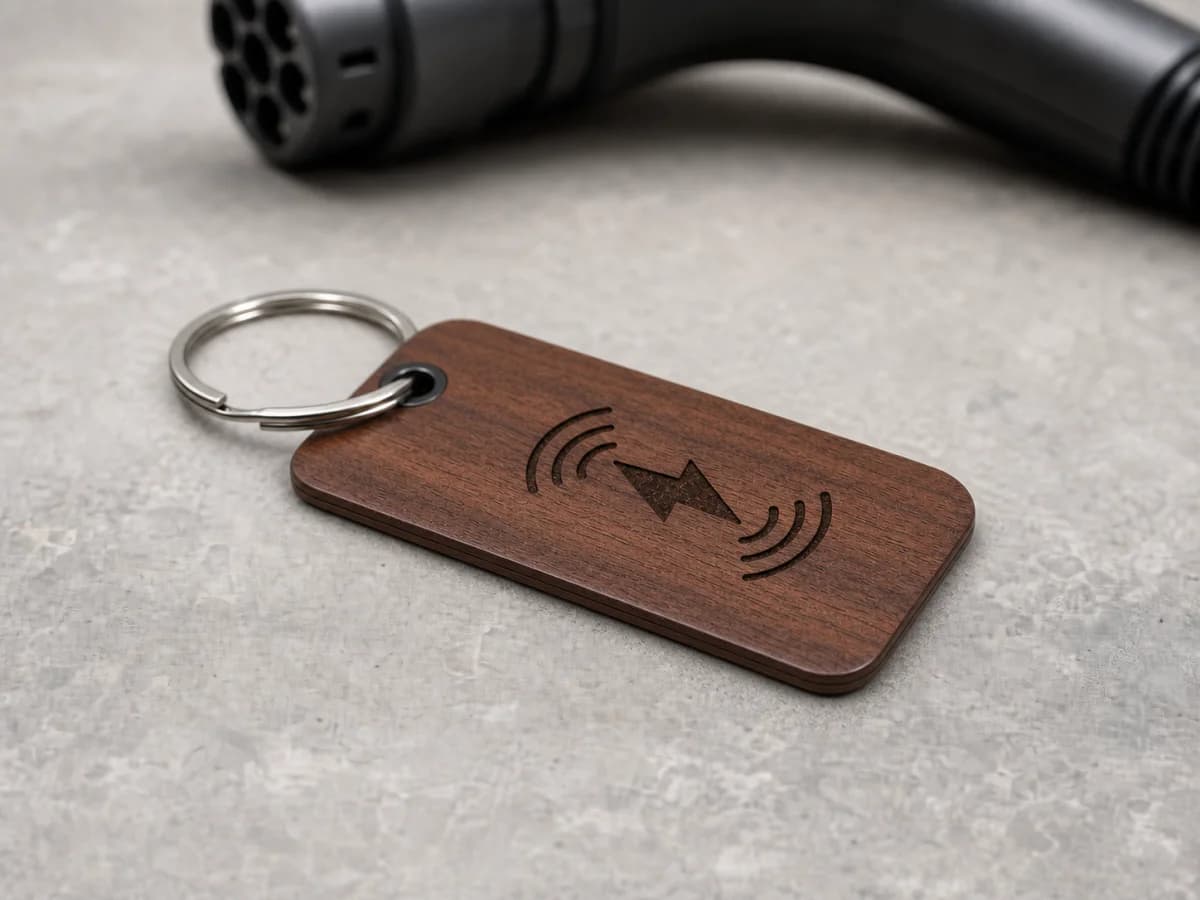 FSC walnut wood
EV charging credential
Made to specificationCompact RFID charging credentials in FSC wood, moulded ABS, domed epoxy and transparent crystal-acrylic constructions.
Compatibility is confirmed against your reader and token workflow. MOQ and timing depend on the approved material, chip, personalization and finish.
Product overview / 01
An EV charging RFID keyfob carries the same kind of contactless credential as a card in a smaller form designed for a keyring. It is useful when drivers want the charging token attached to the vehicle key, when a fleet issues compact credentials, or when a programme offers card and fob choices under the same account model.
FSC wood gives a natural engraved finish, moulded ABS prioritises impact resistance, domed epoxy protects full-colour artwork, and transparent crystal acrylic makes the embedded antenna part of the visual design. Each construction changes thickness, edge behaviour and antenna geometry, so finished samples must be tested at the actual reader positions used across the charging estate.
Check that the keyfob can be placed flat and close enough to readers recessed behind charger housings.
Select wood, ABS, domed epoxy or crystal acrylic according to branding, impact, scratch and presentation requirements.
Confirm the same UID or token format used for cards can be imported and managed for fobs.
Decide how support teams and drivers will distinguish, assign and replace small credentials.
Features and options / 02
The body construction should be selected deliberately: each option creates a different balance of appearance, branding method, wear profile and reader geometry.
A slim laminated wooden body supports laser engraving and visible natural grain. Specify species, finish, edge sealing and expected moisture exposure.
An injection-moulded shell is the practical choice for high-volume daily handling, with pad print, laser marking and multiple mould colours available.
A clear resin dome protects a full-colour printed insert and creates a glossy, tactile branded surface. Check yellowing, scratching and edge adhesion in the approved sample.
Transparent acrylic can reveal a fine embedded antenna and internal artwork for a premium technical look. The antenna remains functional, not merely decorative.
Each construction can use a compatible 13.56 MHz chip and antenna geometry, subject to available body space and finished-sample validation.
Electronic identifiers, serials or QR references can be paired in a delivery file for activation, support and controlled replacement.
Technical fit / 03
The keyfob is convenient for the driver, but its inlay, identifier and replacement controls need the same care as a card.
A smaller antenna may behave differently on metal-fronted or deeply recessed readers. Do not approve from a desktop reader test alone.
Session and billing records normally live in the charging platform; the keyfob presents the credential used to find that account.
AES-authenticated 13.56 MHz credential features help only when the charging reader and authorization design actually use secure application authentication.
A human-readable reference allows helpdesk teams to suspend or replace a credential without asking a driver to read its electronic UID.
Keyring holes, inserts and body thickness should be evaluated for daily mechanical wear as part of sample approval.
In a crystal-acrylic design, the visible antenna and chip should be fully encapsulated inside the body rather than exposed on the surface.
Full specification / 04
Values below are the available product route, not a substitute for reader validation. The final quotation records the exact construction, electronic configuration and data deliverables.
Request SamplesProduction route / 05
The sample should prove construction, print, electronic behavior and data handling together. That approved reference then controls production and reorders.
Reader, current credential, platform, quantity and operating environment
Proposed material, inlay, artwork, encoding and variable data
Physical read, exact token capture, data import and live authorization
Approved masters, controlled data, batch checks and packing review
Final mapping file, shipment record and retained repeat-order reference
Frequently asked / 06
Answers are based on the physical credential and production scope. Your charging platform remains responsible for account, tariff and authorization rules.
Usually yes at the account level: the reader captures the credential identifier and the charging platform decides whether to authorize. The smaller antenna means the physical tap position should be tested separately.
That is normally possible when the charging platform allows multiple tokens to be assigned to one customer or vehicle. The platform owner defines the account relationship; we supply the unique credential data needed for import.
Use the chip already supported by the target reader and backend. Confirm frequency, protocol, UID length and whether the system uses a simple identifier or secure application data.
Choose FSC wood for natural engraved presentation, moulded ABS for robust everyday use, domed epoxy for protected full-colour branding, or crystal acrylic when a transparent premium design and visible embedded antenna support the programme identity. Validate the selected construction on the real charger reader.
The selected body and finish can be designed for normal keyring and outdoor use, but no construction is immune to every combination of water, heat, chemicals and impact. State the service environment and test finished samples.
Yes. A visible serial, QR code or account reference can be printed or engraved and paired with the electronic identifier in a delivery file.
Provide representative charger readers or models and the backend identifier rules. Test the finished fob at real reader positions and complete a live authorization before volume production.
Further reading / 07
Use the technical guide, programme examples and glossary to align procurement, engineering and operations before requesting samples.
Compare UID, memory and security decisions before choosing the fob inlay.
Read more Buyer’s guideSee the full sequence from reader discovery to sample approval and production.
Read more Sample testingValidate handling and reader performance before choosing the programme form factor.
Read moreIncluded with every order
Before production starts, we fix the identifier format with your backend team: byte length, representation, byte order, leading-zero policy. The order then ships with a machine-readable data contract and acceptance vectors your engineers can test against before the first card arrives.
See how the acceptance pack worksRelated Products
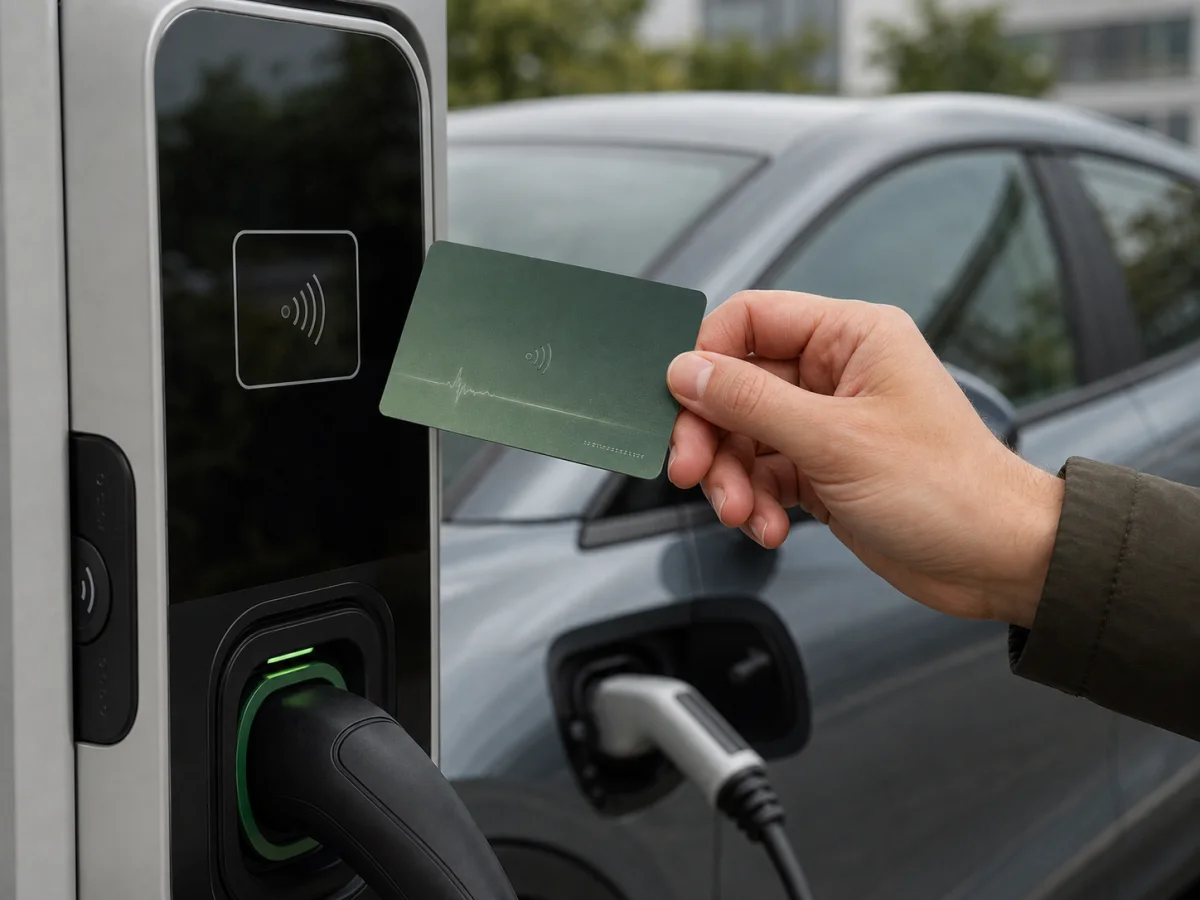
Custom RFID charging cards with a recycled-PVC card body, reader-matched chip options, programme artwork and UID-to-account data handoff.
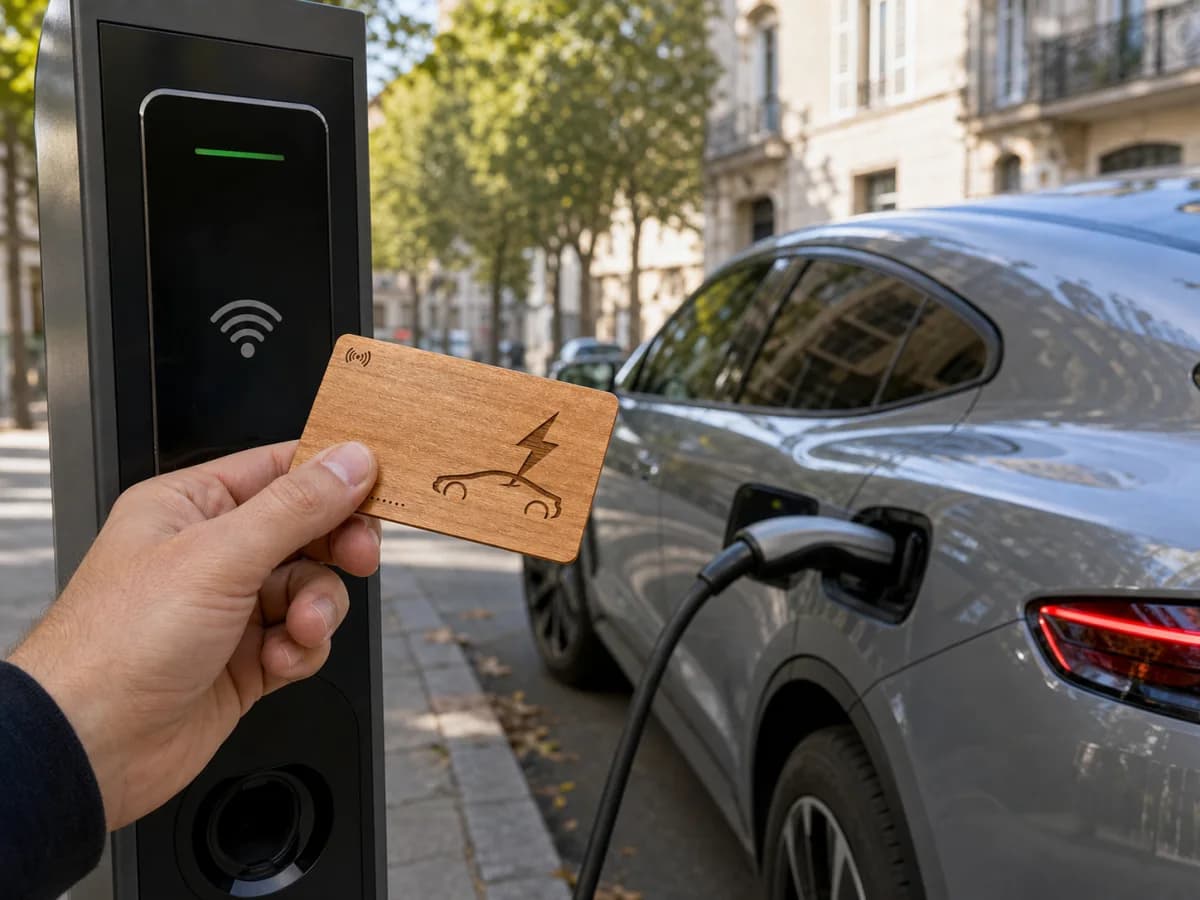
Wood-based RFID charging cards with laser engraving or print, reader-matched chip options and programme-specific variable data.
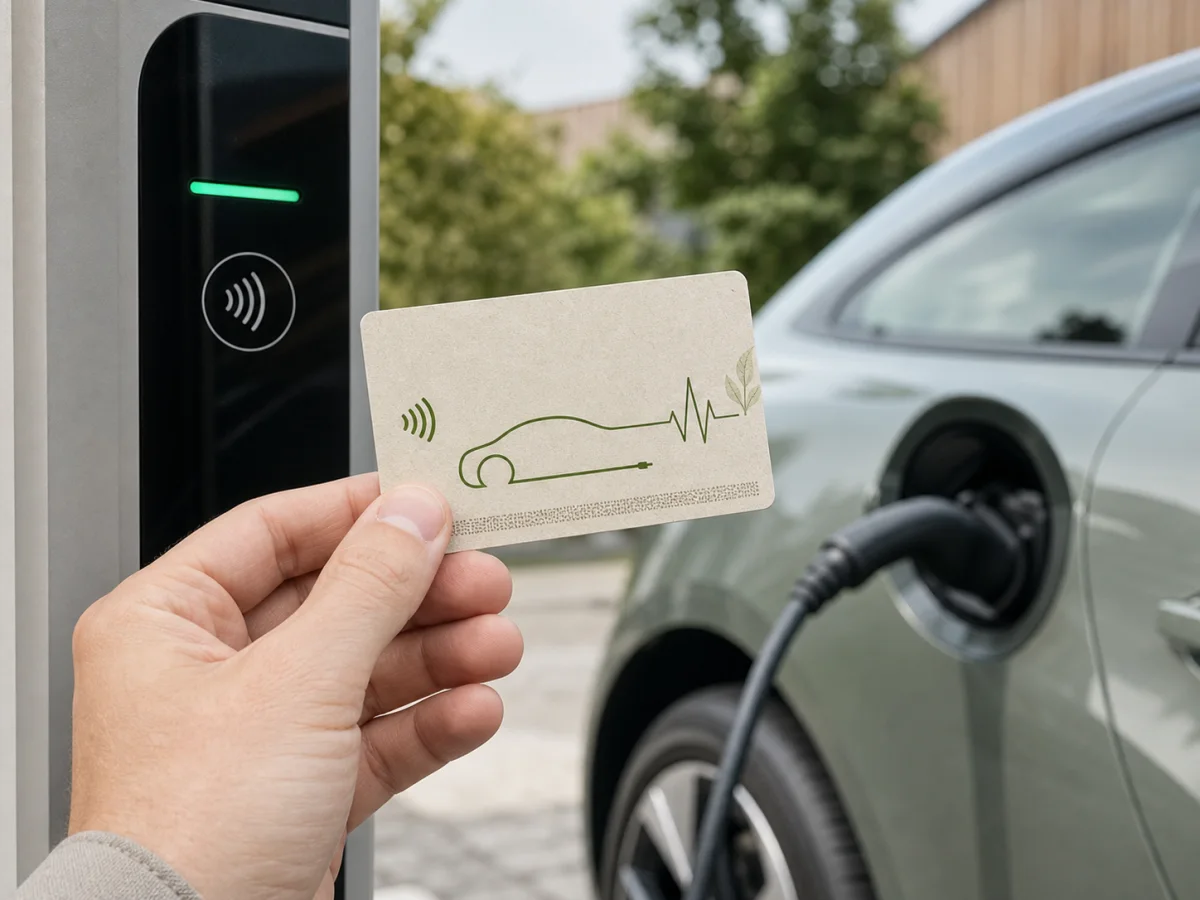
Bio-fibre and non-PVC RFID charging-card constructions with documented material claims, custom artwork and reader-matched electronics.
Send the current card, reader model or programme brief and required quantity.