Metal affects the antenna
A premium metal appearance requires RF engineering. Final reader validation is mandatory because metal can detune or shield HF RFID antennas.
Automotive credential programme
Programme outcome
A premium credential experience whose RF performance, assignment, presentation and repeat production remain controlled.
Review recommended productDesigned for
Vehicle manufacturers, dealer groups, premium charging services and membership brands
Experience
Vehicle delivery, dealer charging or membership
Formats
Metal-composite, FSC wood or premium printed card
Identity
Vehicle, owner, member or campaign record
Control
Reader test, serialization and presentation QC
Operating model / 01
The physical card is one controlled input. Reader behaviour, platform records and operating rules determine whether the correct account is authorized and traced.
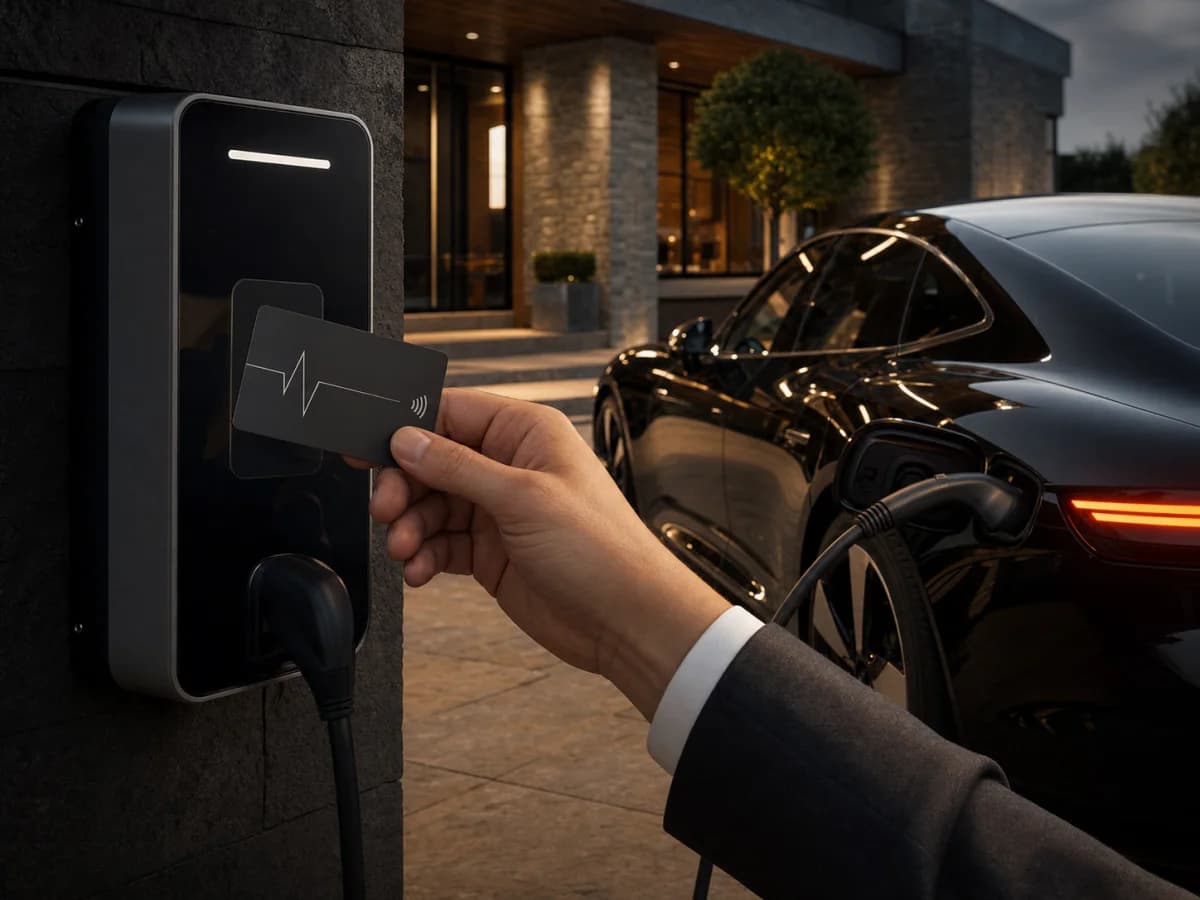
The programme defines who receives the credential, what it represents and when the entitlement begins.
Material, finish, thickness, antenna construction and artwork are engineered as one product rather than a decorative shell.
The credential must still couple reliably with the target reader; metal changes RF behaviour and requires representative testing.
The identifier and visible serial are assigned to the vehicle, owner, member tier, dealer or campaign record.
Packaging, custody, activation, replacement and repeat production are controlled as part of the customer experience.
Specification matrix / 02
A production-ready brief states what must be decided, how it will be implemented and what evidence will count as acceptance.
Define vehicle handover, dealer charging, loyalty, concierge or premium-member use.
The issue and activation moment fits the actual customer journey.
Select metal-composite, wood or printed card based on RF performance, finish and reader estate.
Representative finished samples read consistently at the intended stations.
Use a purpose-built composite construction, antenna zone and shielding strategy; do not assume a solid metal blank will read.
Read performance is approved in final material, thickness and finish.
Choose vehicle, owner, member, dealer or campaign mapping and define reassignment rules.
Every serial resolves to one current programme record.
Control engraving, print, signature finish, colour, numbering and co-brand variants.
Variable data and cosmetic criteria pass the approved master sample.
Specify carrier, sleeve, box, activation instructions and custody handoff.
Packaging protects the card and presents the correct assigned identity.
Define damaged-card replacement, lost-card block and small premium repeat batches.
A replacement preserves the customer relationship without duplicating entitlement.
Failure controls / 03
Most failed launches are not caused by print quality. They come from unclear identifiers, untested readers, incomplete data ownership or weak lifecycle control.
A premium metal appearance requires RF engineering. Final reader validation is mandatory because metal can detune or shield HF RFID antennas.
The physical gift can be ready before the entitlement. Define who activates it and at which customer handoff.
Visible serial, encoded identifier, vehicle/member record and package label should be checked as one set.
Gold, silver, graphite and engraved finishes need physical masters and tolerance criteria, not screen-only colour approval.
Delivery path / 04
Each phase should close with evidence that can be reviewed by operations, platform and procurement teams.
Define recipient, entitlement, delivery moment, markets, dealer roles and brand hierarchy.
Approved customer-journey brief
Prototype final construction, antenna zone, finish and reader-compatible identifier.
Finished reader-test samples
Link sample serials to vehicle/member records and test activation, use, loss and replacement.
Identity and lifecycle test log
Produce, reconcile, package and deliver the first controlled premium batch.
Cosmetic QC and serialized manifest
Manage regional variants, replacements and repeat batches against retained masters.
Versioned finish and reorder record
Responsibility boundary / 05
A precise boundary prevents the card from being blamed for configuration, entitlement or settlement decisions that live elsewhere.
Controls the approved material, chip, antenna, artwork, encoding, variable data, batch QC and production record.
Defines accepted identifier format, reader behaviour, token import, authorization states, security application and technical acceptance.
Owns assignment, activation, contracts, access policy, tariffs, customer support, replacement approval and end-of-life decisions.
Credential options / 06
Luxury Metal / Gold & Silver / Laser Engraving
Premium metal-composite RFID charging cards in matte graphite, brushed silver and champagne gold for luxury automotive, hospitality and private charging programmes.
Review recommended product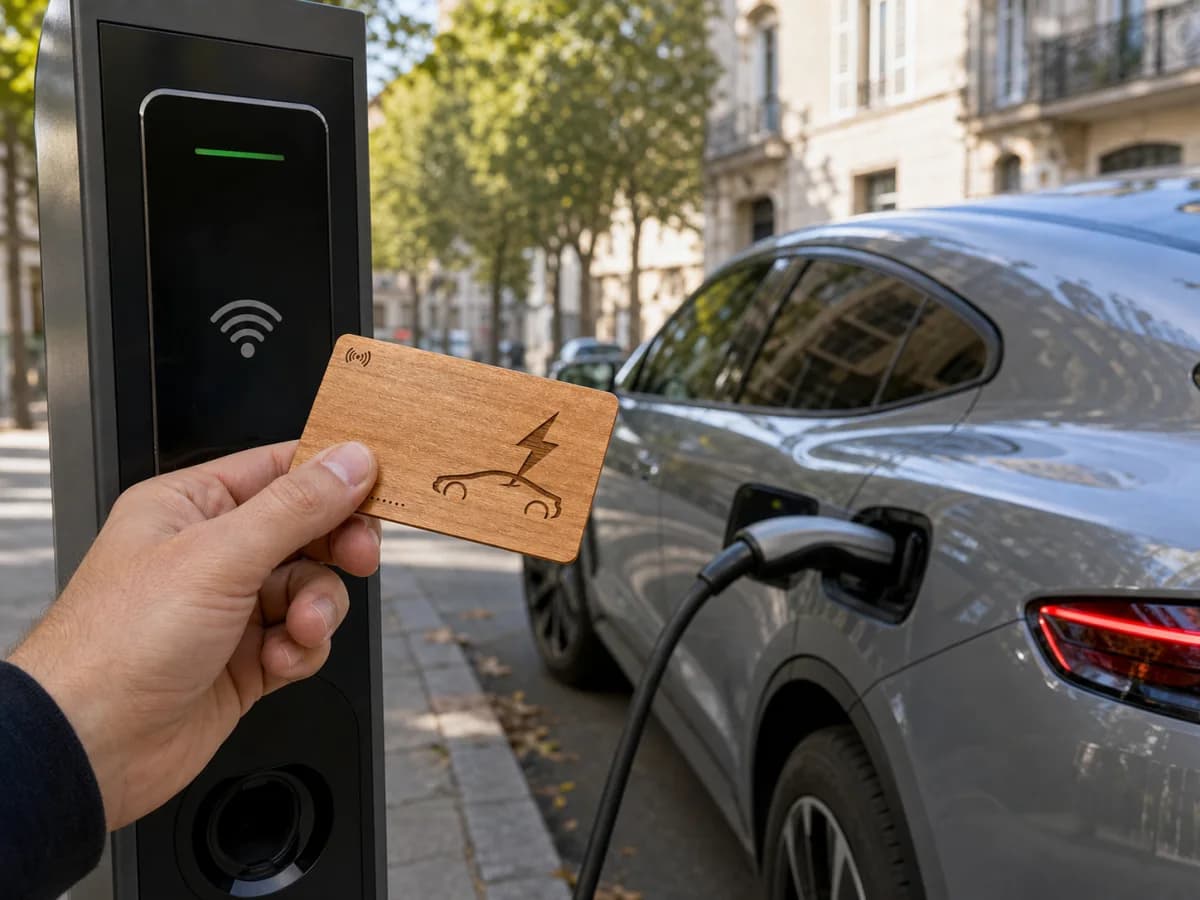
Wood-Based / Laser Engraving / Custom RFID
Wood-based RFID charging cards with laser engraving or print, reader-matched chip options and programme-specific variable data.
Review recommended product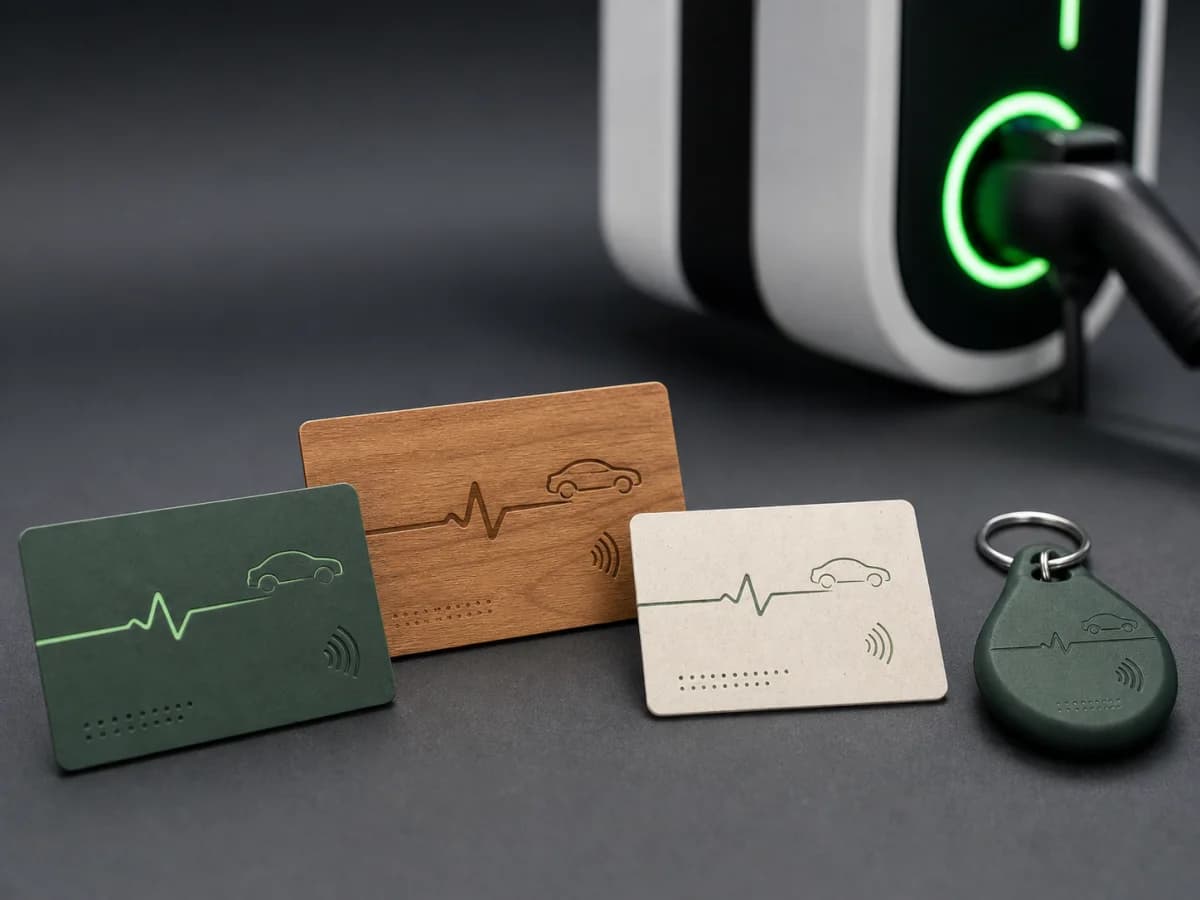
Custom Engineering / OEM/ODM / Prototype Validation
Custom RFID credentials engineered around your charging readers, token data, security model, form factor, artwork and fulfilment workflow.
Review recommended productTechnical library / 07
These sources define the surrounding technology and operating interfaces. ChargeRFID manufactures physical credentials; platform configuration, roaming contracts and charging-station certification remain with the relevant operators and vendors.
Selected work / 2 min read
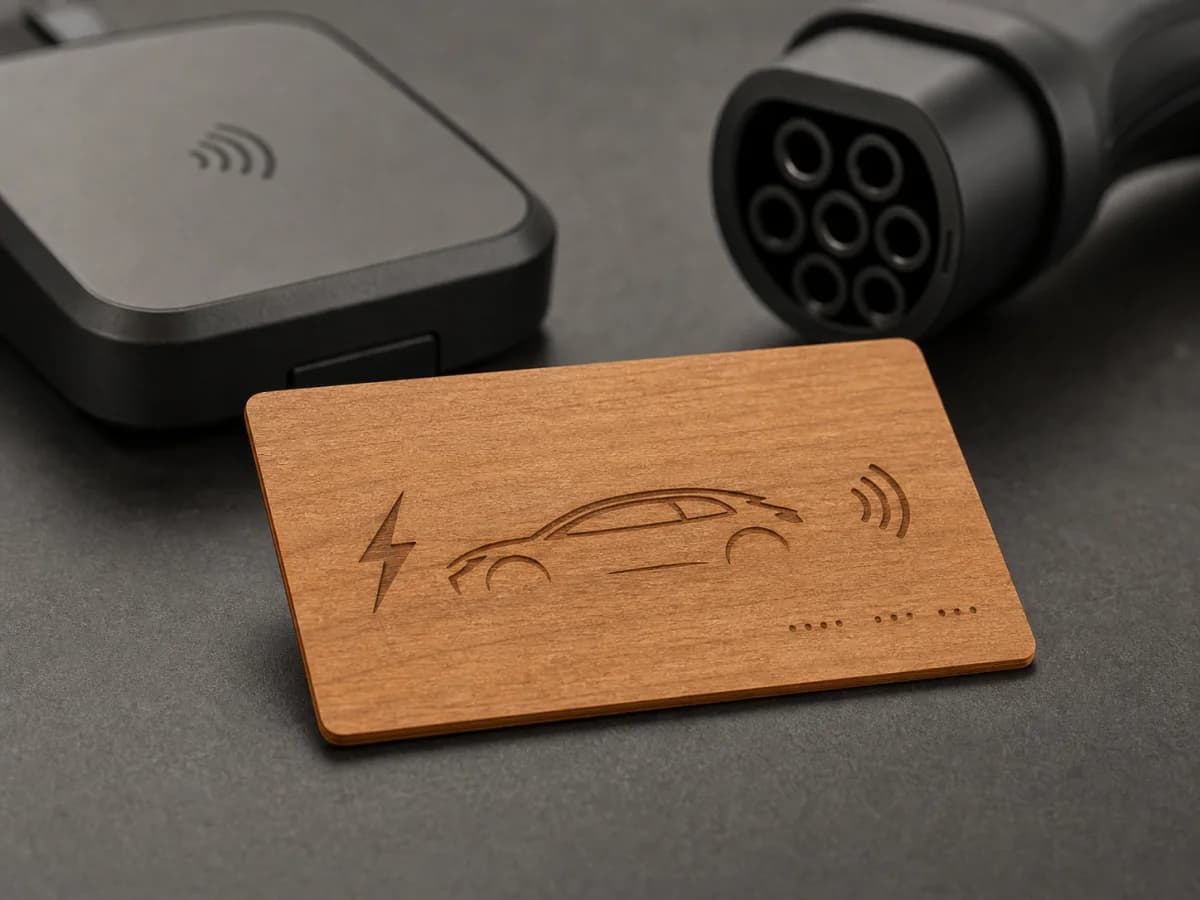
A European automotive campaign: a quiet production record of a laser-engraved cherry-wood EV charging card.
Read More
Technology / 7 min read
A vendor-neutral method for choosing a 13.56 MHz EV charging credential by reader behavior, identifier format, authentication, backend controls and roaming requirements
Read More
Technology / 9 min read
What an RFID card for EV charging actually does, how it authenticates against OCPP stations and roaming hubs, the chip technologies used, and how to choose the right card for fleets, networks, or personal use.
Read MorePrimary implementation references
Programme questions / 08
No universal claim is responsible. Metal changes antenna behaviour, and readers vary. Use a purpose-built composite construction and validate finished samples on the target reader estate before production.
Yes, subject to the selected composite construction and finishing process. Physical finish masters should define colour, sheen, engraving contrast and acceptable cosmetic variation.
That depends on the programme. Vehicle-linked identity suits delivery and asset services; owner/member identity suits loyalty and transferable benefits. Reassignment and replacement rules should be decided before serialization.
Yes. Once cards are assigned to a named package, vehicle or member, the encoded identifier, visible serial and packaging label must be reconciled together to prevent presentation errors.
Other operating programmes
RFID credentials for depot, workplace and public charging, with controlled driver or vehicle assignment, platform-ready identifiers and replacement records.
White-label cards and keyfobs prepared around your brand, identifier format, platform import, launch volume and repeat-order workflow.
Physical RFID credentials for roaming programmes where token records, identifier formats and lifecycle status stay consistent across eMSP, CPO and hub systems.
Credential programmes for workplaces, depots, residential sites and destinations that need controlled access by employee, resident, visitor or account.
A controlled route from legacy or UID-only credentials to reader-matched card technology with a practical pilot, data plan and phased reissue.
Share the reader estate, identifier rules, security requirement, platform handoff, volume and rollout markets. We will return the questions needed for samples and production approval.