By ChargeRFID
Review method: We checked this guide against the primary regulatory, protocol, and manufacturer references listed below. Product recommendations reflect ChargeRFID's manufacturing perspective and should be validated with your reader, charger, and backend.
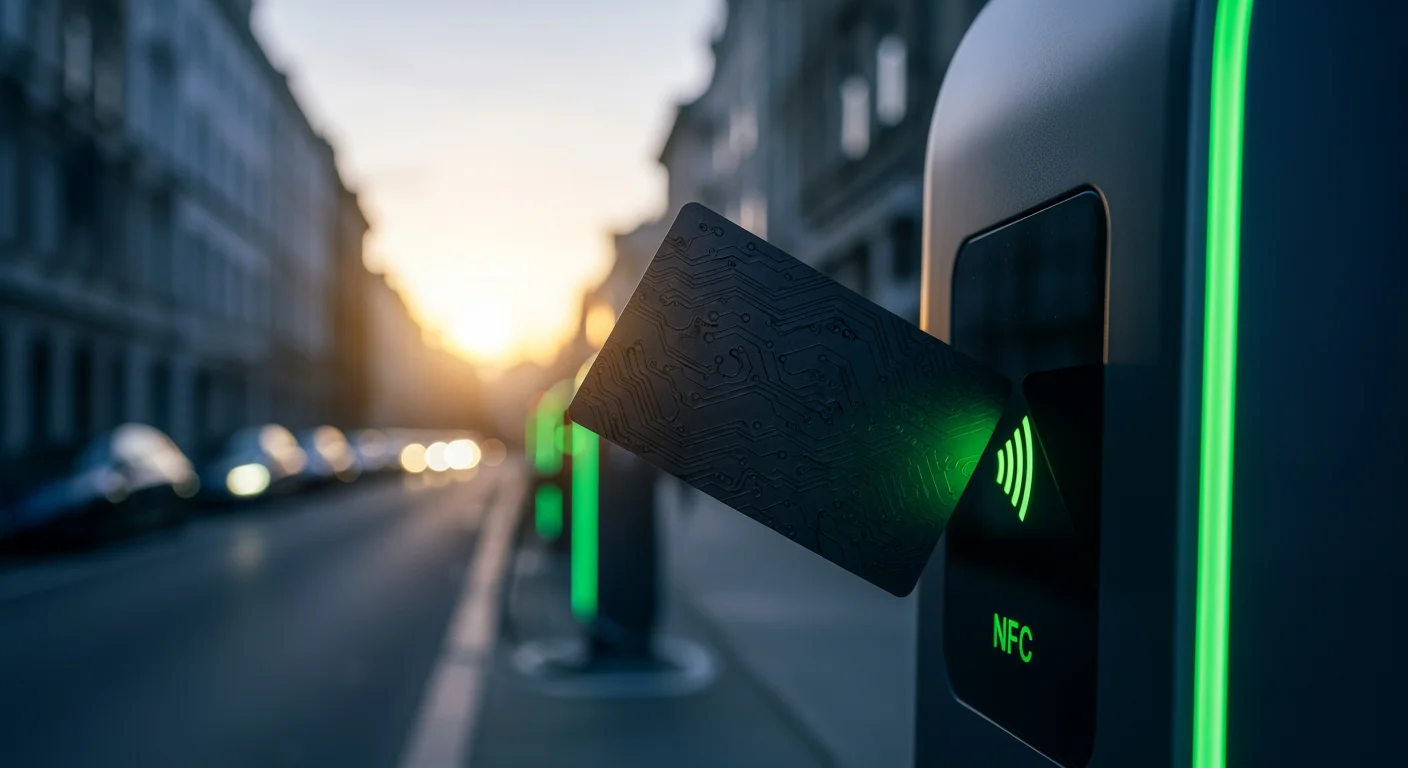
An RFID card for EV charging is a contactless credential that presents an identifier to a charging station. The station or its backend uses that identifier to request authorization before energy flows. RFID remains widely used for contract, fleet, workplace, and fallback access, but acceptance is not universal: it depends on the eMSP, CPO, roaming agreements, token records, and charger configuration.
This guide explains how RFID cards for EV charging work end to end, what chip technologies sit inside them, how they connect to roaming networks, how to compare cards, and what to expect when ordering them in volume.
What Is an RFID Card for EV Charging?
An RFID card for EV charging is a plastic, wood, or bio-based card embedded with an RFID chip and antenna. A charger may use the chip's UID or data from a configured application as the token presented to the backend. OCPP 1.6 calls the authorization value an idTag; OCPP 2.x uses an idToken model. The printed card number, chip UID, backend token, and roaming identifier are not necessarily the same value.
Most cards used for EV charging operate at 13.56 MHz (High Frequency, ISO 14443A) — the same frequency used by contactless payment cards, transit cards, and modern access control. A few legacy systems still use 125 kHz Low Frequency cards (EM4100, 125 kHz proximity), but these have largely been retired for new charging deployments because they cannot be encrypted.
How an RFID Charging Session Authenticates
The broad authorization pattern is stable, but the message names and transaction model differ by OCPP version:
For fleet and roaming use cases, the authorization may involve a roaming platform or bilateral OCPI/OICP connection between the host CPO and the driver's e-mobility service provider (eMSP). The eMSP normally owns the driver contract and token record; the physical card manufacturer does not determine roaming coverage.
Chip Technologies Inside an EV Charging Card
Not every RFID card for EV charging is built the same. Three families dominate:
legacy sector-memory 13.56 MHz credential
An inexpensive legacy option using the publicly broken Crypto-1 cipher. Some systems read only the card's UID rather than a protected sector, which makes the backend mapping — not the memory size — decisive. A new deployment should not assume cloning is harmless merely because sessions are logged; assess the potential for unauthorized energy use and account abuse.
AES-authenticated 13.56 MHz credential
A higher-security family that supports AES-128, mutual authentication, diversified keys, separate applications, and transaction MAC features when the system is configured to use them. Those controls can make credential cloning materially harder, but security still depends on key custody, reader behavior, backend authorization, and whether the charger reads a protected application or only a public UID. Roaming protocols do not require AES-authenticated 13.56 MHz credential simply because the token crosses networks.
NFC-enabled chip option
Uses symmetric AES-128 cryptography and Secure Unique NFC (SUN) message authentication to generate tap-specific authentication data for supported NFC applications. It is designed primarily for secure NFC interactions; a charging deployment must confirm that its readers and backend actually implement the required NFC-enabled chip option application flow.
AES-authenticated 13.56 MHz credential is a strong candidate when the charging reader and backend use its protected application features. If a network authorizes only a public UID, changing the chip alone does not deliver the full security benefit.
OCPP, OCPI, and How a Single Card Roams
The reason one RFID card can charge across hundreds of networks is protocol standardization. Three matter:
When an eMSP issues an RFID charging credential, its backend must store the token in the exact serialized form expected by the authorization path and publish or expose it to contracted CPOs or roaming partners as required. Commercial agreements, not the chip alone, determine where the credential works.
How to Choose the Right RFID Card for EV Charging
Five questions decide the card spec:
Sustainability: Why the Card Material Matters
Material choice can change the card's environmental footprint, but the result depends on feedstock, manufacturing energy, yield, transport, durability, replacement rate, and end-of-life treatment. Recycled content or certified wood can support a procurement goal, but neither an exact emissions reduction nor a "carbon-negative" claim should be made without a product-specific, independently reviewed life-cycle assessment.
For operators with public ESG commitments, material is a procurement decision that should be supported by supplier chain-of-custody records and a defined reporting method.
Pricing and Lead Times
Pricing, minimum quantity, and lead time depend on the chip, memory, material, artwork, printing, personalization, encoding, key ceremony, packaging, freight, and current capacity. Request a quote against a written technical specification and include sample validation before releasing a production batch.
Common Mistakes When Specifying an RFID Card for EV Charging
Where to Go From Here
If you're specifying an RFID card for EV charging, start with the authorization flow and target readers, then choose the identifier or protected application, chip, key model, material, personalization, and artwork. Validate samples end to end with the eMSP and target charger stack before production.
Browse our EV charging cards — recycled PVC, FSC wooden, PPH Bio, and key fobs — or read how we built fleet authentication and roaming solutions for a selected roaming programme, a selected EV charging programme, and a selected regional charging programme. Contact us for a sample kit and quote.
Company, network and product names referenced in this article are the trademarks of their respective owners. They are used descriptively to identify systems our cards interoperate with. ChargeRFID is an independent manufacturer and this article does not assert any affiliation, partnership or endorsement.
Primary sources
Official references used to review the regulatory, protocol, and chip-level claims in this guide.
- Open Charge Point Protocol (OCPP)Open Charge Alliance
- Open Charge Point Interface (OCPI) specificationEV Roaming Foundation
- OICP 2.3 EMP API documentationHubject
Next step
Turn the research into a card specification.
Share the reader, chip, data or rollout context and we will identify the decisions required for samples and production.
Continue reading
Related Articles
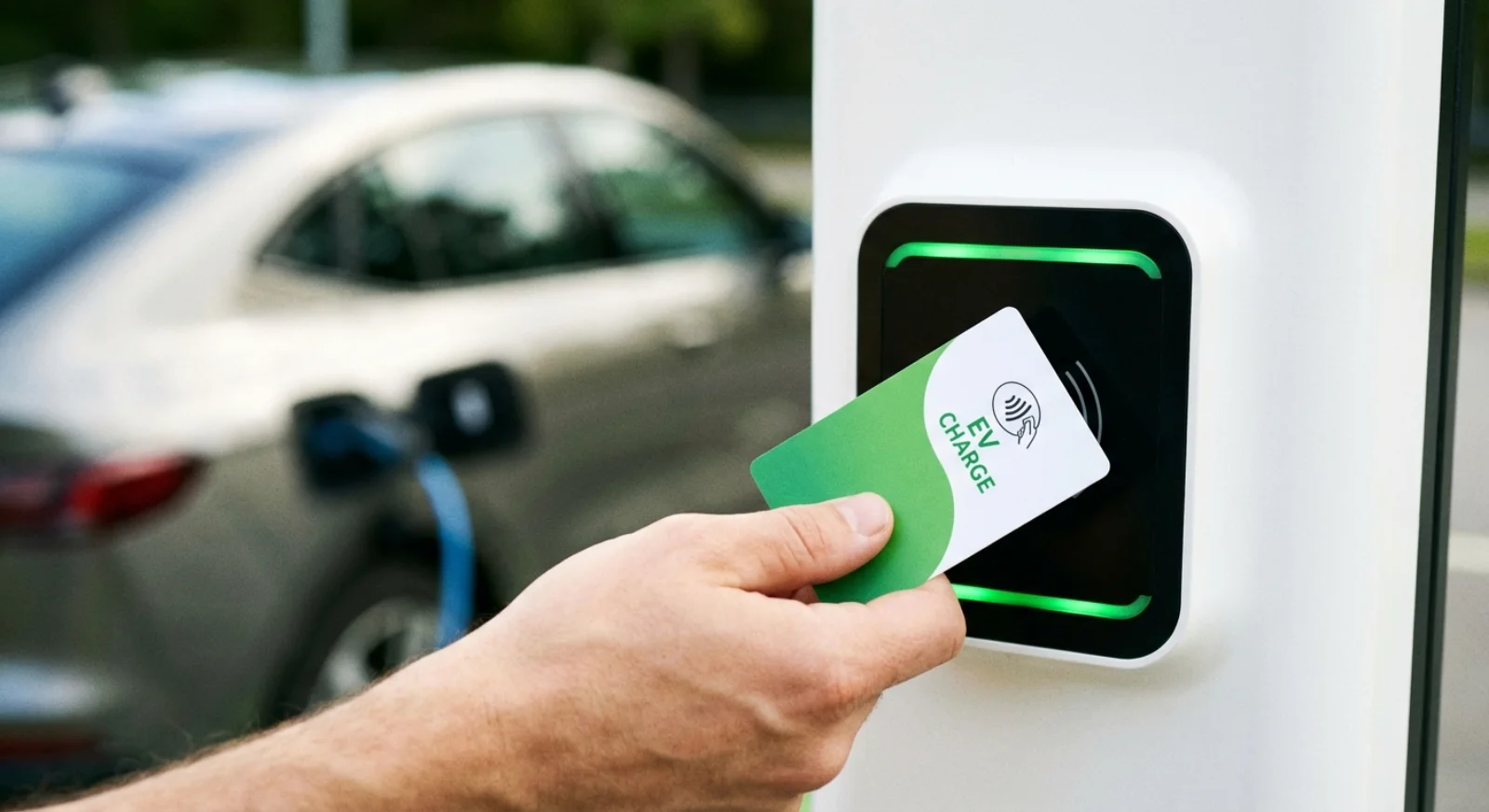
Choosing an RFID Credential for EV Charging
A vendor-neutral method for choosing a 13.56 MHz EV charging credential by reader behavior, identifier format, authentication, backend controls and roaming requirements
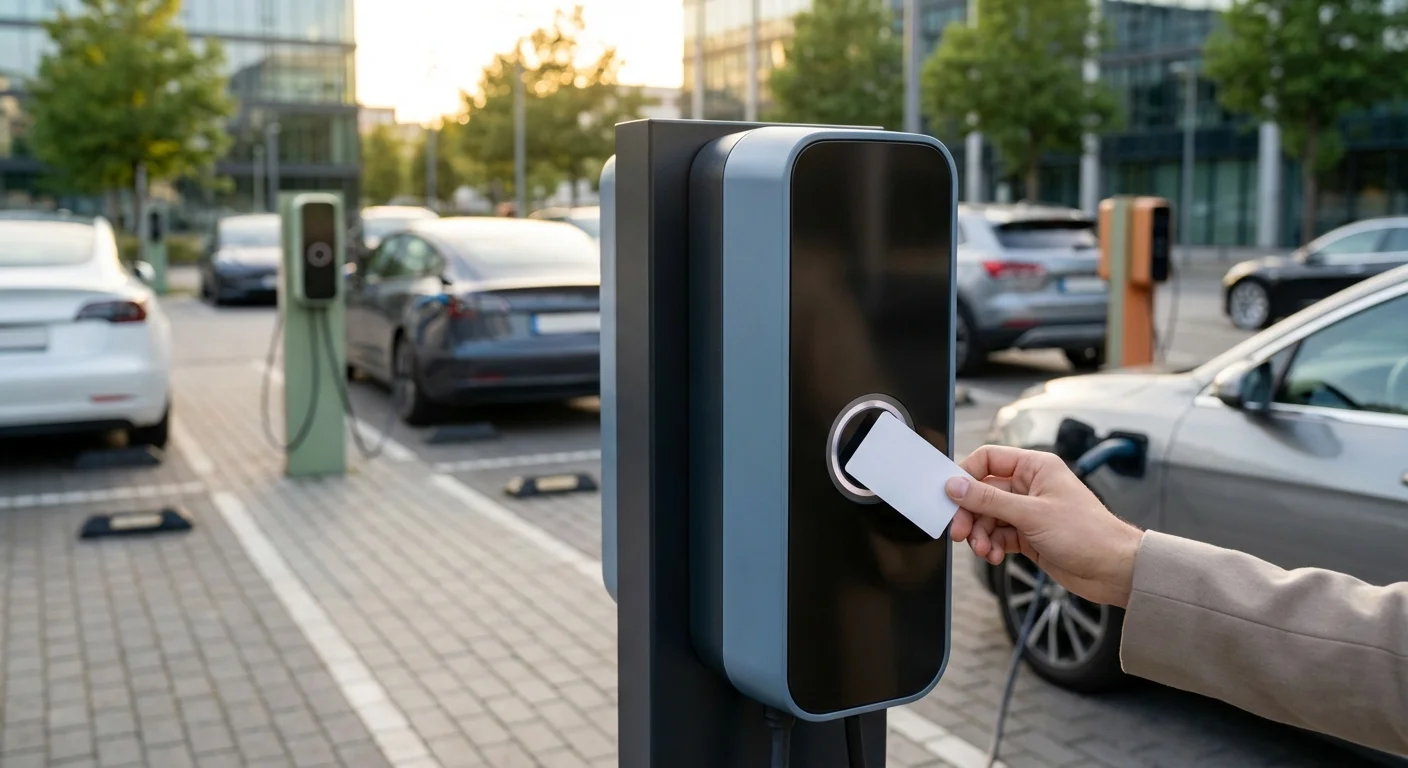
RFID Roaming: How One Card Works Across Participating EV Charging Networks (2026 Guide)
One RFID card, every charging network. How EV roaming works through OCPI and OICP, why drivers stop juggling an app per network, and how fleets get one card and one invoice across 1M+ chargers in 2026.