Custom form factors
Cards, compact tags, keyfobs and other shapes can be developed around reader position and handling needs.
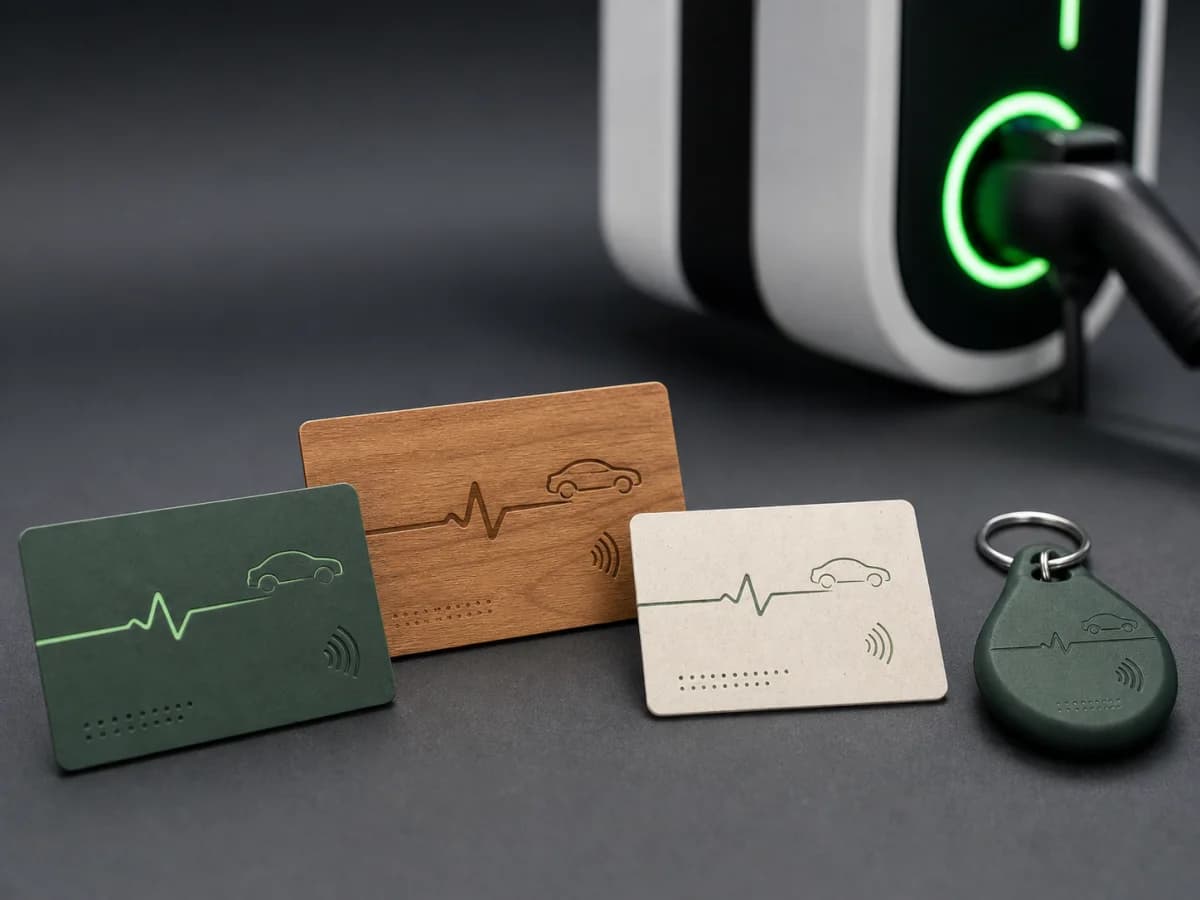
EV charging credential
Made to specificationCustom RFID credentials engineered around your charging readers, token data, security model, form factor, artwork and fulfilment workflow.
Compatibility is confirmed against your reader and token workflow. MOQ and timing depend on the approved material, chip, personalization and finish.
Product overview / 01
Custom EV charging credentials are built when a standard CR80 card and simple UID handoff do not cover the programme. The requirement may involve a compact form factor, dual-frequency operation, protected chip applications, unusual personalization, direct fulfilment or a defined interface to an existing credential database.
The most efficient starting point is an existing card, reader model or authorization-flow description. From that evidence we can separate mandatory electronic requirements from choices such as material, shape, artwork and packaging, then build a sample that can be tested before production tooling or volume is committed.
Identify the readers, charging stations, backend, access controllers and other systems the credential must serve.
Define UID, token, memory, key ownership, application data and file-handoff requirements.
Explain how drivers carry, present, replace and return the credential in daily operation.
Provide pilot quantity, annual forecast, destinations, packing and any direct-to-driver fulfilment requirement.
Features and options / 02
Customisation can cover the physical token, the electronic inlay and the operational delivery process—not only the printed artwork.
Cards, compact tags, keyfobs and other shapes can be developed around reader position and handling needs.
Single- or dual-frequency configurations can bridge EV charging and an approved legacy access requirement.
AES-authenticated 13.56 MHz credential applications, file structures and keys can be loaded under an agreed, controlled provisioning process.
UID representation, prefixes, visible numbering and backend mapping can be structured for the target platform.
Materials, print, engraving, packaging and mailer components can be developed as one coherent credential pack.
Prototype samples, approval records and controlled master data reduce risk when the programme scales or reorders.
Technical fit / 03
Custom work is successful when every requirement has an owner, an approval method and an output that can be repeated.
Reading an existing credential or testing the target hardware is more reliable than choosing a chip from a generic list.
A UID-only flow, an NDEF record and a secure AES-authenticated 13.56 MHz credential application require different provisioning and reader behaviour.
Two antennas in one body affect space, coupling and read performance; both target systems must be tested on finished samples.
Ownership, transfer, diversification, access rights and deletion rules should be documented before secure personalization begins.
Use the intended material, inlay, encoding, artwork and data file so approval proves the complete workflow rather than one isolated component.
Full specification / 04
Values below are the available product route, not a substitute for reader validation. The final quotation records the exact construction, electronic configuration and data deliverables.
Request SamplesProduction route / 05
The sample should prove construction, print, electronic behavior and data handling together. That approved reference then controls production and reorders.
Reader, current credential, platform, quantity and operating environment
Proposed material, inlay, artwork, encoding and variable data
Physical read, exact token capture, data import and live authorization
Approved masters, controlled data, batch checks and packing review
Final mapping file, shipment record and retained repeat-order reference
Frequently asked / 06
Answers are based on the physical credential and production scope. Your charging platform remains responsible for account, tariff and authorization rules.
Any requirement beyond a standard card with standard printing can make it custom: a different shape, dual frequency, secure applications, unusual data structures, special materials, packaging or an integrated fulfilment process.
We can inspect an existing credential and reproduce approved physical and electronic requirements where you own or are authorized to use them. Protected keys or proprietary applications require documented access and cooperation from the system owner.
Potentially. The two systems may use the same technology, separate applications on one secure chip, or different frequencies. Both reader estates and the security owners must be included in the specification and test plan.
The process is defined per project and should cover key ownership, secure transfer, diversification, authorized personnel, provisioning evidence and deletion. Do not send production keys through ordinary email.
Yes for any new construction, antenna, chip configuration, artwork method or data workflow. A production-representative sample is the approval reference for functionality and appearance.
Send the current card or tag, reader and platform details, required functions, estimated quantity, launch date, artwork expectations and any known chip, UID or security requirements.
Further reading / 07
Use the technical guide, programme examples and glossary to align procurement, engineering and operations before requesting samples.
Commercial and technical decisions behind an own-brand charging credential.
Read more Integration conceptA practical example of a multi-system credential brief.
Read more Project reviewWe will identify the missing decisions required for a testable sample.
Read moreIncluded with every order
Before production starts, we fix the identifier format with your backend team: byte length, representation, byte order, leading-zero policy. The order then ships with a machine-readable data contract and acceptance vectors your engineers can test against before the first card arrives.
See how the acceptance pack worksRelated Products

Custom RFID charging cards with a recycled-PVC card body, reader-matched chip options, programme artwork and UID-to-account data handoff.
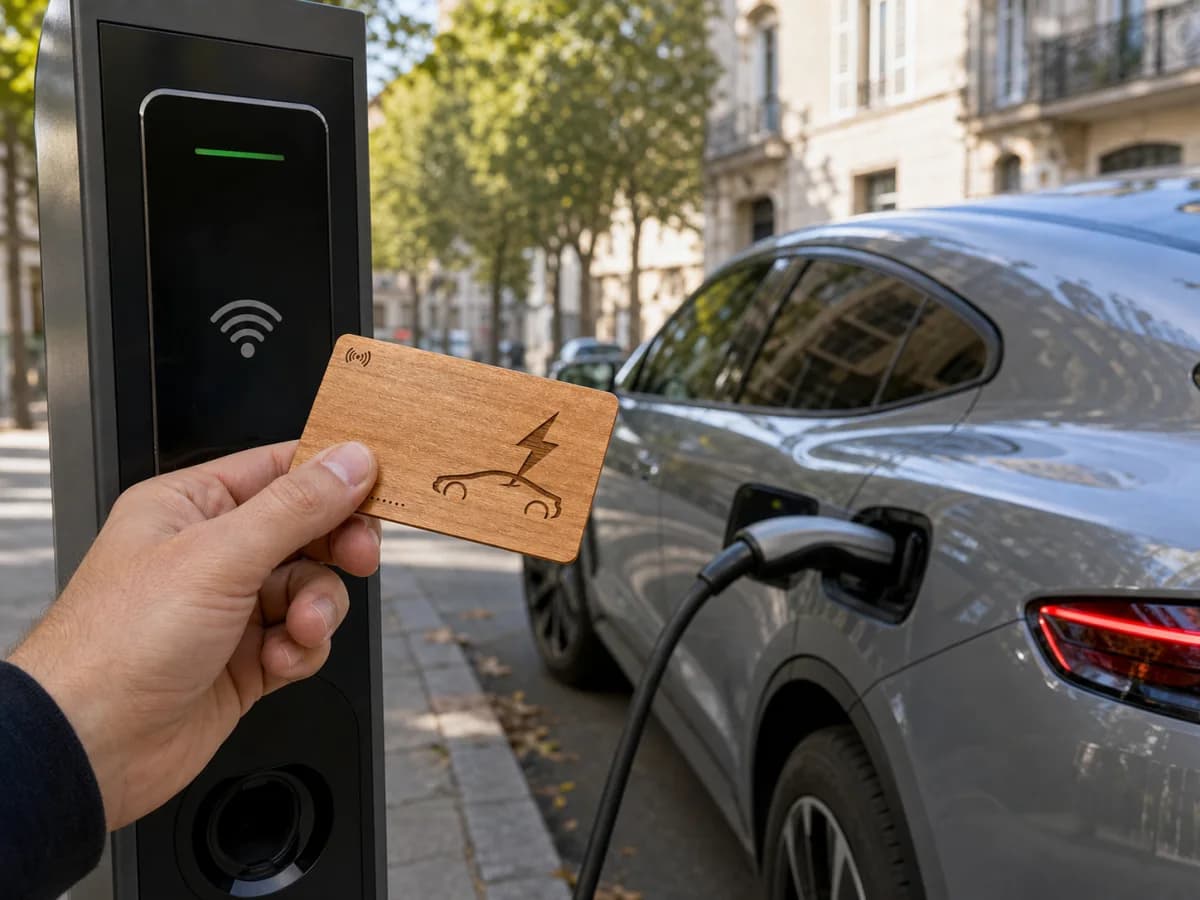
Wood-based RFID charging cards with laser engraving or print, reader-matched chip options and programme-specific variable data.
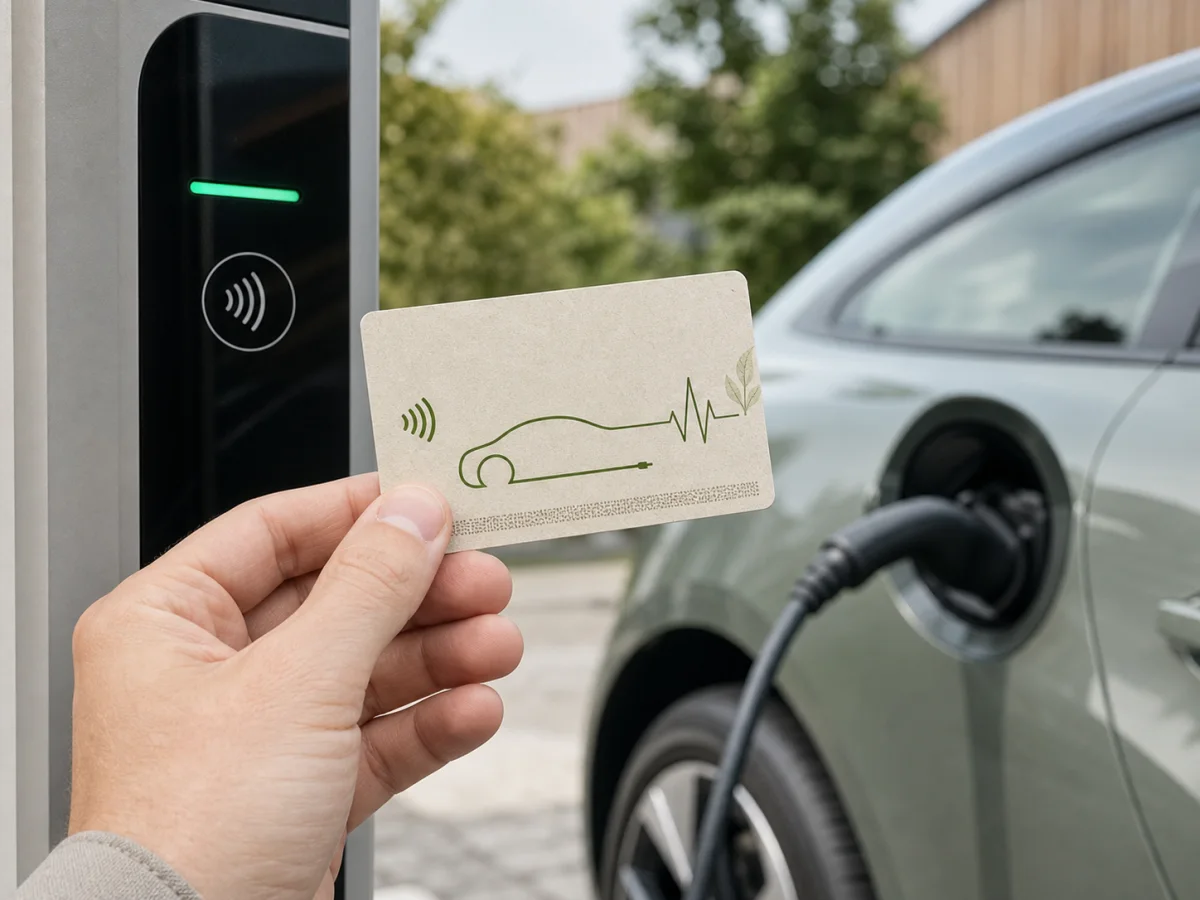
Bio-fibre and non-PVC RFID charging-card constructions with documented material claims, custom artwork and reader-matched electronics.
Send the current card, reader model or programme brief and required quantity.