Wood-based constructions
Cherry, bamboo and other available finishes can be evaluated against appearance, sourcing and production requirements.
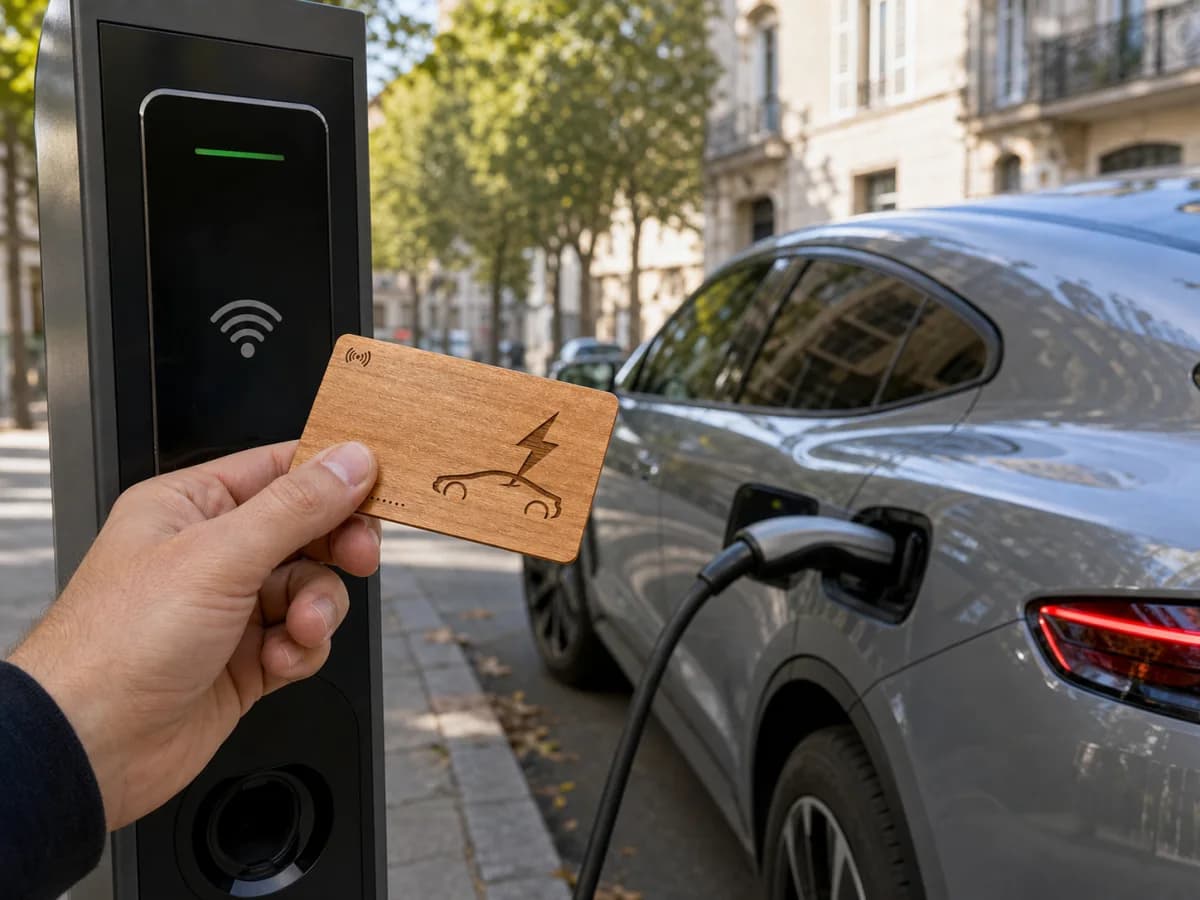
EV charging credential
Made to specificationWood-based RFID charging cards with laser engraving or print, reader-matched chip options and programme-specific variable data.
Compatibility is confirmed against your reader and token workflow. MOQ and timing depend on the approved material, chip, personalization and finish.
Product overview / 01
A wooden EV charging card combines a wood-based face or card body with an RFID inlay. It is selected when the physical presentation of the credential matters as much as the tap-to-charge function—for member programmes, vehicle launches, premium tariffs and limited-edition campaigns.
Wood affects thickness, surface finish, printing and antenna tuning, but it does not remove the need to match the chip and identifier to the charging system. The complete credential also contains an antenna, chip, bonding materials and usually a protective finish, so material and end-of-life claims must describe the finished construction accurately.
Select the appearance and confirm whether FSC or other chain-of-custody evidence is required for the order.
Confirm the finished construction can be presented consistently to the target charger reader.
Choose laser engraving, print or a combination after checking contrast, detail size and variable-data needs.
Define coating, moisture exposure, sleeves and packing so the natural surface arrives and remains presentable.
Features and options / 02
Wooden cards can carry the same programme identity as a conventional card while using a more tactile, individually varied surface.
Cherry, bamboo and other available finishes can be evaluated against appearance, sourcing and production requirements.
Permanent logos, text and numbering can be engraved where artwork contrast and line weight suit the selected surface.
Colour printing is possible on suitable constructions when the programme needs more than a natural engraved finish.
Chip and antenna are chosen around the reader estate, UID format and any secure application requirement.
Sequential numbering, QR codes and driver or membership references can be coordinated with the digital credential file.
Individual sleeves, carriers and programme packs are available for launches, member onboarding and direct distribution.
Technical fit / 03
The electronic brief may remain familiar, but the physical approval needs closer attention to thickness, finish and environmental exposure.
Antenna tuning and read position should be checked after the wood, adhesive, coating and chip are assembled.
Grain and tone vary between cards. Brand approval should define acceptable variation instead of expecting identical surfaces.
Small reversed text, dense QR codes and light colours may need adjustment for reliable engraving or printing on wood.
Confirm the required chain-of-custody statement and order documentation; it does not mean every component in the RFID credential is wood.
A coating can improve resistance to handling and incidental moisture, but the sample should be assessed for the actual storage and outdoor-use pattern.
Full specification / 04
Values below are the available product route, not a substitute for reader validation. The final quotation records the exact construction, electronic configuration and data deliverables.
Request SamplesProduction route / 05
The sample should prove construction, print, electronic behavior and data handling together. That approved reference then controls production and reorders.
Reader, current credential, platform, quantity and operating environment
Proposed material, inlay, artwork, encoding and variable data
Physical read, exact token capture, data import and live authorization
Approved masters, controlled data, batch checks and packing review
Final mapping file, shipment record and retained repeat-order reference
Frequently asked / 06
Answers are based on the physical credential and production scope. Your charging platform remains responsible for account, tariff and authorization rules.
Yes when the chip, antenna and identifier are compatible with the charger reader and backend. The finished wooden construction should be sampled and tested because thickness and material can affect read behaviour.
The visible body can be wood-based, but a functioning RFID credential also contains a chip, antenna, bonding materials and often a protective coating. Any plastic-free or biodegradability claim should be based on the complete approved construction, not the face material alone.
Colour printing is available on suitable wood constructions. Laser engraving is often chosen for a natural finish, while combined print and engraving can be evaluated during sampling.
Yes. Sequential identifiers, QR codes or membership numbers can be engraved or printed and matched to the RFID UID in a delivery file.
The material does not determine the chip. Choose from the frequency, reader protocol, UID length, memory and security model required by the charging programme.
Approve the wood construction, acceptable grain variation, thickness, coating, artwork contrast, variable data, RF reading and backend authorization using finished samples.
Further reading / 07
Use the technical guide, programme examples and glossary to align procurement, engineering and operations before requesting samples.
A production example showing how material, engraving and charging authentication come together without implying a direct OEM relationship.
Read more Programme exampleA wood-based fleet credential produced for an operational charging programme.
Read more Technical glossaryDefinitions for FSC sourcing, chip families, UID handling and charging-system roles.
Read moreIncluded with every order
Before production starts, we fix the identifier format with your backend team: byte length, representation, byte order, leading-zero policy. The order then ships with a machine-readable data contract and acceptance vectors your engineers can test against before the first card arrives.
See how the acceptance pack worksRelated Products
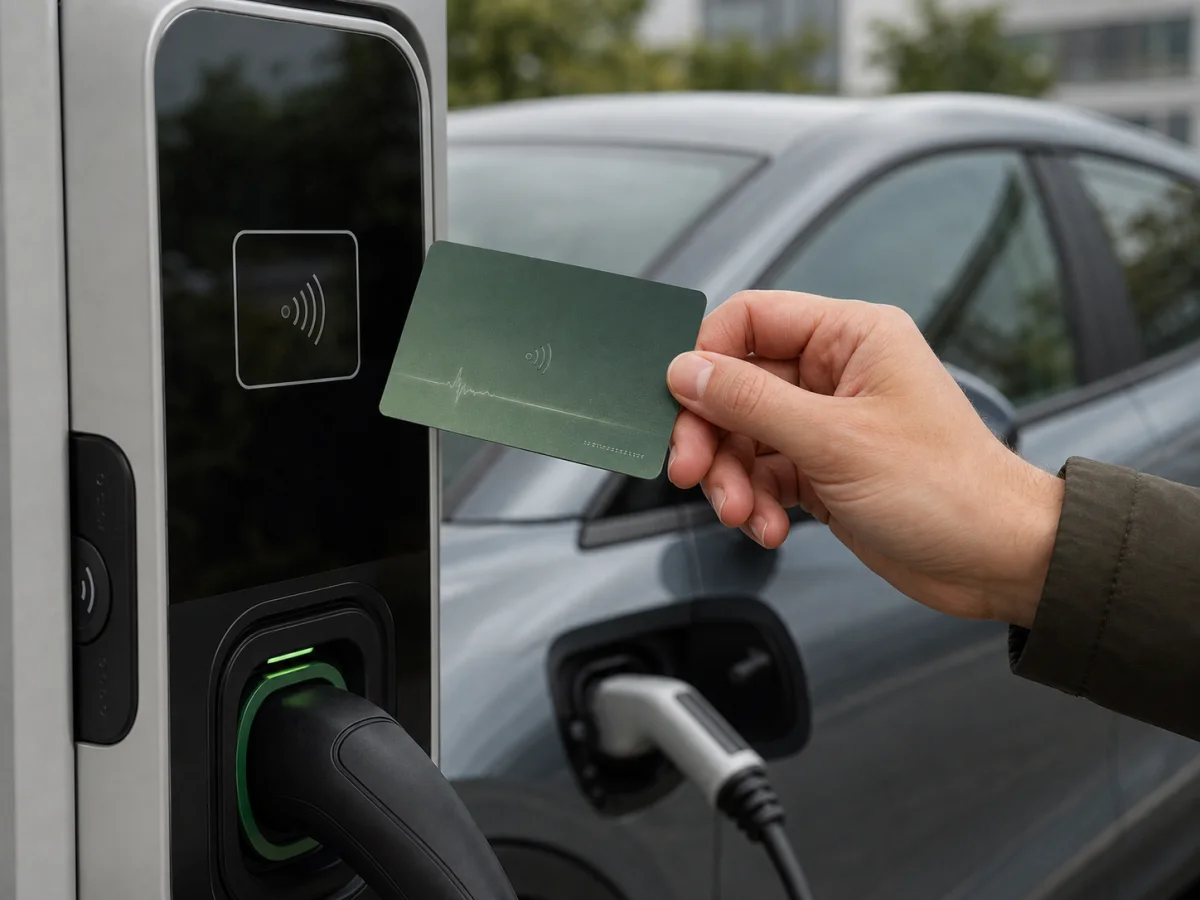
Custom RFID charging cards with a recycled-PVC card body, reader-matched chip options, programme artwork and UID-to-account data handoff.
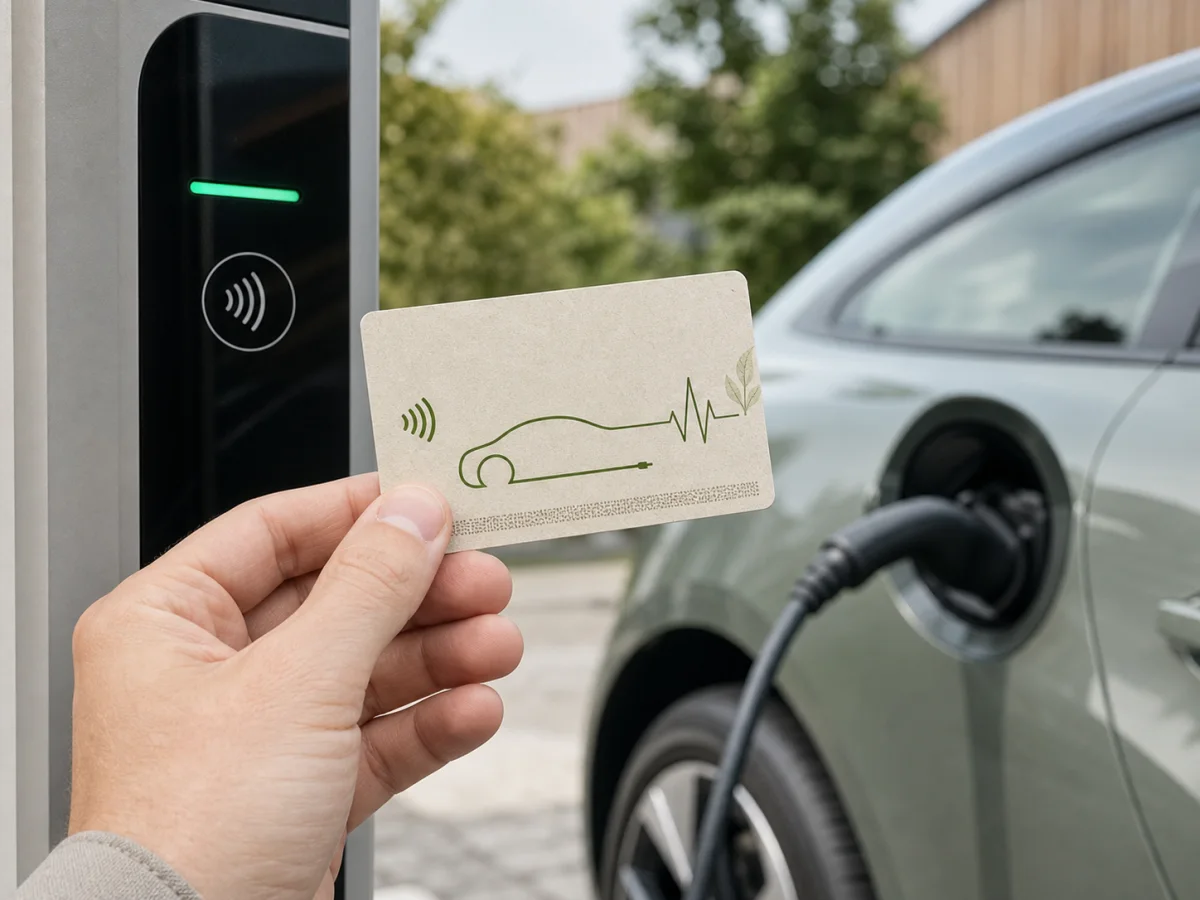
Bio-fibre and non-PVC RFID charging-card constructions with documented material claims, custom artwork and reader-matched electronics.
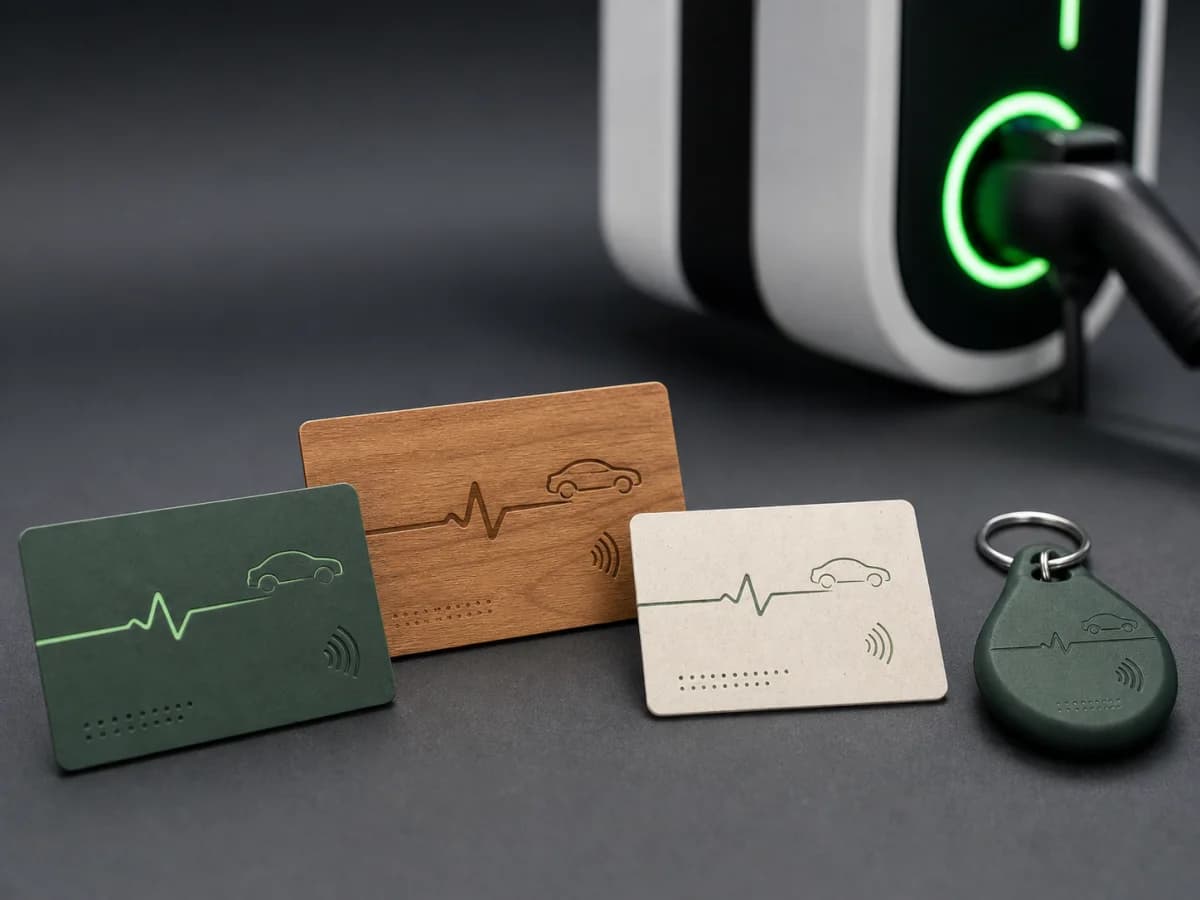
Custom RFID credentials engineered around your charging readers, token data, security model, form factor, artwork and fulfilment workflow.
Send the current card, reader model or programme brief and required quantity.