By ChargeRFID
Review method: This organization-authored article reflects ChargeRFID's manufacturing perspective. Confirm chip, reader, charger, and backend compatibility in your own environment before ordering.

In a significant development for electric vehicle infrastructure across Europe, a groundbreaking alliance named Spark has emerged, uniting four major charging providers to create the continent's most extensive public charging network. This collaboration between industry leaders from various European countries represents a pivotal moment in addressing one of the most pressing challenges in EV adoption: convenient and widespread access to charging infrastructure.
The newly formed coalition will integrate approximately 11,000 charging points distributed across 1,700 stations in 25 European countries. This unprecedented level of cooperation demonstrates the industry's commitment to overcoming fragmentation - long considered a significant barrier to widespread EV adoption.
Starting this summer, EV drivers will benefit from seamless access to ultra-fast charging capabilities of up to 400 kW through any of the alliance members' applications, eliminating the frustration of juggling multiple accounts and payment methods that has plagued European EV users.
While digital applications receive much attention, RFID cards remain a critical component in the charging ecosystem, particularly for this expansive network
In a significant development for electric vehicle infrastructure across Europe, a groundbreaking alliance named Spark has emerged, uniting four major charging providers to create the continent's most extensive public charging network.
Reliability in All Conditions: Unlike smartphone apps that depend on battery life and network connectivity, RFID cards function regardless of weather conditions, signal strength, or device status - a crucial consideration for travelers in remote areas or during adverse weather.
Simplified Authentication: Fleet operators and business users particularly value the straightforward tap-and-charge capability, streamlining expense reporting and eliminating the need for drivers to download multiple applications.
Enhanced Security: Modern RFID cards incorporate advanced encryption protocols, protecting both the charging network and user payment information from potential security breaches.
Accessibility: For users less comfortable with smartphone technology, RFID cards provide a familiar, credit-card-like experience that reduces barriers to EV adoption among all demographic groups.
The European Commission has established ambitious goals, calling for 3.5 million charging points across the continent by 2030 - nearly triple the current annual installation rate. Industry experts note that while quantity is important, the quality and reliability of charging experiences will ultimately determine consumer confidence in transitioning to electric vehicles.
"A charging network is only as good as its weakest point," notes a senior industry analyst. "RFID cards provide a failsafe mechanism that ensures drivers can access charging even when digital systems face challenges."
While the alliance creates a network larger than some established competitors in terms of station count, industry observers point out that the EV charging ecosystem benefits from healthy competition and complementary services.
Company, network and product names referenced in this article are the trademarks of their respective owners. They are used descriptively to identify systems our cards interoperate with. ChargeRFID is an independent manufacturer and this article does not assert any affiliation, partnership or endorsement.
Next step
Turn the research into a card specification.
Share the reader, chip, data or rollout context and we will identify the decisions required for samples and production.
Continue reading
Related Articles
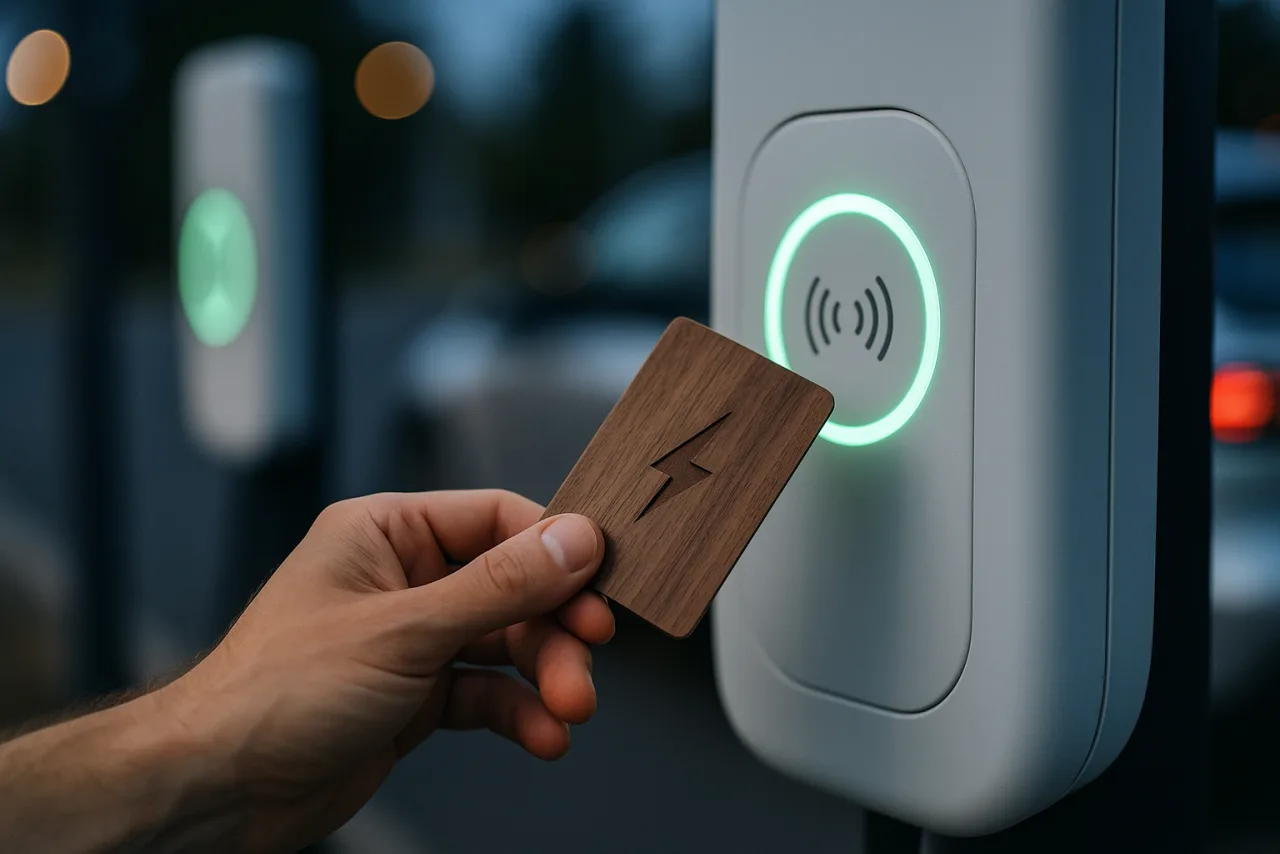
White-Label RFID Cards for E-Mobility Service Providers: The eMSP Playbook
An e-mobility service provider lives or dies by the moment a driver taps a card at a stranger's charger and it just works. Here is how white-label RFID cards, OCPI tokens, and clean UID provisioning let an eMSP put its brand on a credential that roams across hundreds of thousands of charge points.
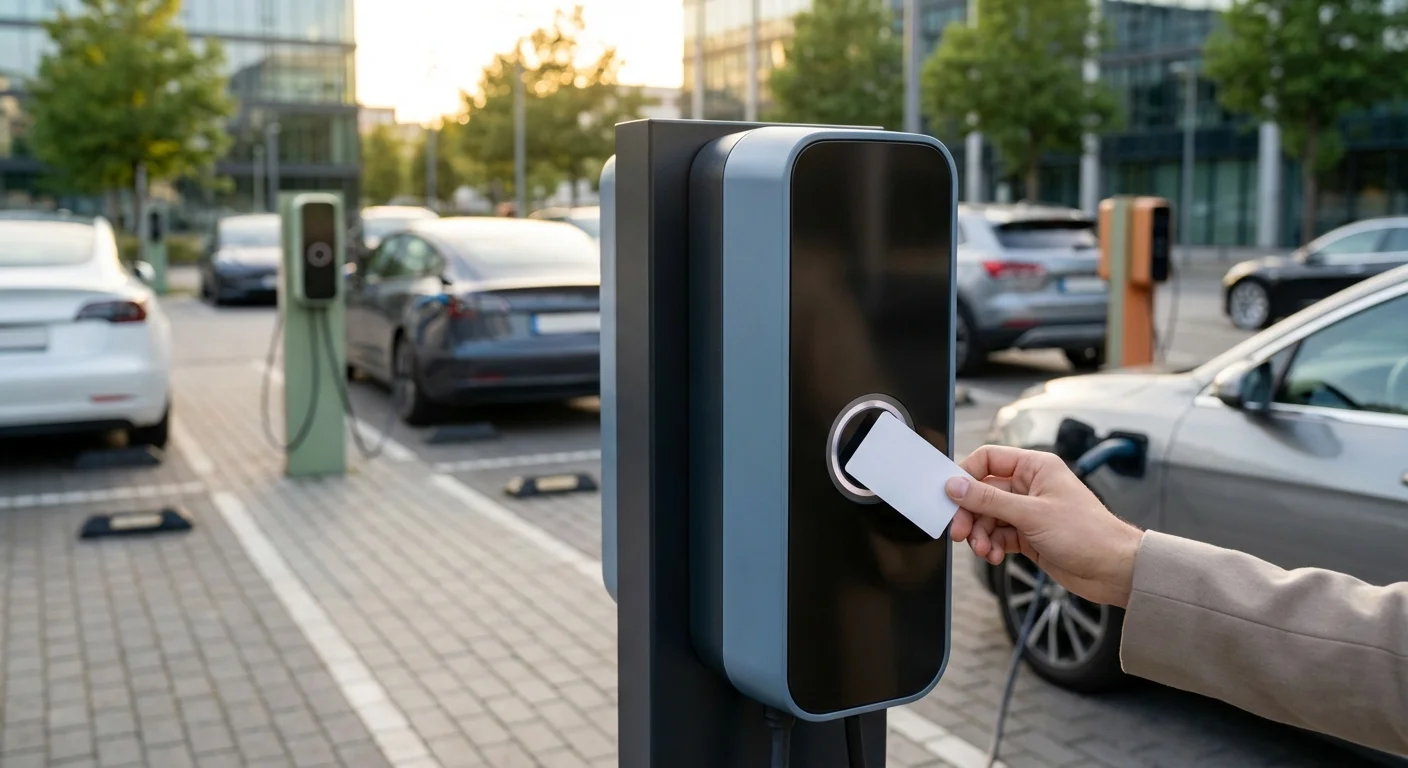
RFID Roaming: How One Card Works Across Participating EV Charging Networks (2026 Guide)
One RFID card, every charging network. How EV roaming works through OCPI and OICP, why drivers stop juggling an app per network, and how fleets get one card and one invoice across 1M+ chargers in 2026.