By ChargeRFID
Review method: This organization-authored article reflects ChargeRFID's manufacturing perspective. Confirm chip, reader, charger, and backend compatibility in your own environment before ordering.
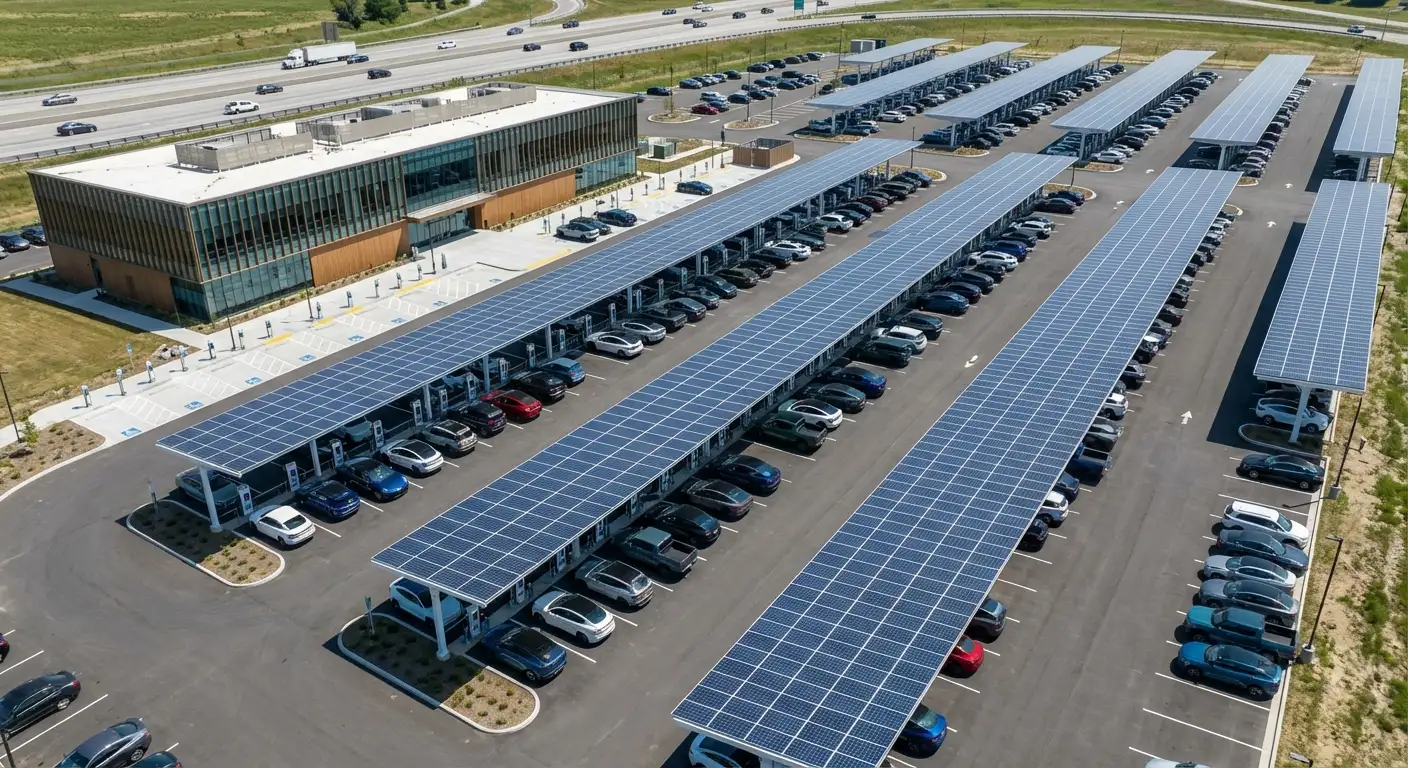
The numbers tell a compelling story: 67,916 public DC fast-charging ports now operate across the United States, representing a 33% increase from the previous year. As this infrastructure expands toward a projected $90.4 billion global market by 2032, one question becomes critical for network operators: how do drivers seamlessly access charging across different networks? RFID cards provide the answer.
The Scale of Infrastructure Growth
DC fast charging has reached an inflection point. Government incentives, automaker commitments, and consumer demand have aligned to create unprecedented infrastructure investment. The 16.3% compound annual growth rate projected through 2032 means today's 67,916 ports will multiply several times over within the decade.
This growth creates both opportunity and complexity. Multiple charging networks now compete for locations and customers. Electrify America, ChargePoint, EVgo, Tesla's newly-opened Supercharger network, and dozens of regional operators all deploy stations with different business models, pricing structures, and—historically—different access methods.
The Interoperability Challenge
Early EV adopters remember the frustration: each charging network required its own app, its own account, its own payment method. A cross-country road trip might require five different apps and memberships. Drivers arrived at stations only to discover their preferred network's charger was broken while a functional competitor's charger sat unused beside it—inaccessible due to account barriers.
This fragmentation threatened to slow EV adoption. Consumers accustomed to universal fuel pump access balked at the complexity of electric charging. The industry recognized that growth required simplification.
How RFID Enables Network Roaming
RFID cards emerged as the universal key to multi-network access. Through roaming agreements similar to those enabling cell phones to work across carriers, charging card providers now offer single credentials accepted at thousands of stations across multiple networks.
The technology is elegantly simple. Each RFID card contains a unique identifier linked to the holder's account. When tapped at any participating station, the charger queries a central database, confirms authorization, and initiates the session. The driver experiences instant access regardless of which company owns that particular charger.
For fleet operators, this roaming capability proves essential. Delivery vehicles, service technicians, and sales teams travel unpredictable routes. Guaranteeing charging access requires credentials accepted everywhere, not just at a single network's locations.
Beyond Authentication: Data and Analytics
RFID cards generate valuable operational data with every tap. Network operators gain insights into usage patterns, peak demand periods, and geographic distribution of their cardholders' charging behavior. This intelligence informs infrastructure planning—where to add capacity, which locations underperform, and how pricing affects utilization.
For businesses managing EV fleets, card-based charging creates detailed expense records. Each session logs location, duration, energy consumed, and cost. Finance teams receive the documentation needed for tax credits, expense reports, and total cost of ownership analysis.
This data granularity exceeds what credit card transactions alone provide. RFID systems capture charging-specific metrics that generic payment processing cannot, enabling optimization opportunities unique to electric fleet management.
Preparing for Continued Expansion
As DC fast-charging infrastructure grows toward the 2032 projections, access solutions must scale accordingly. RFID cards manufactured today remain compatible with stations deployed years from now—the underlying standard 13.56 MHz contactless credential and similar standards have decades of proven reliability.
Organizations investing in EV charging access should evaluate card programs based on network coverage, roaming agreements, and reporting capabilities. The right RFID solution turns 67,916 potential charging points into a seamlessly accessible network rather than a fragmented collection of incompatible stations.
The infrastructure exists. The growth trajectory is clear. The remaining variable is access—and RFID cards solve that equation elegantly.
Ready to provide your drivers with universal charging network access? Contact us to learn about RFID card solutions for the expanding DC fast-charging landscape.
Company, network and product names referenced in this article are the trademarks of their respective owners. They are used descriptively to identify systems our cards interoperate with. ChargeRFID is an independent manufacturer and this article does not assert any affiliation, partnership or endorsement.
Next step
Turn the research into a card specification.
Share the reader, chip, data or rollout context and we will identify the decisions required for samples and production.
Continue reading
Related Articles
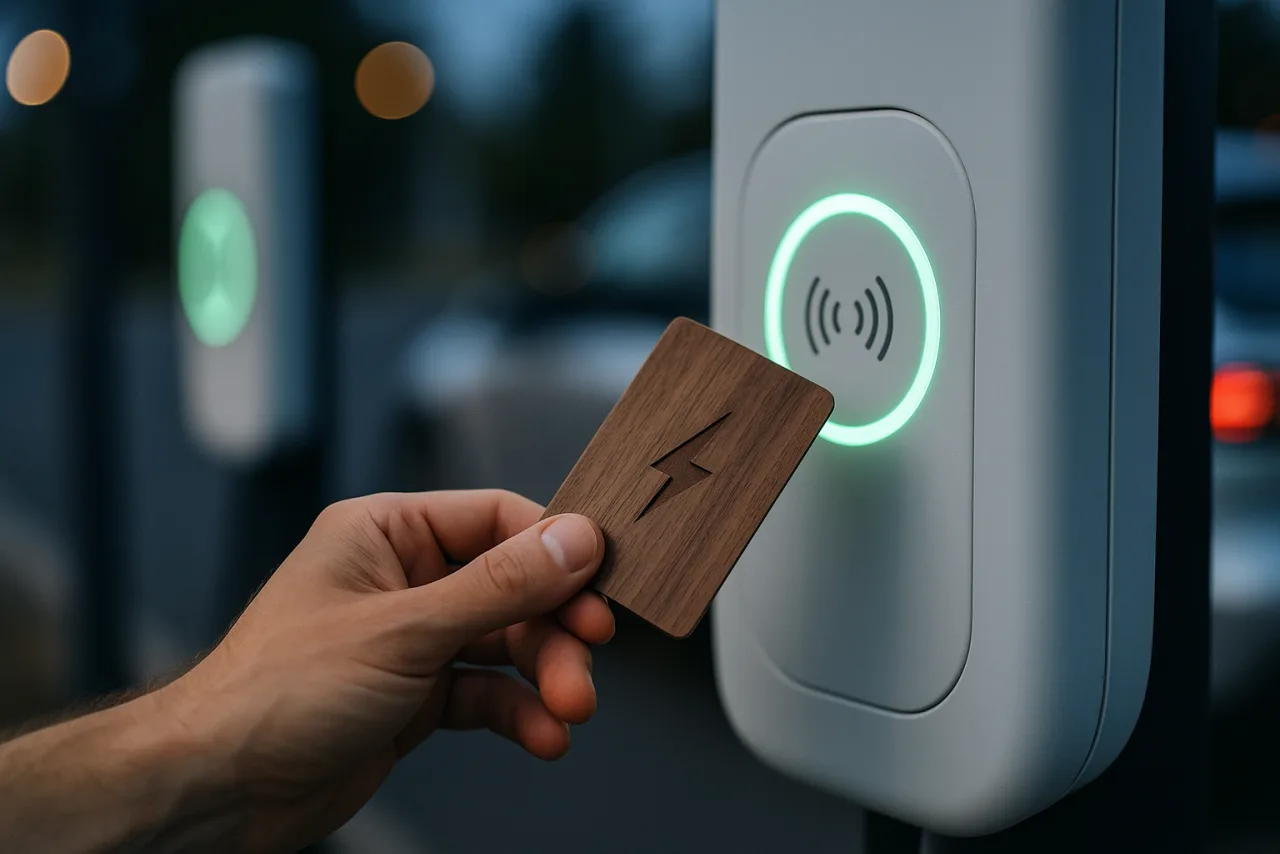
White-Label RFID Cards for E-Mobility Service Providers: The eMSP Playbook
An e-mobility service provider lives or dies by the moment a driver taps a card at a stranger's charger and it just works. Here is how white-label RFID cards, OCPI tokens, and clean UID provisioning let an eMSP put its brand on a credential that roams across hundreds of thousands of charge points.
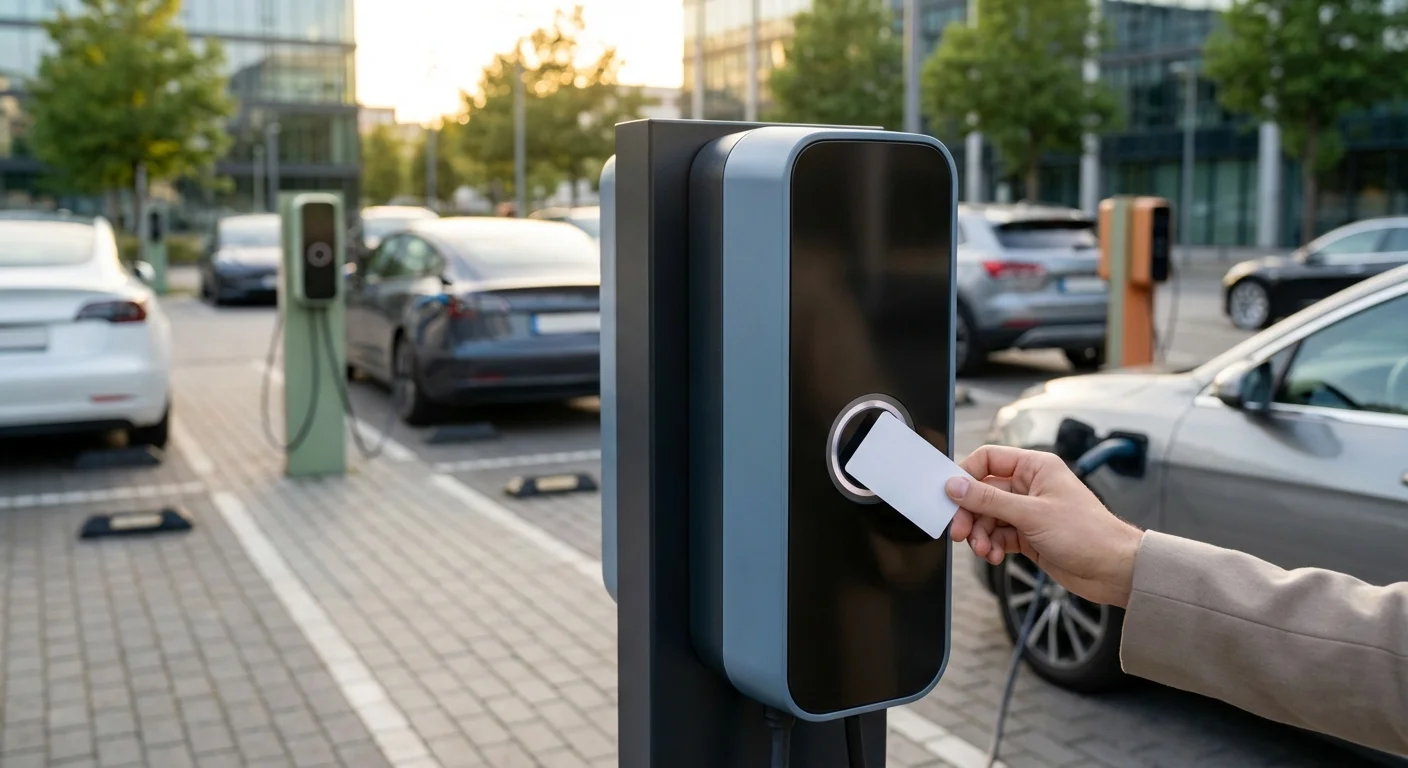
RFID Roaming: How One Card Works Across Participating EV Charging Networks (2026 Guide)
One RFID card, every charging network. How EV roaming works through OCPI and OICP, why drivers stop juggling an app per network, and how fleets get one card and one invoice across 1M+ chargers in 2026.