Personalization & data
Control artwork, numbering and variable-data fields
Operating programmes / EV charging
The credential sits between
Programme fit / 01
Similar card hardware can serve different programmes, but identity, security, data handoff, fulfilment and replacement controls change by operating model.

Controlled access
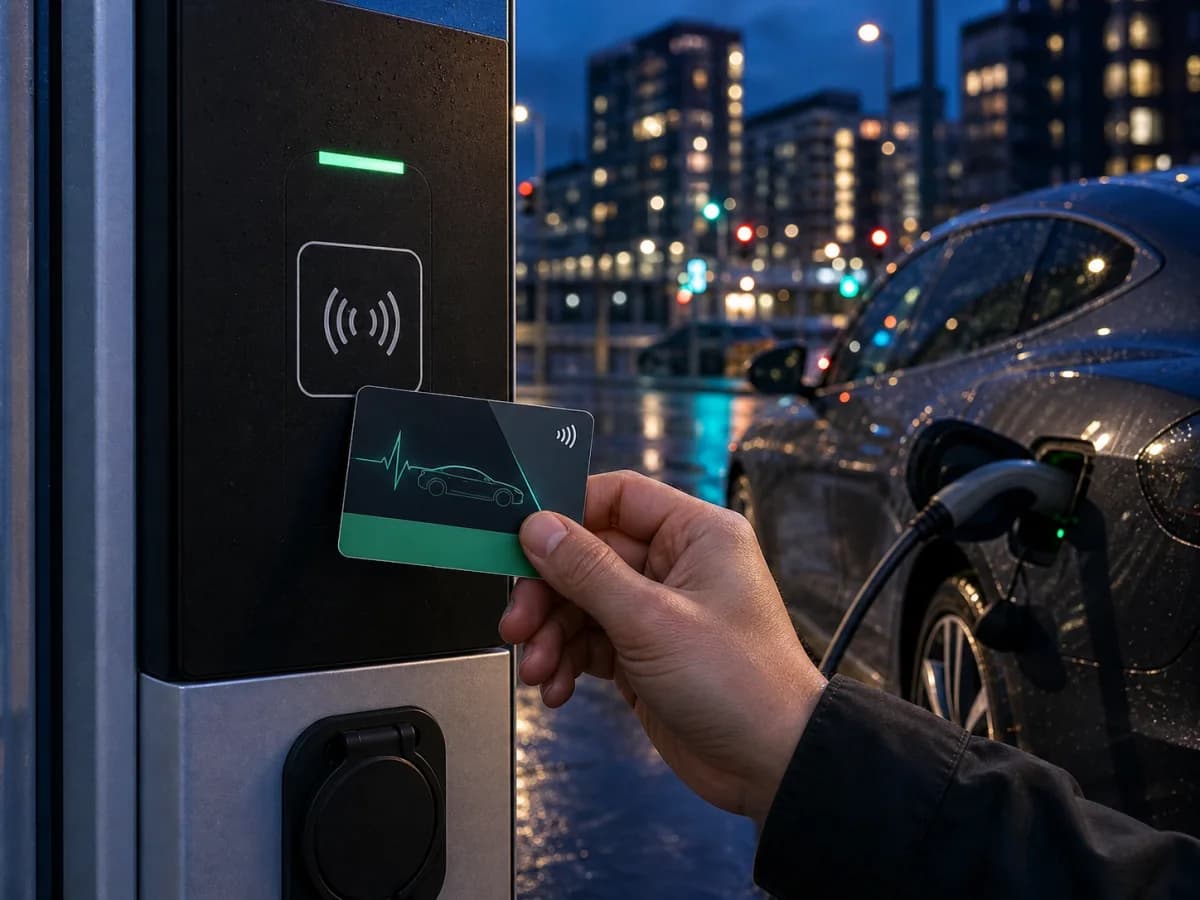
01RFID credentials for depot, workplace and public charging, with controlled driver or vehicle assignment, platform-ready identifiers and replacement records.
White-label issuance
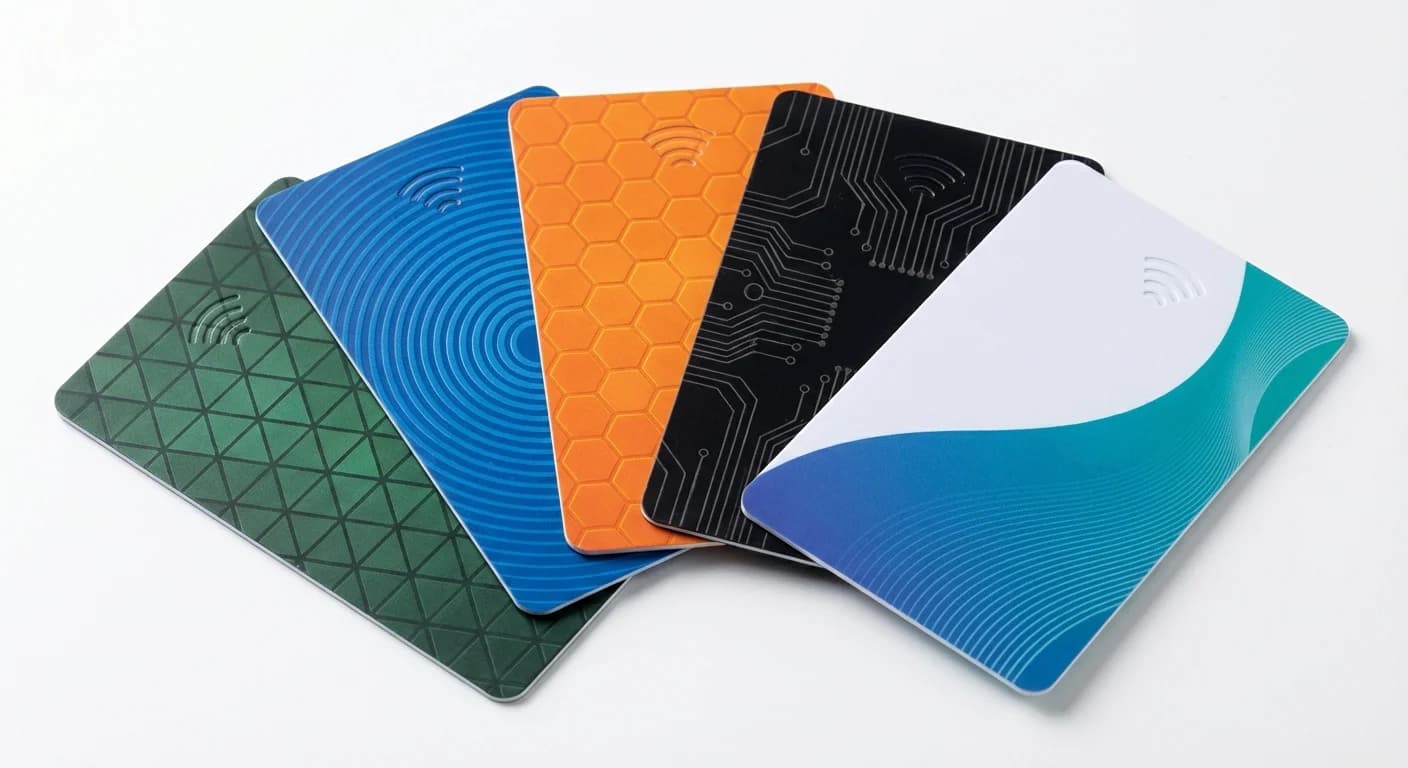
02White-label cards and keyfobs prepared around your brand, identifier format, platform import, launch volume and repeat-order workflow.
Cross-network identity
03Physical RFID credentials for roaming programmes where token records, identifier formats and lifecycle status stay consistent across eMSP, CPO and hub systems.

Managed site access
04Credential programmes for workplaces, depots, residential sites and destinations that need controlled access by employee, resident, visitor or account.
Technology transition
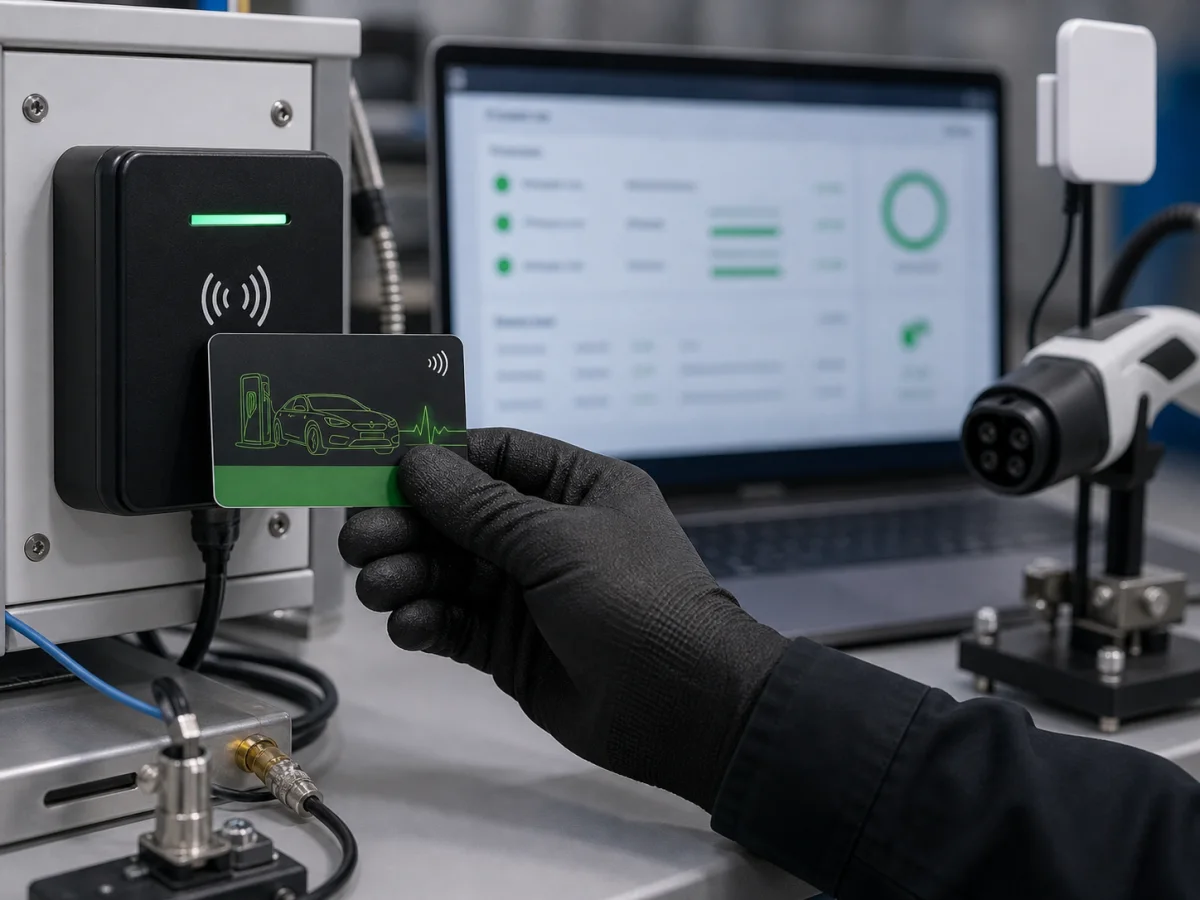
05A controlled route from legacy or UID-only credentials to reader-matched card technology with a practical pilot, data plan and phased reissue.

Premium experience
06Branded credentials for vehicle delivery, dealership charging, loyalty and premium member programmes—with controlled serialization and presentation.
System handoff / 02
OCPP, OCPI and OICP describe system communication. The physical card still needs the correct chip, identifier and data handoff for your implementation.
UID, idTag, customer number or application data
Reader frequency, protocol and accepted card technology
Import format, activation status and account mapping
UID-only access, keys, applications or diversified credentials
Issue, replace, block, replenish and repeat production
Credential operations / 03
A reliable physical credential programme controls personalization, validation, fulfilment and the records needed for replacement and replenishment.
Control artwork, numbering and variable-data fields
Pilot the proposed credential on representative readers
Prepare the data-file, packaging and fulfilment handoff
Retain the approved specification for replenishment and replacement
Decision table / 04
A useful quotation connects the physical credential to the system and rollout requirement. This is the minimum handoff we review.
Drivers, members, fleet accounts or visitors
Reader and station references
Identifier, encoding and import format
Quantity, markets, packaging and timing
We will translate the operating requirement into material, chip, encoding, sample and production questions.