RFID Roaming: How One Card Works Across All EV Charging Networks (2026 Guide)
If you have ever driven an electric vehicle across multiple charging networks, you already know the frustration: a different app here, a separate RFID card there, and an entirely new account for the next provider down the road. For fleet operators ma
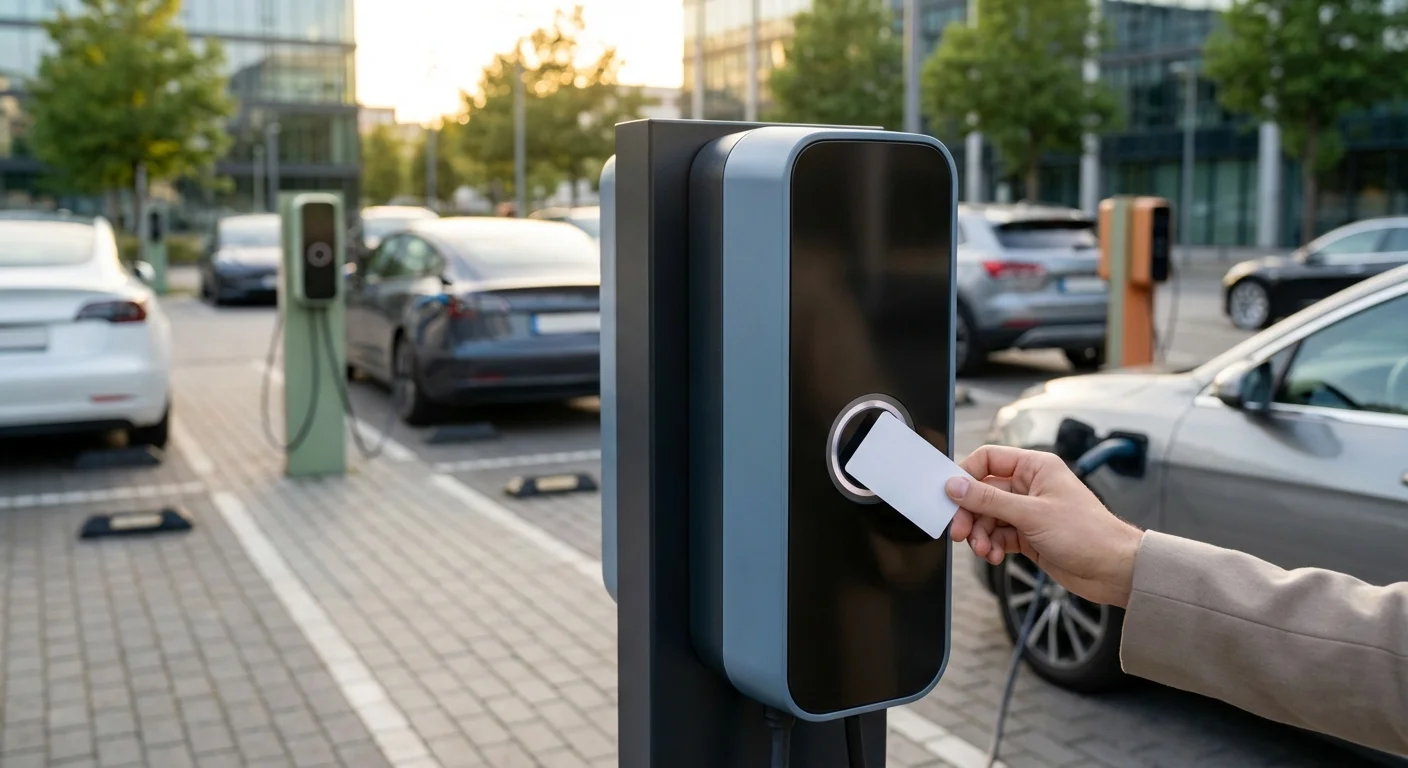
If you have ever driven an electric vehicle across multiple charging networks, you already know the frustration: a different app here, a separate RFID card there, and an entirely new account for the next provider down the road. For fleet operators managing dozens or hundreds of vehicles, this fragmentation multiplies into a logistical headache that wastes time, money, and driver patience. But the EV charging industry is finally solving this problem through RFID roaming, a system that lets a single card work seamlessly across competing networks, much like how a mobile phone connects to towers regardless of carrier.
The Fragmentation Problem: Too Many Cards, Too Many Apps
Europe now has over one million public charging points, with the Netherlands, Germany, and France hosting 61 percent of all EU chargers despite occupying just 22 percent of its land area. While the raw infrastructure keeps growing, the user experience has not kept pace. Each charge point operator (CPO) historically maintained its own proprietary app, membership card, and pricing structure. A driver crossing from France into Germany might need three different accounts just to keep moving.
Surveys in Norway, where more than 80 percent of new car sales are electric, have consistently found that juggling multiple charging apps ranks among drivers' top frustrations. For commercial fleets, the problem is even worse. Fleet managers need consolidated invoicing, purchase controls, and real-time visibility into charging costs across every vehicle. Handing each driver a stack of different RFID cards from different networks is simply not scalable.
How RFID Roaming Works Behind the Scenes
RFID roaming relies on a layered architecture of open protocols and roaming platforms that connect CPOs with e-mobility service providers (EMSPs). When a driver taps an RFID card at a charging station, the station's backend communicates with the roaming hub to verify the card, authorize the session, and route the billing data back to the driver's home provider. The entire handshake happens in seconds, invisible to the user.
Two protocols make this possible. The Open Charge Point Protocol (OCPP) standardizes communication between the charger hardware and the operator's management system. The Open Charge Point Interface (OCPI), now in version 2.2.1 with version 3.0 delivering major updates for energy management and ISO 15118 integration, handles the roaming layer between networks. OCPI has become the de facto standard for roaming across Europe and is gaining rapid traction in North America and Asia-Pacific.
On top of these protocols sit the roaming platforms themselves. Hubject operates the world's largest cross-provider charging network, connecting over one million charge points and more than 2,750 business partners across 72 countries through its intercharge platform. Gireve, the leading European B2B digital platform for EV charging, reported 695,000 charging points connected to its platform as of February 2026. Together, these hubs ensure that an RFID card issued by one provider can authenticate and bill at stations operated by hundreds of others.
Why Roaming Matters for Fleets and Businesses
For fleet operators transitioning from internal combustion to electric vehicles, RFID roaming solves several operational challenges at once. A single RFID card per driver means one invoice, one set of purchase controls, and one dashboard for monitoring energy costs. Fleet managers can set spending limits, restrict charging to approved networks, and track kilowatt-hour consumption across the entire fleet without reconciling data from a dozen different platforms.
The business case is already proving out in early 2026. WEX, one of the largest fleet payment providers, launched the first unified fuel and EV charging card in January 2026, embedding RFID technology directly into its standard fleet card. The card works at 90 percent of US fuel stations and over 175,000 EV charging stations, giving fleet customers a single payment method, one account, and one consolidated invoice for both traditional fueling and electric charging. This kind of convergence would not be possible without the roaming infrastructure built on OCPI and platforms like Hubject.
For businesses that operate workplace or destination charging stations, RFID roaming opens a revenue stream. By connecting their chargers to a roaming network, property owners can offer charging to any driver with a compatible RFID card, not just employees or tenants. The roaming hub handles authentication, billing, and settlement automatically, turning a private amenity into a monetized service.
Regulation Is Accelerating Interoperability
The European Union's Alternative Fuels Infrastructure Regulation (AFIR), which came into force in April 2024, is pushing the industry toward full interoperability on a strict timeline. As of January 2026, ISO 15118 compliance is mandatory throughout the EU, and by April 2026, all public charging operators must publish station data in the standardized DATEX II format. These requirements ensure that every public charger provides transparent pricing, real-time availability, and open access to roaming platforms.
AFIR also mandates ad-hoc payment via contactless debit and credit cards at all new DC fast chargers rated 50 kilowatts or above, ensuring that even drivers without an RFID card can charge without friction. However, for regular users and especially for fleet operators, RFID cards remain the preferred authentication method because they enable pre-negotiated rates, consolidated billing, and administrative controls that contactless bank cards cannot match.
In a notable development for accessibility, the EVRoaming Foundation published OCPI extensions in early 2026 specifically designed to provide better charging station information for disabled and less mobile EV drivers, demonstrating how the protocol continues to evolve beyond basic interoperability.
What to Look for in an RFID Charging Card
Not all RFID charging cards are created equal. When evaluating options for your fleet or business, consider the breadth of network coverage first. Cards connected to major roaming hubs like Hubject or Gireve will work at the largest number of stations. Check whether the card supports both AC and DC charging, since many fleet vehicles need fast DC charging on highways but use slower AC chargers at depots or workplaces.
Billing transparency matters, too. Some roaming agreements add markup fees on top of the CPO's base rate, which can erode savings. Look for providers that offer pass-through pricing or clearly disclose roaming surcharges. Finally, evaluate the management portal. The best fleet RFID solutions provide real-time dashboards, per-driver spending limits, customizable alerts, and exportable reports that integrate with existing fleet management software.
The EV charging landscape is moving toward a future where a single RFID card unlocks any charger, anywhere, with full cost transparency and centralized billing. The protocols are in place, the roaming platforms are scaling, and regulation is removing the last barriers. For fleet managers and businesses preparing for electrification, choosing the right RFID partner now will save years of operational complexity down the road.
Ready to find the right RFID charging solution for your fleet or business? Contact our team to discuss your requirements and explore the options that fit your charging infrastructure needs.
Ready to Go Green with Your Charging Network?
Contact us to learn how our sustainable RFID cards can enhance your EV charging infrastructure.
Related Articles
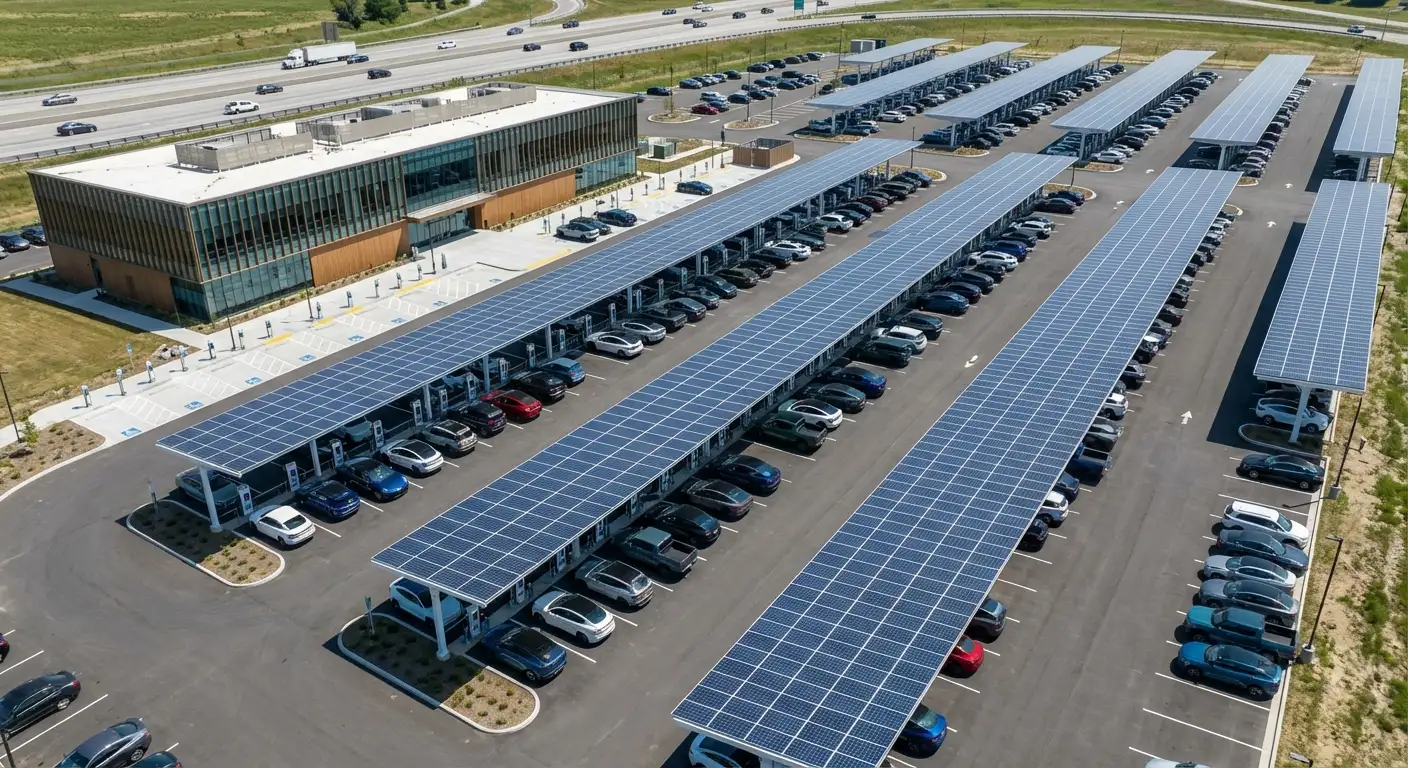
67,916 DC Fast-Charging Ports and Growing: How RFID Cards Enable Seamless Network Access
The numbers tell a compelling story: 67,916 public DC fast-charging ports now operate across the United States, representing a 33% increase from the previous year. As this infrastructure expands toward a projected $90.4 billion global market by 2032,

RFID Cards in Europe's Largest EV Charging Network Expansion
Discover how RFID cards are powering secure, seamless access across Spark — Europe’s largest EV charging network launched by BMW and Mercedes.