AFIR 2026: What Europe's New Charging Rules Mean for RFID Authentication
Europe's Alternative Fuels Infrastructure Regulation (AFIR) is reshaping the EV charging landscape, and 2026 marks a critical inflection point. With new ISO 15118 mandates taking effect in January 2026 and contactless payment terminal retrofits requi
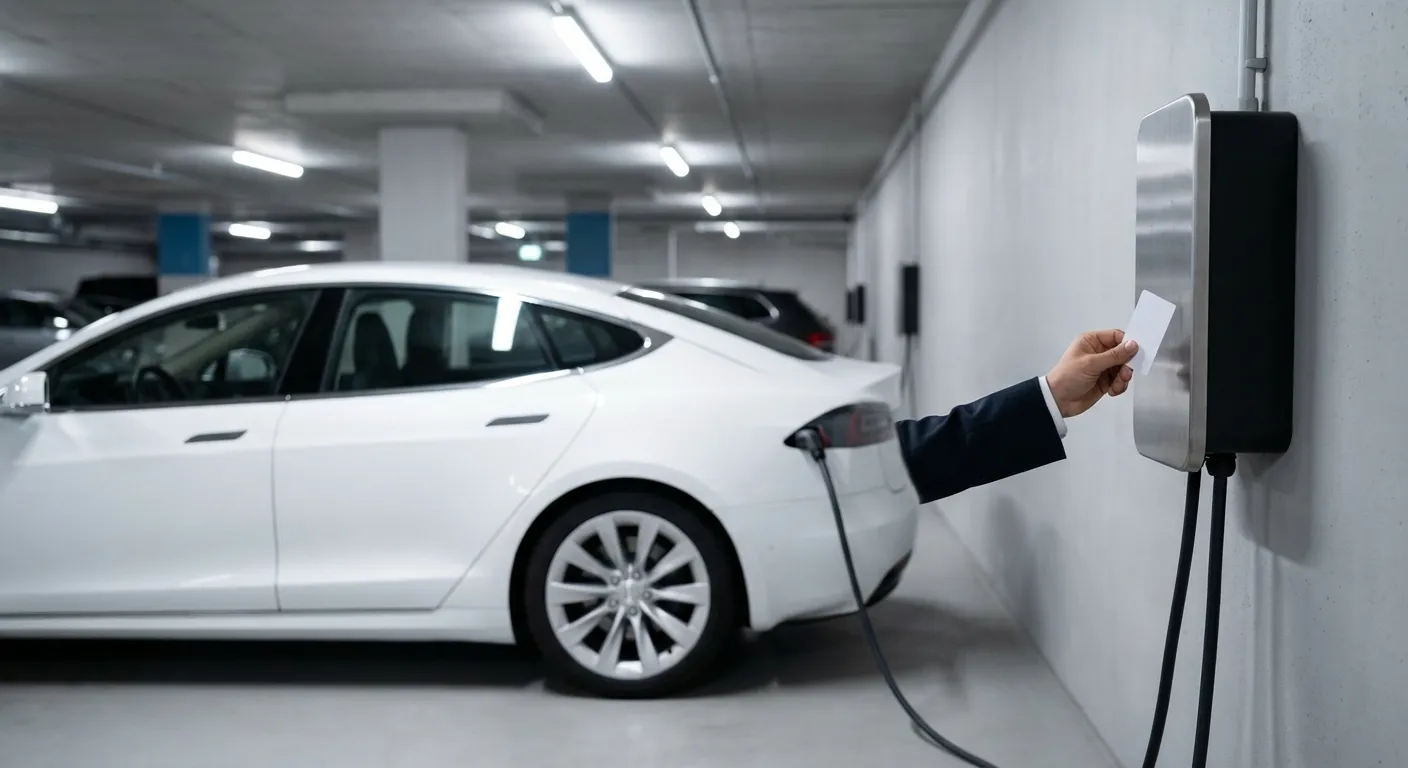
Europe's Alternative Fuels Infrastructure Regulation (AFIR) is reshaping the EV charging landscape, and 2026 marks a critical inflection point. With new ISO 15118 mandates taking effect in January 2026 and contactless payment terminal retrofits required by year-end, charging network operators across Europe face a decisive moment: adapt authentication systems or risk non-compliance. For organizations relying on RFID-based access control, understanding how these rules intersect with existing infrastructure is essential.
What AFIR Demands From Public Charging Stations
AFIR, which took effect in April 2024, establishes binding requirements for publicly accessible charging infrastructure across all 27 EU member states. The regulation's core principle is simple: any EV driver must be able to charge without prior registration or a subscription to a specific provider. Ad-hoc payment is now non-negotiable.
The payment requirements are tiered by charger capacity. DC fast chargers rated at 50 kW or above must accept contactless debit and credit card payments via integrated card terminals. AC chargers and lower-capacity DC stations below 50 kW must provide a secure ad-hoc payment process, such as a dynamically generated QR code displayed on screen. Charging stations rated at 150 kW or higher along TEN-T corridors face even stricter requirements, with dedicated payment terminals mandatory at each location.
There is also a retrofit deadline. All fast chargers of 50 kW or more deployed along TEN-T road networks before April 2024 must be equipped with compliant payment terminals by the end of 2026. This means thousands of existing stations across Europe need hardware or software upgrades within the next several months.
ISO 15118 and the Rise of Plug and Charge
Starting January 8, 2026, all newly installed or substantially upgraded publicly accessible AC charging points must support EN ISO 15118-2:2016. This standard enables Plug and Charge, a protocol where the vehicle and charger authenticate each other automatically through digital certificates. The driver simply connects the cable, and charging begins without any manual authentication step.
By January 2027, the more advanced ISO 15118-20 becomes compulsory for any new or refurbished charger, whether public or private. This version adds bidirectional power transfer capabilities and more granular communication between vehicle and charging station, paving the way for vehicle-to-grid services.
For public charging, this shift toward certificate-based authentication is significant. Plug and Charge eliminates the friction of apps, QR codes, and physical cards at the point of use. However, this evolution does not render RFID technology obsolete across the entire charging ecosystem.
Why RFID Still Matters for Fleet and Workplace Charging
AFIR's requirements primarily target publicly accessible charging infrastructure. Private and semi-private charging environments, including corporate workplaces, logistics depots, multi-tenant residential buildings, and fleet operations, operate under different dynamics where RFID-based authentication remains highly relevant.
Fleet operators managing dozens or hundreds of electric vehicles need centralized access control and precise per-vehicle or per-driver billing. RFID cards provide exactly this: each card links to a specific driver or vehicle in the backend management system, creating clean audit trails for energy costs, tax reporting, and operational analytics. A fleet manager can issue, reassign, or deactivate cards instantly without touching the physical charger.
Workplace charging presents similar requirements. Companies deploying chargers in employee parking areas need to restrict access to authorized personnel, track usage for benefit-in-kind calculations, and manage load across limited electrical capacity. Integrating RFID cards with existing employee ID badges creates a seamless system: the same card that opens the office door also activates the EV charger.
Multi-tenant buildings face perhaps the most complex access control challenge. Different residents, commercial tenants, and visitor parking all require distinct authorization levels. RFID-based systems handle this layered access elegantly, assigning different permission profiles to different card groups while routing billing to the correct tenant account.
The Numbers Behind the Infrastructure Push
The scale of Europe's charging infrastructure expansion underlines why authentication systems matter so much right now. Europe has surpassed 1.14 million publicly accessible charging points, with 941,953 AC and 206,109 DC stations across the continent. The year-over-year growth rate has accelerated from 34% to 37%, while total installed charging capacity jumped 49% in the last reporting period.
To meet the European Commission's target of 3.5 million charging points by 2030, approximately 410,000 new stations need to be installed annually. At the current pace, that translates to more than 23,000 new installations every week. Each of these charging points requires an authentication and payment mechanism, whether that is a contactless card terminal, QR code, Plug and Charge certificate, RFID reader, or a combination of these.
The distribution remains uneven: the Netherlands, Germany, and France together host 61% of all EU charging points while covering just 22% of the land area. As infrastructure expands into underserved regions, operators deploying new stations must ensure AFIR compliance from day one while also building authentication systems that serve the specific needs of their use case, whether public roadside, fleet depot, or workplace parking.
How RFID Adapts to the New Regulatory Landscape
Rather than being displaced, RFID technology is evolving alongside the new regulations. Many existing RFID readers installed on charging stations can be repurposed for AFIR compliance through firmware updates. By reconfiguring the reader to function as an NFC transponder, it can communicate with smartphones to open dynamic payment links, satisfying the ad-hoc payment requirement without replacing hardware.
The Open Charge Point Protocol (OCPP) provides the standardized communication layer that connects RFID-equipped chargers to backend management platforms. Through OCPP, operators can manage both RFID card-based authentication for contracted users and ad-hoc payment flows for casual users on the same hardware. Roaming platforms such as Hubject, GIREVE, and e-clearing.net further extend interoperability, allowing a single RFID card to authenticate across multiple charging networks and even across national borders.
For operators building new charging infrastructure in 2026, the practical approach is a layered authentication strategy: ISO 15118 Plug and Charge for compatible vehicles, contactless card payment for ad-hoc public access, and RFID cards for fleet management, workplace access control, and contracted user programs. This multi-method approach future-proofs the investment while maximizing accessibility for every type of EV driver.
The regulatory landscape is clear: Europe is moving toward frictionless, interoperable EV charging at unprecedented speed. RFID technology remains a critical piece of the puzzle, especially for private networks and fleet operations where centralized control and detailed usage tracking are business necessities. Contact us today to learn how ChargeRFID can streamline your EV charging access management.
Ready to Go Green with Your Charging Network?
Contact us to learn how our sustainable RFID cards can enhance your EV charging infrastructure.
Related Articles
ISO 15118 Plug and Charge vs RFID Cards: Which Authentication Will Win in 2026?
January 8, 2026 marked a pivotal moment for electric vehicle charging infrastructure. New regulations now require all public charging stations to support ISO 15118-2:2016, the standard enabling Plug & Charge technology. Does this spell the end for RF
RFID Authentication Goes Embedded: How Secure, Offline-Capable Charging Stations Are Reshaping EV Infrastructure
RFID Authentication Goes Embedded: Offline-Capable Charging Stations Reshape EV Infrastructure